


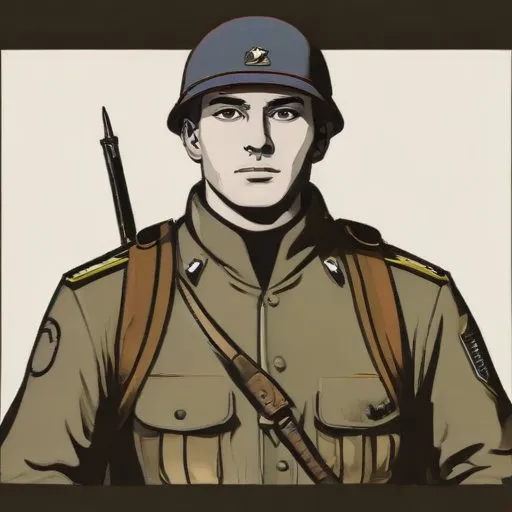
Jaroslav Hašek, the Czech writer, humorist, satirist, and journalist, is best known for his unfinished yet iconic novel, The Fate of the Good Soldier Švejk During the World War. This farcical collection of incidents has been translated into an astonishing 60 languages, earning the title of the most translated novel in Czech literature.
Hašek's paternal ancestors were rooted in Mydlovary, South Bohemia, with his grandfather, Frantiek Haek, being a member of the Czech Landtag and later the Kromeriz convention. Rumors also suggest that he worked with Mikhail Bakunin during his stay in Bohemia in 1849.
Hašek's family, on his mother's side, was also from South Bohemia. His grandfather, Antonín Jare, and great-grandfather, Matěj Jare, were pondkeepers for the Schwarzenberg princes in Kr village No. 32. Tragedy struck when his father, Josef Haek, a mathematics teacher and religious fanatic, died from alcohol intoxication, leaving his mother, Katherine, to care for three children.
At the tender age of four, Hašek was diagnosed with a heart defect and stunted thyroid gland. This led to frequent stays in the countryside with his maternal grandfather, in the Raice damhouse, where he developed a strong bond with his younger brother, Bohuslav. Hašek's childhood was marked by jealousy towards Bohuslav, even attempting to harm him as a baby. Later, the brothers would share an intense relationship, traveling extensively on foot together.
Hašek's writing career was marked by his rebellious nature, reflecting his anarchist and later communist leanings. His satirical works targeted authority figures, criticizing the ineptitude of those in power. The Fate of the Good Soldier Švejk During the World War, his magnum opus, is a testament to this satirical wit, offering a scathing critique of the Austro-Hungarian Empire.
Hašek's life was riddled with contradictions – a bohemian who became a communist, a satirist who joined the Red Army as a commissar, fighting against the Czechoslovak Legion. His philosophical contributions and beliefs were shaped by his anarchist roots, yet he later aligned himself with the communist movement.
Hašek's untimely death in 1923 left behind an unfinished novel, The Fate of the Good Soldier Švejk During the World War, which has become a cultural icon in Czech literature. His work continues to inspire and provoke, offering a unique glimpse into the complexities of human nature during times of war and social upheaval.
Hašek's satirical genius has influenced generations of writers, inspiring works that critique authority and challenge societal norms. His legacy extends beyond literature, shaping the cultural fabric of the Czech Republic and resonating with readers worldwide.
"A good soldier doesn't think, a good soldier acts." – Jaroslav Hašek, The Fate of the Good Soldier Švejk During the World War
Hašek's life and work are deeply intertwined with the tumultuous period of World War I and the subsequent rise of communism in Czechoslovakia. His satirical critique of authority figures resonated with the public, cementing his position as a cultural icon in Czech literature.
Hašek's younger brother, Bohuslav, drank himself to death just a year after Jaroslav's passing.
Hašek's writing style was heavily influenced by his experiences as a soldier during World War I.
Hašek's life is a testament to the power of satire and social critique. Despite facing adversity and controversy, he continued to write, inspiring future generations to challenge authority and seek truth.
Born in 1890
Czech author and playwright credited with coining the term "robot" and exploring the intersection of technology and humanity in his works, particularly in his play "R.U.R."
Born in 1883
A writer of surreal, psychologically complex fiction that explores the human condition, often featuring isolated protagonists in absurd, nightmarish scenarios.
Born in 1914
A Czech writer celebrated for his poetic and humorous novels that explore the human condition, often set against the backdrop of World War II and communist Czechoslovakia.
90 Years Old
A Czech poet, playwright, and politician who led the country's transition from communism to democracy, and is known for his advocacy of human rights and individual freedom.
97 Years Old
A Czech-French writer who explored the human condition through novels, poetry, and plays, often blending philosophy and politics with a touch of irony and humor. His works are known for their lyrical style and exploration of themes such as identity, morality, and the search for meaning.
99 Years Old
A Czech writer and playwright, best known for his novels and plays that explore the human experience during World War II, particularly the Holocaust. His works are celebrated for their emotional depth and historical significance.
Born in 1924
A Czech-Canadian author and publisher who wrote novels and essays that often blended elements of jazz, politics, and Czech culture, and founded a publishing house that promoted Czech literature worldwide.
