


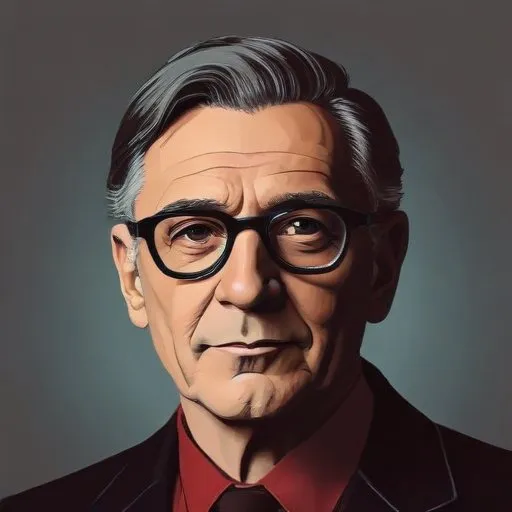
A Czech-Canadian author and publisher who wrote novels and essays that often blended elements of jazz, politics, and Czech culture, and founded a publishing house that promoted Czech literature worldwide.
Josef kvoreck, a Czech-Canadian writer and publisher, is renowned for his courageous efforts in promoting banned Czech literature during the communist era, earning him the prestigious Neustadt International Prize for Literature in 1980. Through his works, kvoreck not only exposed the horrors of totalitarianism but also celebrated the liberating power of jazz, reflecting his own life experiences as a saxophone player and émigré.
Born on September 27, 1924, in Nchod, Czechoslovakia, kvoreck grew up in a family of modest means. He developed a passion for jazz during his teenage years, becoming an amateur tenor saxophone player before the Second World War. This experience would later inspire his novella, The Bass Saxophone (1967).
Kvoreck's academic pursuits took him to the Faculty of Medicine of Charles University in Prague, but he soon switched to the Faculty of Arts, graduating in 1949 with a degree in philosophy. He further earned a PhD in philosophy in 1951. Following his military service in the Czechoslovak Army, kvoreck worked as a teacher, editor, and translator in the 1950s.
Kvoreck's writing career was marked by controversy and censorship. His early novels, The Cowards (written in 1948-1949, published in 1958) and The End of the Nylon Age (1956), were condemned and banned by the Communist authorities. His innovative, open-ended prose style and democratic ideals challenged the regime, leading to his dismissal as editor of the magazine Svtov literatura (World Literature).
In 1969, kvoreck emigrated to Canada, where he continued to write and publish, becoming a vocal supporter of Czech dissident writers. Alongside his wife, he played a crucial role in promoting Czech literature globally, earning him the respect and admiration of his peers.
Kvoreck's fiction is characterized by themes of totalitarianism, repression, and the expatriate experience, all woven together with the redemptive power of jazz. His works include The Bass Saxophone, The Cowards, and The End of the Nylon Age, as well as numerous essays and short stories.
Through his writing, kvoreck not only preserved the cultural heritage of his homeland but also inspired future generations of writers and artists. His unwavering commitment to artistic freedom and his unrelenting passion for jazz continue to inspire and educate readers around the world.
Kvoreck's literary achievements were recognized with the Neustadt International Prize for Literature in 1980. This prestigious award solidified his reputation as a champion of freedom and a master of his craft.
Josef kvoreck's remarkable life is a testament to the power of art and the human spirit. Through his writing, he continues to inspire and educate, leaving behind a legacy that will be cherished for generations to come.
97 Years Old
A Czech-French writer who explored the human condition through novels, poetry, and plays, often blending philosophy and politics with a touch of irony and humor. His works are known for their lyrical style and exploration of themes such as identity, morality, and the search for meaning.
90 Years Old
A Czech poet, playwright, and politician who led the country's transition from communism to democracy, and is known for his advocacy of human rights and individual freedom.
Born in 1883
A writer of surreal, psychologically complex fiction that explores the human condition, often featuring isolated protagonists in absurd, nightmarish scenarios.
Born in 1901
A Czech poet and journalist who captured the essence of his country's history and culture through his lyrical and expressive works, earning him the Nobel Prize in Literature.
Born in 1914
A Czech writer celebrated for his poetic and humorous novels that explore the human condition, often set against the backdrop of World War II and communist Czechoslovakia.
Born in 1926
A Czech journalist and author who wrote novels and essays that critiqued communism, and is best known for his 1967 novel "The Guinea Pigs" which satirized the Soviet occupation.
Born in 1834
A Czech journalist and poet who wrote influential works that explored the human condition, social issues, and patriotism, leaving a lasting impact on Czech literature.
