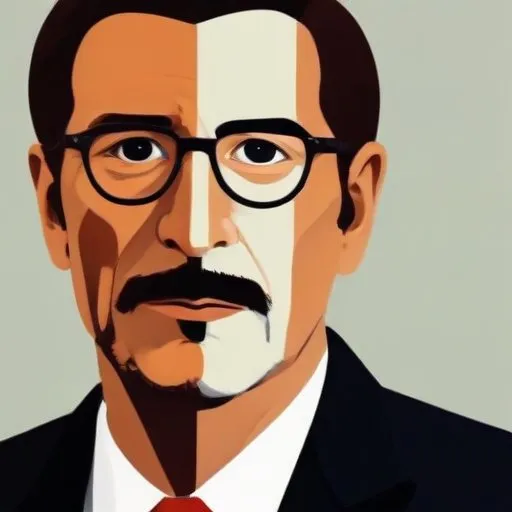
Ludvík Vaculík: The Voice of Dissent in Communist Czechoslovakia
A Champion of Free Speech and Reform
Ludvík Vaculík, a Czech writer and journalist, is best known for his courageous stand against the Communist regime in Czechoslovakia. His iconic
Two Thousand Words manifesto, published in June 1968, became a beacon of hope for reform and a powerful critique of the government's restrictive policies.
Early Life and Career
Born on July 23, 1926, in Brumov, Moravian Wallachia, Vaculík grew up in a family of modest means. He developed a passion for literature and writing at an early age, which eventually led him to become a prominent figure in Czech literary circles.
The Fourth Congress of the Union of Writers: A Turning Point
In July 1967, Vaculík attended the Fourth Congress of the Union of Writers, where he delivered a groundbreaking speech that would change the course of his life. As a member of the Communist Party, he boldly criticized the government's cultural policies, calling for greater freedom of expression and an end to censorship. His words resonated with many, but also incurred the wrath of the Party leadership, led by Antonín Novotný.
The Two Thousand Words Manifesto: A Call to Action
In June 1968, Vaculík penned the
Two Thousand Words manifesto, a powerful call to action that urged citizens to demand democratic reforms and an end to the Communist Party's monopoly on power. This bold statement was signed by thousands of Czechs and Slovaks, including many prominent intellectuals and artists.
The Prague Spring and Its Aftermath
The
Two Thousand Words manifesto played a significant role in the Prague Spring, a period of reform and liberalization that characterized Czechoslovakia in 1968. Although the movement was eventually crushed by Soviet forces, Vaculík's courageous stand helped pave the way for future generations of dissidents and reformers.
Personal Life and Legacy
Throughout his life, Vaculík remained committed to the principles of democracy and human rights. Despite facing persecution and censorship, he continued to write and speak out against injustice, inspiring countless others to do the same. Ludvík Vaculík passed away on June 6, 2015, leaving behind a legacy as a champion of free speech and a symbol of resistance against oppression.
Major Works and Achievements
- Two Thousand Words (1968) - a seminal work that called for democratic reforms and an end to Communist rule
- Numerous articles and essays published in samizdat journals, including Literární noviny and Květen
- Member of the Union of Writers and the Czech PEN Club
Impact on Modern Society
Vaculík's courageous stand against the Communist regime inspired a generation of Czechs and Slovaks to demand greater freedom and democracy. His legacy continues to inspire dissidents and reformers around the world, who recognize the power of free speech and the importance of standing up against oppression.
FAQ
What was Ludvík Vaculíks most notable literary work?
Ludvík Vaculíks most notable literary work was his novel The Axe, which critiqued the communist regime in Czechoslovakia.
How did Ludvík Vaculíks writing reflect his experiences under communism?
Ludvík Vaculíks writing reflected his experiences under communism by exploring themes of censorship, dissidence, and the human condition.
What role did Ludvík Vaculík play in the Prague Spring?
Ludvík Vaculík played a key role in the Prague Spring, a period of liberalization in Czechoslovakia, by writing dissident literature and advocating for democratic reforms.
How did Ludvík Vaculíks writing influence Czech literature?
Ludvík Vaculíks writing influenced Czech literature by challenging the communist regime and paving the way for future generations of dissident writers.
What awards did Ludvík Vaculík receive for his writing?
Ludvík Vaculík received several awards for his writing, including the Jaroslav Seifert Prize and the Tom Stoppard Prize.