


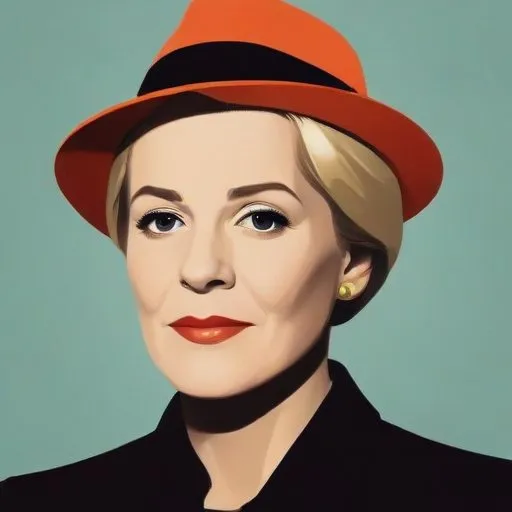
A pioneering journalist and author, known for her vivid and insightful reporting on European culture and politics, particularly her Paris Letter column in The New Yorker.
Janet Flanner, writing under the pen name 'Genêt', was a groundbreaking American writer and journalist who served as the Paris correspondent of The New Yorker magazine for an unprecedented five decades. She is best known for her iconic 'Letter from Paris' columns, which offered readers a unique window into the city's vibrant cultural, artistic, and intellectual scene from the 1920s to the 1970s.
Born on March 13, 1892, in Indianapolis, Indiana, Flanner grew up in a Quaker family with two sisters. Her father, Frank Flanner, was a mortician and crematorium owner, and the family's strong values and emphasis on education instilled in Janet a passion for learning and writing.
Flanner's early years were marked by travel and exploration, with the family embarking on a European tour when she was just 16. This experience sparked her fascination with different cultures and ways of life, a theme that would recur throughout her writing career. After attending Tudor Hall School for Girls, Flanner enrolled at the University of Chicago in 1912 but left two years later without graduating.
Flanner's early writing career saw her work as a cinema critic for the Indianapolis Star, where she developed her writing skills and honed her critical eye. Her connections with the Algonquin Round Table circle in New York, including Harold Ross and Jane Grant, eventually led to her being offered the position of French correspondent for The New Yorker.
In 1925, Flanner published her first 'Letter from Paris' in The New Yorker, marking the beginning of a long and fruitful collaboration that would last for over 50 years. Her columns, written in a unique blend of journalism and literary flair, captured the essence of Parisian life, from art and fashion to politics and culture.
Flanner's tenure in Paris saw her become an integral part of the city's vibrant expatriate community, rubbing shoulders with the likes of Ernest Hemingway, F. Scott Fitzgerald, and Gertrude Stein. Her writing provided a window into the city's avant-garde scene, introducing American readers to the works of artists like Pablo Picasso, Henri Matisse, and Salvador Dalí.
Flanner's personal life was also marked by her long-term partnership with Solita Solano, a writer and editor in her own right. The couple's relationship was an open and celebrated one, with Flanner often referencing Solano in her writing.
Janet Flanner's legacy is that of a trailblazing journalist and writer who helped shape the Course of American literary journalism. Her 'Letter from Paris' columns, collected in a series of books, remain a testament to her unique voice and perspective.
Flanner's writing not only captured the essence of Parisian life but also helped to shape American perceptions of the city and its culture. Her work inspired generations of writers, including the likes of Joan Didion and Susan Sontag, who have often cited her as a role model and influence.
Today, Janet Flanner's contribution to American literature and journalism is recognized through various awards and honors, including the prestigious O. Henry Award. Her life and work continue to inspire writers, journalists, and cultural historians alike, offering a powerful testament to the enduring power of her unique voice and vision.
Flanner's life and work serve as a powerful reminder of the importance of cultural exchange, literary innovation, and journalistic excellence. As a pioneering narrative journalist, she left an indelible mark on American literature, ensuring her place as one of the most important and influential writers of the 20th century.
Born in 1899
A legendary writer who crafted sparse, powerful prose, capturing the human experience in novels like "The Old Man and the Sea" and "A Farewell to Arms".
Born in 1896
Author of novels and short stories that capture the essence of the Jazz Age, exploring themes of wealth, class, and the American Dream. Known for timeless classics like "The Great Gatsby" and "Tender Is the Night".
Born in 1874
A pioneering figure in modernist literature, known for experimental writing styles and influential salons that fostered artistic innovation. 82
Born in 1885
A pioneering modernist poet and critic who transformed 20th-century literature with innovative styles and provocative ideas, shaping the course of modern poetry.
Born in 1888
A renowned poet, playwright, and critic who reshaped modern poetry with works like "The Waste Land" and "Old Possum's Book of Practical Cats", influencing literature and art with their unique style.
Born in 1882
A pioneering modernist writer, known for experimental novels and short stories that explore the human experience, particularly in Dublin, Ireland. His works are celebrated for their complex, lyrical prose and innovative narrative structures.
Born in 1873
A pioneering modernist writer, credited with influencing 20th-century literature through experimental novels and poetry that explored the human condition. Known for his impressionistic style and complex characters.
Born in 1893
A witty and insightful writer who crafted poetry, short stories, and critiques that continue to delight readers with their clever wordplay and sharp observations.
