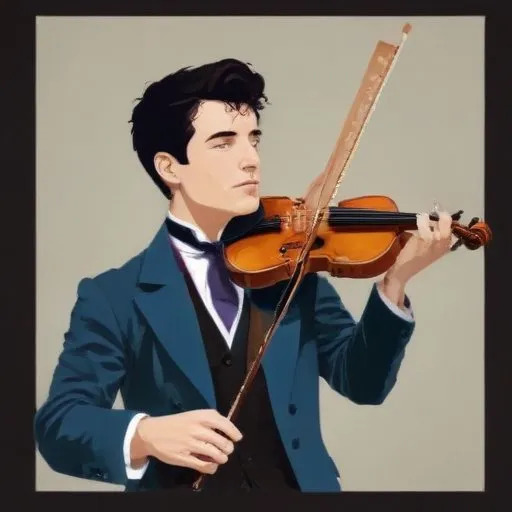
Jean-Baptiste Accolay: The Prolific Violinist and Composer of the Romantic Era
A Legacy of Music Education and Innovation
Jean-Baptiste Accolay, a Belgian violinist, composer, and educator, is best known for his iconic one-movement student concerto in A minor, a staple in music education for over a century. His remarkable career spanned several decades, leaving an indelible mark on the world of classical music.
Early Life and Training
Born on April 17, 1833, in Brussels, Accolay began his musical journey at the Royal Conservatory of Brussels, where he honed his skills as a violinist. He later joined the second cuirassier regiment of Bruges as a solo flugelhorn player, further refining his musical talents.
A Career of Teaching and Composing
In 1860, Accolay became a teacher of solfège at the Conservatory of Bruges, marking the beginning of a long and successful career in music education. Over the years, he taught various subjects, including violin, viola, string quartets, and harmony. His passion for teaching and composing led him to co-found the concert series "Sances de musique classique" in 1865 and the "Maatschappij der Concerten van het Conservatorium" in 1896.
Concerto in A minor: A Timeless Masterpiece
Accolay's Concerto in A minor, composed in 1868, has become a beloved piece in the classical music repertoire. The concerto's enduring popularity can be attributed to its beautiful melodies, technical accessibility, and expressive qualities. Renowned violinists, including
Itzhak Perlman, have performed and recorded this concerto, solidifying its place in the pantheon of classical music.
Compositional Style and Legacy
Accolay's compositional style is characterized by his mastery of melody, harmony, and rhythm. His works, often written for violin and piano or orchestra, showcase his ability to craft pieces that are both technically demanding and musically substantial. As a composer, Accolay's contributions have had a lasting impact on the world of classical music, influencing generations of musicians and educators.
Teaching and Mentoring
Accolay's dedication to music education is evident in his pedagogical approach, which emphasized the importance of technical foundation, musical expression, and artistic development. His teaching methodology has been passed down through generations, shaping the way violinists approach the instrument.
Impact on Modern Society
Accolay's legacy extends beyond the realm of classical music. His contributions to music education have inspired countless individuals to pursue careers in music, teaching, and the arts. His emphasis on technical mastery, musical expression, and artistic development has influenced the way we approach music education today.
Personal Milestones and Key Life Events
- 1860: Became a teacher of solfège at the Conservatory of Bruges
- 1861-1864: Taught violin at the Conservatory of Bruges
- 1864: Taught viola at the Conservatory of Bruges
- 1865: Co-founded the concert series "Sances de musique classique" in Bruges
- 1874: Taught harmony at the Conservatory of Bruges
- 1896: Co-founded the "Maatschappij der Concerten van het Conservatorium"
A Lasting Legacy
Jean-Baptiste Accolay's remarkable career, spanning over four decades, has left an indelible mark on the world of classical music. His contributions to music education, composition, and performance have inspired generations of musicians, educators, and music lovers. As we continue to celebrate his life and achievements, we are reminded of the power of music to touch hearts, minds, and souls.
FAQ
What was Jean-Baptiste Accolays contribution to music education?
Jean-Baptiste Accolay was a Belgian violinist and composer who wrote several influential music education books, including Méthode de Violon and École du Violon. His methods emphasized technique and musicality.
What was Jean-Baptiste Accolays style as a violinist?
Jean-Baptiste Accolay was known for his expressive and technically precise violin playing, which was influenced by the Belgian and French violin traditions.
What is Jean-Baptiste Accolays significance in the history of violin pedagogy?
Jean-Baptiste Accolay is an important figure in the history of violin pedagogy, representing a link between traditional French and Belgian violin teaching and modern music education. His methods continue to influence violin teaching today.
What was Jean-Baptiste Accolays compositional style like?
Jean-Baptiste Accolays compositional style was characterized by his use of Classical and Romantic forms and his emphasis on technical display. He wrote several concertos, sonatas, and other works for violin.
What is Jean-Baptiste Accolays legacy in modern violin teaching?
Jean-Baptiste Accolays legacy in modern violin teaching is significant, with his methods and compositions remaining popular among violin teachers and students today. His emphasis on technique and musicality continues to influence violin pedagogy.