


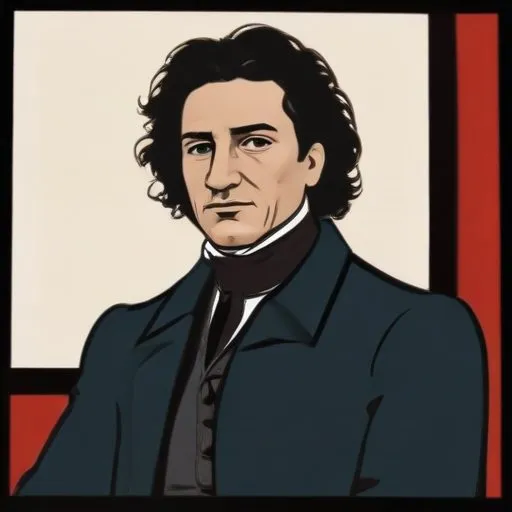
A prominent figure in 18th-century French literature, known for his lyrical poetry and plays that explored themes of love, nature, and morality. His works were widely admired and influential in his time.
French playwright and poet Jean-Baptiste Rousseau is renowned for his piercing wit and biting satire, earning him the reputation as a master of cynical epigrams. His sharp tongue and clever wordplay have made him a household name in 17th-century France, despite his tumultuous life and controversial reputation.
Rousseau was born in Paris on April 6, 1671, to a humble shoemaker and his wife. Despite the modest circumstances, Rousseau received a good education, which nurtured his passion for writing. Boileau, a prominent poet, took Rousseau under his wing, encouraging him to pursue a literary career.
Rousseau's early attempts at playwriting were met with resounding failure. His one-act comedy, Le Caf, flopped in 1694, and his more ambitious play, Le Flatteur, didn't fare much better in 1696. Even his foray into opera, Venus et Adonis, was met with disappointment in 1697. Rousseau's failures on the stage may have been a blessing in disguise, as they led him to focus on his true talent: poetry.
In 1700, Rousseau accompanied the Duke of Tallard to London as an attaché, where his literary talents earned him recognition. He began to make a name for himself in literary circles, and his poems, though initially circulated in manuscript, gained him a reputation as a master of lyrical poetry.
Rousseau's sharp wit and satire eventually got him into trouble. A club squabble at the infamous Caf Laurent, a hub for literary men, led to a series of libellous and obscene verses, some of which were attributed to Rousseau. The incident sparked a chain reaction of legal proceedings, accusations, and recriminations that would haunt Rousseau for the rest of his life.
In 1712, Rousseau was prosecuted for defamation of character and, after failing to appear in court, was sentenced to perpetual exile. He spent the remainder of his life in foreign countries, with the exception of a clandestine visit to Paris in 1738. Despite his tumultuous life, Rousseau continued to write, producing works that cemented his reputation as a master of cynical epigrams.
Rousseau's impact on French literature cannot be overstated. His biting satire and clever wordplay have influenced generations of writers, and his legacy continues to be felt today. Though his life was marked by controversy and turmoil, Rousseau's contributions to the world of poetry and literature remain unparalleled.
Born in 1622
A 17th-century master of comedy, he penned witty plays that satirized the French aristocracy, leaving a lasting impact on Western theater. His works remain widely performed and adapted today.
Born in 1639
A 17th-century master of French tragedy, crafting intricate, psychologically complex dramas that probed the human condition, influencing the development of Western theatre.
Born in 1606
A 17th-century French mastermind behind iconic plays like "Le Cid" and "Horace", known for pioneering the classical French tragedy genre.
Born in 1694
A witty and insightful 18th-century writer and philosopher who used satire to critique societal norms and advocate for reason, tolerance, and human rights.
Born in 1712
A pioneering thinker who shaped modern democracy and education with his ideas on social contracts, general will, and the importance of early childhood education. His writings influenced the French Revolution and modern political thought.
Born in 1636
A 17th-century French poet and critic who advocated for reason and morality in literature, and is known for his influential writings on poetry and aesthetics.
Born in 1621
A 17th-century master of fables, crafting witty, moral tales that entertain and educate, still widely read and adapted today.
