


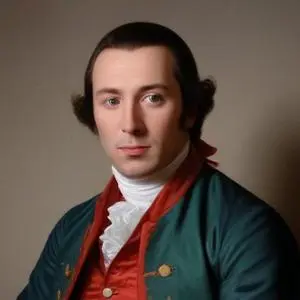
A master of still-life and domestic scenes, capturing the quiet beauty of everyday life with remarkable attention to detail and texture. Known for his subtle, nuanced, and intimate paintings that evoke a sense of calm and contemplation.
French painter Jean-Baptiste-Simon Chardin is renowned for his exquisite still-life compositions and tender domestic scenes, which captivated the hearts of art enthusiasts and aristocrats alike in 18th-century Europe. His remarkable talent for capturing the subtleties of light and texture elevated the genre of still life to unprecedented heights, earning him a revered place in the annals of art history.
Born on November 2, 1699, in Paris, France, Chardin was the son of a cabinetmaker and grew up amidst the ornate and elegant surroundings of the French capital. His early artistic inclinations led him to study with the French painter Pierre-Jacques Cazes and later with Nicolas de Largillière, where he honed his skills in portraiture and still life.
Chardin's innovative approach to still life painting lay in his emphasis on the subtle interplay of light and texture. He achieved an extraordinary level of realism by using a range of techniques, including delicate glazing and scumbling, to create an atmosphere of quiet intimacy.
Chardin's domestic scenes, often depicting women and children engaged in everyday activities, offered a glimpse into the private lives of the French bourgeoisie. These tender and introspective works humanized the ordinary, elevating the genre of domestic painting to new heights.
Chardin's artistic innovations had a profound impact on the development of French art, influencing notable artists such as François Boucher and Jean-Honoré Fragonard. His emphasis on the beauty of everyday life paved the way for the rise of Realism and Impressionism in the 19th century.
"Il n'y a que les audacieux qui font les grandes choses" ("Only the bold achieve great things"), a quote often attributed to Chardin, reflects his own artistic courage and innovative spirit.
Chardin's artistic career unfolded against the backdrop of the Enlightenment, an era marked by intellectual curiosity and a growing appreciation for the arts. His contributions to French art and culture cemented his place as one of the most celebrated painters of the 18th century.
Chardin's unique blend of realism and lyricism set him apart from his contemporaries, such as Jean-Antoine Watteau and Nicolas Lancret, who were known for their more lighthearted and ornate style.
Chardin's artistic journey serves as a testament to the power of dedication and perseverance. Despite facing financial difficulties and personal struggles, he remained committed to his craft, inspiring future generations of artists to pursue their passions with unwavering resolve.
Born in 1732
A prolific Rococo painter and etcher, renowned for his delicate, whimsical, and often erotic works that capture the carefree spirit of 18th-century French aristocracy. His art often featured lush landscapes, gentle colors, and playful scenes of love and leisure.
Born in 1703
A prominent artist of the Rococo style, known for his delicate and ornate paintings, often depicting mythological and pastoral scenes, as well as designing sets for the Paris Opera.
Born in 1748
A French painter and illustrator who revolutionized Neoclassicism with his realistic and emotive works, creating iconic pieces like "Oath of the Horatii" and "Napoleon Crossing the Alps".
Born in 1741
A renowned French sculptor and educator, famous for his incredibly lifelike and expressive portraits of prominent figures, including Voltaire, Rousseau, and Napoleon.
Born in 1770
A prominent Neoclassicist painter, renowned for his elegant and refined portraits of European aristocracy, capturing the essence of his subjects with precision and subtlety.
