


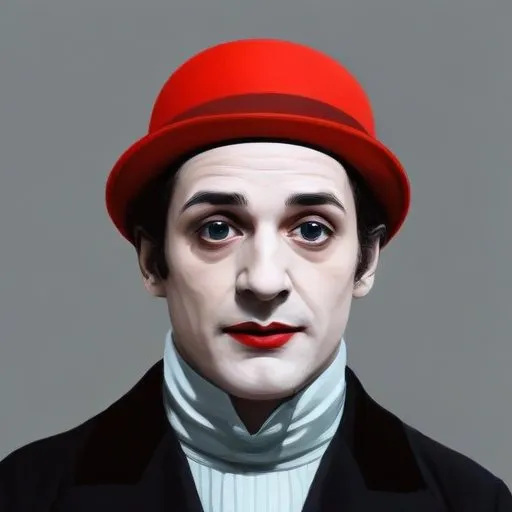
A Czech-French actor and mime who revolutionized the art of pantomime, creating the iconic character Pierrot, and is still celebrated for his silent, emotive performances.
Known as the "godfather of all Pierrots," JeanGaspard Deburau was a Bohemian-French mime who mesmerized audiences with his iconic character, Pierrot. From 1816 until his death in 1846, Deburau performed at the Théâtre des Funambules, leaving an indelible mark on the world of pantomime and beyond.
Born Jan Kapar Dvok on July 31, 1796, in Kolín, Bohemia (now the Czech Republic), Deburau was the son of a Czech servant and a former French soldier. His father, Philippe-Germain Deburau, was a showman who performed with a nomadic troupe, which introduced JeanGaspard to the world of entertainment at a young age.
In 1814, Philippe took his company to Paris, and two years later, they were hired by the manager of the Théâtre des Funambules. Cast lists indicate that Deburau appeared as Pierrot right away, but it wasn't until 1825 that he became the sole actor to claim the role.
Deburau's talent didn't go unnoticed for long. In 1828, influential writer Charles Nodier published a panegyric about him, which catapulted Deburau to fame. Journalist Jules Janin followed suit with a book of effusive praise, entitled Deburau, histoire du Théâtre à Quatre Sous, in 1832.
By the mid-1830s, Deburau was widely known and admired. Théophile Gautier wrote of his talent with enthusiasm, calling him "the most perfect actor who ever lived." Charles Baudelaire praised his style of acting, and Théodore de Banville dedicated poems and sketches to his Pierrot.
In 1832, Deburau took his pantomime to the Palais-Royal, but the performance ended in disaster. The occasion was a benefit performance of a pantomime that had been performed earlier with great success at the Funambules. Louis Pricaud, the chronicler of the Funambules, wrote that "never was there a greater disaster, a rout more complete for Deburau and his fellow artists."
Despite this setback, Deburau continued to perform and innovate, solidifying his position as a master of pantomime.
Deburau's impact on modern society is still felt today. His creation, Pierrot, has become an archetype of the romantic and melancholic artist. He inspired generations of artists, including Marcel Carné, who immortalized him in the 1945 film Children of Paradise.
Deburau's influence extends beyond the world of pantomime. He has been the subject of numerous poems, sketches, and writings by prominent artists and writers. His legacy continues to captivate audiences, ensuring that his art will endure for generations to come.
Deburau married and had two children, but little is known about his personal life beyond his professional career.
Born in 1889
A pioneer of silent film, he is renowned for his iconic "Little Tramp" character and groundbreaking work in writing, directing, and starring in his own movies.
Born in 1923
A legendary French performer who brought silence to life through pantomime, entertaining audiences worldwide with his iconic character "Bip the Clown" and inspiring generations of artists.
Born in 1910
A renowned French actor and director who pioneered the art of mime, bringing silence to life on stage and screen through his expressive gestures and poignant performances.
Born in 1888
A charming French entertainer, renowned for his debonair on-screen presence and iconic renditions of French cabaret songs, particularly in Hollywood musicals of the 1920s-1930s.
