


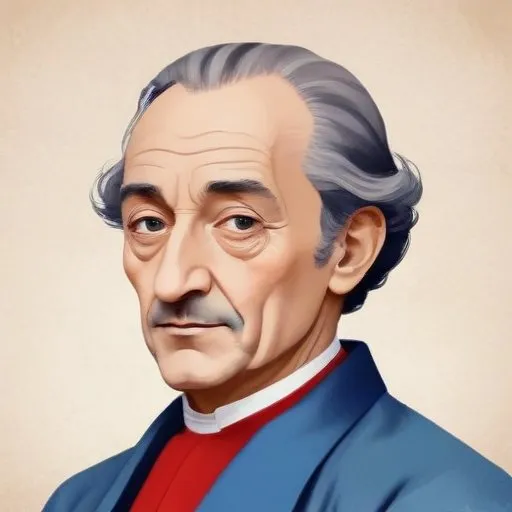
A 19th-century French philosopher and poet who developed a philosophy of individualism and hedonism, arguing that life's purpose is to seek pleasure and happiness. He's also known for his poetry, which explores themes of love, nature, and the human condition.
French philosopher and poet JeanMarie Guyau is best known for his profound contributions to moral philosophy, particularly in the realm of Epicureanism, and his thought-provoking writings that continue to influence contemporary thinkers. His life's work, though cut short by his untimely death at 33, left an indelible mark on the world of philosophy, poetry, and literature.
Born on October 28, 1854, Guyau was raised in an environment that fostered his intellectual curiosity. His stepfather, the notable French philosopher Alfred Fouille, introduced him to the works of Plato, Kant, and other prominent thinkers at a young age. This exposure enabled Guyau to attain his Bachelor of Arts degree at just 17 years old and translate the Handbook of Epictetus two years later.
Guyau's promising career was marked by early success, with his 1,300-page Mmoire winning a prize from the French Academy of Moral and Political Sciences in 1874. This achievement earned him a philosophy lectureship at the Lyce Condorcet. However, his life took a dramatic turn when he began suffering from pulmonary disease, which forced him to relocate to southern France. Despite his illness, Guyau continued to write prolifically, producing works that would cement his legacy in the world of philosophy and poetry.
Guyau's works primarily focused on analyzing and responding to modern philosophy, particularly moral philosophy. He is often regarded as an Epicurean and viewed English utilitarianism as a modern iteration of Epicureanism. While he admired the works of Jeremy Bentham and John Stuart Mill, he did not hesitate to subject their approaches to morality to rigorous scrutiny. His magnum opus, Esquisse d'une morale sans obligation ni sanction, remains a seminal work on moral theory, offering a nuanced critique of utilitarian and positivist schools.
Guyau's philosophical contributions continue to resonate with contemporary thinkers, influencing modern discussions on morality, ethics, and philosophy. His critiques of utilitarianism and positivism have inspired generations of scholars to reexamine the fundamental principles of moral philosophy. Moreover, his poetry and literature continue to captivate readers with their beauty and depth.
JeanMarie Guyau's life and works serve as a testament to the power of intellectual curiosity and the human spirit. His philosophical contributions, though often overlooked, continue to shape modern discussions on morality and ethics. As a poet and philosopher, Guyau's legacy extends beyond the realm of academia, inspiring generations to explore the complexities of human existence.
In a world where philosophical giants like Epicurus, Kant, and Mill dominate the landscape, Guyau's unique voice and perspective offer a refreshing alternative. His life's work, though tragically cut short, remains a powerful reminder of the importance of intellectual exploration and the pursuit of wisdom.
Born in 1859
A French philosopher and Nobel laureate who developed the concept of "duration" and emphasized the importance of intuition and experience in understanding reality. He's known for his philosophical ideas on time, consciousness, and the human experience.
Born in 1858
A founder of modern sociology, known for establishing the field and exploring the relationships between individuals and society, particularly in his work "Suicide".
Born in 1817
Creator of the iconic Larousse dictionaries, which have been a cornerstone of French language reference for over a century, providing authoritative definitions and explanations.
Born in 1856
A 19th-century French philosopher who developed a philosophical system that emphasized the role of intuition and the importance of individual experience, influencing existentialism and phenomenology.
