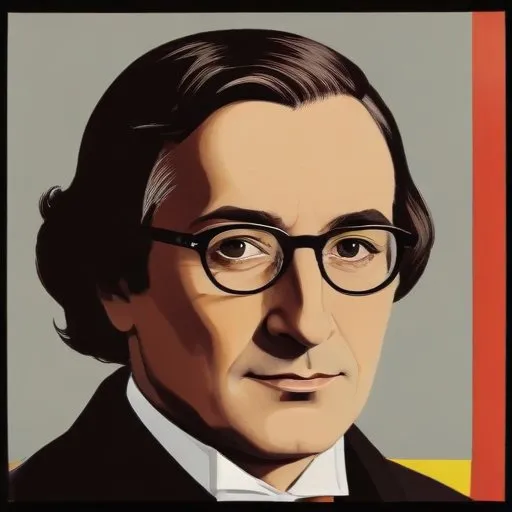
Jean-Pierre Van Rossem: The Enigmatic Master of Money and Mayhem
The Stock Market Guru Turned Convicted Fraudster
Jean-Pierre Van Rossem, a Belgian economist, and econometrician, is best known for his extraordinary rise and fall as a stock market guru, amassing an estimated fortune of $860 million. With his investment company Moneytron, he promised his high-profile clients, including the Belgian royal family, seemingly endless returns, only to be later convicted of fraud.
A Brilliant Mind with a Flair for the Dramatic
Born on May 29, 1945, Van Rossem's academic prowess was evident from an early age. He studied economics at Ghent University, winning the prestigious International Scholarship of Flanders prize for his thesis on the velocity of money. This accolade earned him a two-year scholarship to study econometrics under Nobel laureate
Lawrence Klein at the Wharton School of the University of Pennsylvania.
The Rise of Moneytron: A Formula for Success?
Van Rossem's investment company, Moneytron, became the epitome of success in the 1980s. With his charismatic persona and claims of having developed a model that could predict and beat the stock market, he attracted a clientele of wealthy Europeans, including the Belgian royal family. His lavish lifestyle, complete with a yacht, 108 Ferraris, and two Falcon 900 aircraft, was the envy of many.
A Formula One foray and a Dash of Controversy
In 1989, Van Rossem ventured into the world of Formula One, sponsoring and eventually becoming the majority owner of the Moneytron Onyx team. Although the team only managed a 10th-place finish in the constructors' championship, Van Rossem's enthusiasm was undeniable. However, his deal with Porsche to use their V12 engines was later canceled, leading to a dispute with the Footwork team.
The Fall of Moneytron: Fraud and Imprisonment
In 1991, Van Rossem's world came crashing down when he was sentenced to five years in prison for fraud. During his incarceration, he penned a personal diary, later published as "Gevangenisboek" (Prison Book). Van Rossem maintained that his fraudulent activities were a deliberate attempt to "fuck the system," a stance that sparked both outrage and intrigue.
A Legacy of Contrasts
Love him or loathe him, Jean-Pierre Van Rossem's turbulent life left an indelible mark on the world of finance and beyond. His meteoric rise and spectacular fall serve as a cautionary tale of the dangers of unchecked ambition and the blurred lines between genius and hubris.
Philosophical Musings and Memorable Quotes
- "My goal is not to make money, but to change the system."
- "I'm not a fraudster, I'm a revolutionary."
A Life of Highs and Lows
Jean-Pierre Van Rossem's remarkable journey serves as a reminder that even the most brilliant minds can be flawed by personal demons and a desire for power. As we reflect on his life, we are left to ponder the enigmatic figure behind the headlines – a man of unbridled enthusiasm, unwavering conviction, and an unrelenting desire to challenge the status quo.
FAQ
What is Jean-Pierre Van Rossems area of expertise?
Jean-Pierre Van Rossem is an expert in linguistics and language teaching, with a particular focus on pedagogy and language acquisition.
What are some of Jean-Pierre Van Rossems most influential publications?
Jean-Pierre Van Rossem has published several influential books and articles on language teaching and linguistics, including Language Teaching: A Pedagogical Approach and The Linguistics of Language Teaching.
How did Jean-Pierre Van Rossems work influence language teaching?
Jean-Pierre Van Rossems work has had a significant influence on language teaching, emphasizing the importance of pedagogy and learner-centered approaches in language instruction.
What awards did Jean-Pierre Van Rossem receive for his contributions to linguistics?
Jean-Pierre Van Rossem has received several awards for his contributions to linguistics, including the 2005 Language Teaching Award.
What is Jean-Pierre Van Rossems current role in academia?
Jean-Pierre Van Rossem is currently a professor emeritus of linguistics at the University of Ghent in Belgium.