


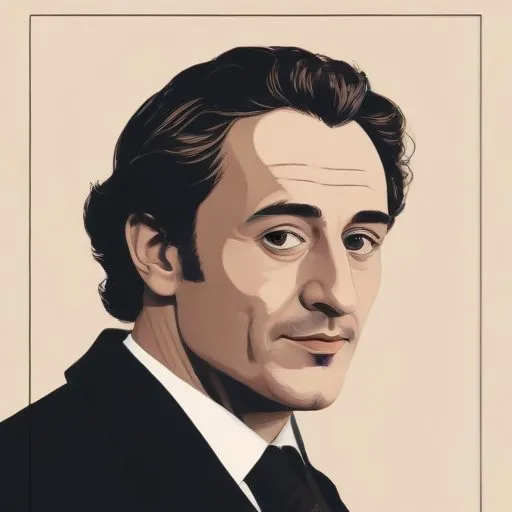
A French literary figure who wrote poetry, novels, and plays that often explored themes of love, nature, and social justice, leaving a mark on French literature.
Known for his unapologetic and provocative style, Jean Richepin was a French poet, novelist, and dramatist who left an indelible mark on the literary world. Through his works, he championed the cause of the marginalized and critiqued the bourgeoisie, earning him both accolades and controversy.
Born on February 4, 1849, in Médéa, French Algeria, Richepin was the son of an army doctor. His early years were marked by a sense of restlessness, which found expression in his later works. After completing his education, he served as a franctireur in the Franco-German War and later worked as an actor, sailor, and stevedore. This varied experience would later inform his writing, imbuing it with a sense of realism and authenticity.
Richepin's breakthrough came in 1876 with the publication of his poetry collection, La Chanson des gueux. This declaration of war against the bourgeoisie was met with both praise and censorship, leading to his imprisonment and fine for "outrage aux murs." The collection was later republished, minus the contentious pieces, which were published separately in Brussels in 1881.
Richepin's literary output was vast and varied, spanning poetry, novels, and plays. His poetry collections, such as L'Étoile, Les Caresses, Les Blasphèmes, and La Mer, showcased his unique voice, which blended elegance with provocation. His novels, including Les Morts bizarres, La Glu, and Miarka, explored themes of morality, psychology, and social commentary, often with a focus on the darker aspects of human nature.
His plays, many of which were produced at the Comédie-Française, are considered some of his best work. They often featured strong, complex female characters and explored themes of love, power, and redemption.
Richepin's unflinching commitment to his artistic vision often led to controversy and criticism. His works were frequently censored, and he was imprisoned for his provocative writings. Despite this, he remained true to his art, refusing to compromise his vision to appease the establishment.
Richepin's influence on modern society is multifaceted. His commitment to social justice and his critique of the bourgeoisie paved the way for future generations of writers and artists. His innovative style, which blended poetry and prose, influenced writers such as André Gide and Jean Cocteau.
Today, Richepin's legacy is that of a rebellious poet and writer who refused to be silenced. His works continue to inspire and provoke, offering a unique window into the tumultuous world of late 19th-century France. As a testament to his enduring influence, Richepin's works remain a powerful reminder of the importance of artistic freedom and the need to challenge the status quo.
Born in 1821
A pioneering realist novelist who crafted meticulous, psychologically nuanced portrayals of 19th-century French life, particularly in his iconic novel "Madame Bovary".
Born in 1840
A pioneering figure in naturalist literature, known for his influential novels that exposed social ills and championed reform, such as "Germinal" and "Nana".
Born in 1828
A visionary writer who pioneered the science fiction genre, crafting timeless tales of adventure and exploration that continue to inspire generations.
Born in 1850
A 19th-century French literary mastermind who crafted hauntingly beautiful short stories and novels that probed the human psyche, often with a dark, ironic twist. His works remain widely read and adapted today.
Born in 1840
A 19th-century literary mastermind, celebrated for his vivid depictions of French life and poignant short stories, particularly "The Last Lesson" and "Tartarin of Tarascon".
Born in 1842
A French poet and critic who pioneered Symbolism, experimenting with language and form to evoke emotions and ideas, and is known for his enigmatic and influential poetry.
Born in 1844
A leading figure of the French Symbolist movement, known for his sensual and emotive poetry that explored themes of love, beauty, and the human condition.
