


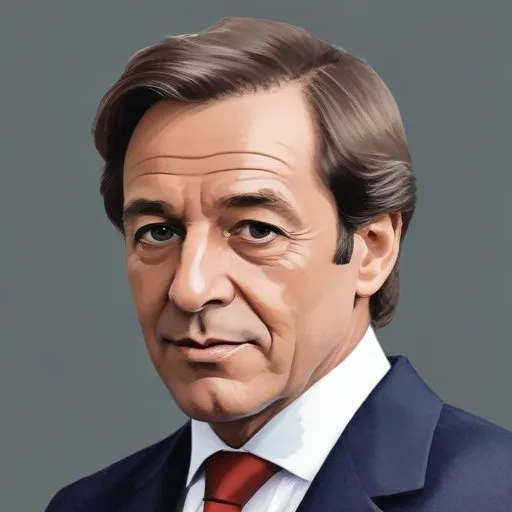
Jean d'Ormesson, a French writer, novelist, and intellectual, left an indelible mark on the literary world with his profound works and influential roles in esteemed institutions. As a prolific author of over 40 books, he was recognized for his outstanding contributions, earning the Grand Prix du roman from the Académie française in 1971 and later becoming the dean of the same institution.
Born on June 16, 1925, in Paris, Jean d'Ormesson was a count, descending from an aristocratic family. His father, André Lefèvre, Marquis of Ormesson, served as the French ambassador to Brazil, exposing Jean to a diverse upbringing in Bavaria, Romania, and Brazil. He spent time at the Château de Saint-Fargeau and was raised as a Roman Catholic, later describing himself as a secular Catholic.
Jean attended preparatory school at the Lycée Henri IV and was admitted to the École normale supérieure, subsequently passing the agrégation in Philosophy.
Jean d'Ormesson's writing career spanned multiple genres, including novels, plays, and essays. Although his initial novels, such as L'amour est un plaisir, Un amour pour rien, and Les illusions de la mer, did not garner significant attention, his breakthrough came with La Gloire de l'Empire, which earned him the Grand Prix du roman in 1971.
Another notable work, Au plaisir de Dieu, was adapted into a television film. In 2015, his work was published in the prestigious Bibliothèque de la Pléiade, a testament to his literary prowess.
Aside from his writing, Jean d'Ormesson held influential positions in esteemed institutions. He served as the Secretary-General of the International Council for Philosophy and Humanistic Studies at UNESCO and directed the conservative French newspaper Le Figaro from 1974 to 1979.
In 1973, he was elected a member of the Académie française, taking seat 12, following the death of Jules Romains. Upon the death of Claude Lévi-Strauss in 2009, d'Ormesson became the Dean of the Académie, its longest-serving member.
Jean d'Ormesson's philosophical views were rooted in his Catholic upbringing, but he later identified as a secular Catholic. His work reflects a profound exploration of humanism, morality, and the search for meaning.
Through his writing and institutional roles, d'Ormesson left an indelible mark on French literature and intellectual circles. His influence extends to the realms of philosophy, humanism, and journalism, inspiring future generations of writers, thinkers, and scholars.
Jean d'Ormesson's remarkable life and career serve as a testament to the power of intellectual curiosity, literary genius, and dedication to the pursuit of human understanding.
Born in 1916
A French lawyer and politician who served as the 21st President of France, known for his socialist policies and role in shaping the European Union. He's also remembered for his controversial past and complex personality.
93 Years Old
A French military officer and statesman who served as President of France from 1995 to 2007, known for his opposition to the US-led invasion of Iraq and his efforts to strengthen the European Union.
71 Years Old
The 23rd President of France, a lawyer-turned-politician who led the country from 2007 to 2012, known for his efforts to reform the EU and his controversial domestic policies.
72 Years Old
The 24th President of France, a key European leader who implemented significant economic reforms and played a crucial role in shaping the European Union's policies, particularly during the European sovereign-debt crisis.
48 Years Old
The 25th President of France is a centrist leader who has been a driving force behind the European Union and a strong advocate for climate action. He has implemented various reforms to modernize the French economy and has been a key player in international diplomacy.
Born in 1902
Led the Free French Forces during WWII, playing a crucial role in the liberation of Paris and ultimately contributing to the Allied victory.
95 Years Old
A pioneer of French New Wave cinema, known for experimental and provocative films that challenged traditional narrative structures and explored themes of politics, philosophy, and social commentary.
