


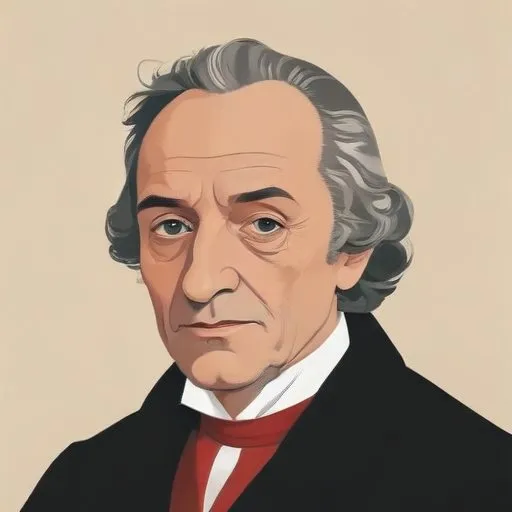
A 17th-century French moralist and satirist, known for his witty and insightful writings on human nature, morality, and society, offering a timeless critique of his era's social ills.
Jean de La Bruyère, a 17th-century French philosopher and moralist, left an indelible mark on the literary world with his biting satire and penetrating insight into human nature. His works, characterized by wit, irony, and a deep understanding of the human condition, continue to captivate readers to this day.
Born in Paris in 1645, La Bruyère came from a middle-class family with a rich history of Catholicism. His family's legacy, marked by associations with the Catholic League, would later influence his writing and perspectives. Educated by the Oratorians and at the University of Orléans, La Bruyère was well-versed in the arts and letters, which would serve as the foundation for his future literary endeavors.
In 1673, La Bruyère acquired a post in the revenue department at Caen, a position that provided him with financial security and social status. This opportunity led to his introduction to the renowned orator and tutor, Jacques Benigne Bossuet. Through Bossuet, La Bruyère gained access to the royal court and became tutor to the grandson of Louis, Prince of Condé, as well as to the prince's child-bride, Mlle de Nantes.
La Bruyère's most celebrated work, Les Caractères, a collection of 1,080 aphorisms and character studies, showcases his mastery of satire and social commentary. First published in 1688, the book critiques the excesses and follies of the aristocracy and clergy, sparking controversy and earning him both admiration and censure. Les Caractères remains a landmark work of French literature, offering a scathing yet brilliant portrayal of humanity.
La Bruyère's writing not only reflected the social and cultural nuances of his time but also influenced the development of modern Western thought. His satirical works foreshadowed the Enlightenment's critiques of absolute power and the rise of reason. Furthermore, his emphasis on moral and philosophical inquiry paved the way for thinkers like Voltaire and Rousseau.
La Bruyère's biting satire and unabashed critiques of the powerful earned him both acclaim and censure. His works sparked controversy among the aristocracy and clergy, who saw his writings as a threat to their authority. Despite the controversy, La Bruyère's reputation as a master satirist and philosopher endures, and his works continue to fascinate readers with their piercing insight and wit.
La Bruyère's philosophical contributions revolve around his critiques of human nature, morality, and the role of reason in society. He believed that human beings were flawed creatures, prone to excess and folly, and that reason was the only means to achieve true wisdom. Through his writings, he advocated for a more just and equitable society, encouraging readers to question authority and challenge the status quo.
La Bruyère's life was marked by significant relationships and encounters. His association with Bossuet and the royal court provided him with access to the highest echelons of society. His tutelage of the prince's grandson and child-bride, Mlle de Nantes, allowed him to observe and critique the excesses of the aristocracy firsthand.
La Bruyère's literary legacy extends far beyond his own time and country. His satirical works have inspired countless writers, from Voltaire to Swift, and continue to resonate with readers today. As a moralist, philosopher, and satirist, Jean de La Bruyère left an indelible mark on the literary canon, forever changing the way we think about humanity, morality, and the role of reason in society.
In conclusion, Jean de La Bruyère's remarkable life and works continue to captivate readers with their piercing insight, wit, and biting satire. As a philosopher, moralist, and satirist, he left an indelible mark on the literary world, forever changing the way we think about humanity and society.
Born in 1712
A pioneering thinker who shaped modern democracy and education with his ideas on social contracts, general will, and the importance of early childhood education. His writings influenced the French Revolution and modern political thought.
Born in 1694
A witty and insightful 18th-century writer and philosopher who used satire to critique societal norms and advocate for reason, tolerance, and human rights.
Born in 1689
A French lawyer and philosopher who developed the concept of separation of powers, which divides a government into legislative, executive, and judicial branches to prevent abuse of power. His ideas greatly influenced modern democracy.
Born in 1533
A 16th-century French philosopher and writer who pioneered the essay as a literary form, exploring human nature, morality, and the human experience through personal anecdotes and philosophical musings.
Born in 1622
A 17th-century master of comedy, he penned witty plays that satirized the French aristocracy, leaving a lasting impact on Western theater. His works remain widely performed and adapted today.
Born in 1606
A 17th-century French mastermind behind iconic plays like "Le Cid" and "Horace", known for pioneering the classical French tragedy genre.
