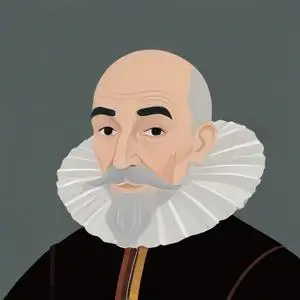
Michel de Montaigne

Michel de Montaigne

Michel de Montaigne was born on February 28th, 1533

Full name: Michel Eyquem de Montaigne
Born: February 28, 1533
Died: September 13, 1592
Nationality: French
Profession: Philosopher, writer
Notable works: Essays
Influence: Renaissance humanism
Education: University of Toulouse

A 16th-century French philosopher and writer who pioneered the essay as a literary form, exploring human nature, morality, and the human experience through personal anecdotes and philosophical musings.

Timeline
1533
Born in Saint-Michel-de-Montaigne, France
Michel de Montaigne was born in Saint-Michel-de-Montaigne, France, to a noble family.
1557
Became a Counsellor
Montaigne became a counsellor to the Parliament of Bordeaux, marking the beginning of his political career.
1570
Published Essais
Montaigne published the first volume of his famous essays, Essais, which explored his thoughts on philosophy, morality, and human nature.
1580
Travelled to Italy
Montaigne embarked on a journey to Italy, where he spent over a year, observing the culture and society.
1592
Died in Château de Montaigne
Montaigne died in his Château de Montaigne, France, leaving behind a legacy as one of the greatest philosophers and writers of the Renaissance.
Michel de Montaigne

Michel de Montaigne Quiz

What literary form did Michel de Montaigne pioneer?

Score: 0/5
FAQ
What is Michel de Montaignes most famous work?
Michel de Montaignes most famous work is the collection of essays titled Essais, which explores various aspects of human nature, morality, and culture.
What is Montaignes writing style?
Montaignes writing style is characterized by its conversational tone, self-deprecation, and introspection. He pioneered the essay form, which has influenced countless writers and thinkers.
What were Montaignes views on education?
Montaigne believed that education should be tailored to the individuals needs and interests. He advocated for a more flexible and experiential approach to learning, rather than rote memorization.
How did Montaignes experiences shape his worldview?
Montaignes experiences in the French Wars of Religion and his encounters with indigenous peoples during his travels shaped his views on tolerance, diversity, and the complexity of human nature.
What is Montaignes impact on Western philosophy?
Montaignes influence on Western philosophy is immense, as he helped to establish the essay form and challenged traditional notions of morality, truth, and knowledge. His ideas have influenced thinkers like René Descartes and Voltaire.

Related People:

Francis Bacon

Born in 1561

A 16th-17th century Renaissance figure who pioneered the scientific method and empiricism, and served as a prominent government official.

Jean-Jacques Rousseau

Born in 1712

A pioneering thinker who shaped modern democracy and education with his ideas on social contracts, general will, and the importance of early childhood education. His writings influenced the French Revolution and modern political thought.

Voltaire

Born in 1694

A witty and insightful 18th-century writer and philosopher who used satire to critique societal norms and advocate for reason, tolerance, and human rights.

John Locke

Born in 1632

A 17th-century thinker who laid the groundwork for modern democracy, arguing that governments derive their power from the people and that individuals have inherent rights to life, liberty, and property.

Immanuel Kant

Born in 1724

Developed influential philosophical frameworks, such as the Critique of Pure Reason, that shaped modern Western thought on ethics, morality, and human understanding.

Blaise Pascal

Born in 1623

A 17th-century genius who made major contributions to mathematics, physics, and philosophy, inventing the mechanical calculator and developing the theory of probability. His writings also explored the human condition and faith.

Born in 1530

A 16th-century French philosopher and judge who wrote about the nature of power and obedience, arguing that people can free themselves from tyranny by simply withdrawing their consent. His ideas have influenced thinkers and revolutionaries for centuries.