


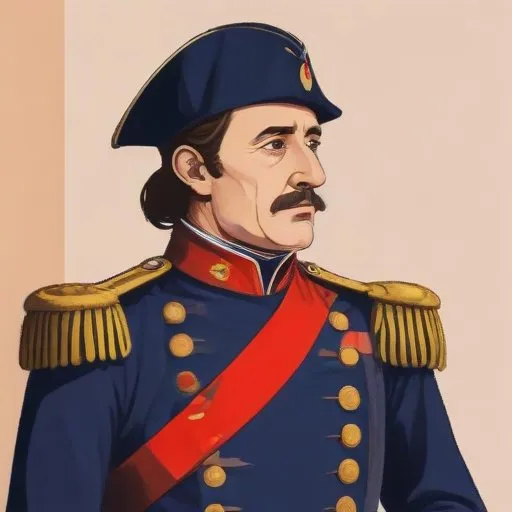
Jean Étienne Valluy was a renowned French general who played a pivotal role in shaping the course of modern history, leaving an indelible mark on the world. He is best known for his unwavering commitment to the French military, his leadership during World War I and II, and his contributions to the French colonial empire.
Valluy was born on May 15, 1899, in Rivede-Gier, Loire, to Claude Claudius Valluy and Jeanne Adrienne Cossanges. His early life was marked by a strong sense of patriotism and a desire to serve his country, which led him to enroll in the military academy of Saint-Cyr in 1917.
Upon graduating as an Aspirant in July 1918, Valluy joined the Régiment d'Infanterie Coloniale du Maroc (RICM), where he would go on to fight in the final months of World War I. His bravery and selflessness during this period earned him the Croix de Guerre, the first of many citations he would receive throughout his illustrious career.
At the outbreak of World War II, Valluy held the rank of Major and served as operations officer with the XXI Corps. Captured by the Germans, he was released in 1941 and went on to become a brigadier general in the First Army by 1944. In March 1945, he was appointed commander of the 9th Colonial Infantry Division (9th DIC).
In the aftermath of World War II, Valluy played a crucial role in the French colonial government's efforts to reassert its control over Indochina. In 1946, he replaced Philippe Leclerc de Hauteclocque as the commander of French Forces in Indochina, where he navigated the complex and often treacherous landscape of post-war politics.
In November 1946, a series of events would test Valluy's leadership and have far-reaching consequences for the region. The seizure of a French patrol boat by the Viet Minh, followed by rioting in Haiphong, resulted in the deaths of 240 Vietnamese and 7 French nationals. Valluy's response, which involved ordering Colonel Pierre-Louis Debs to take control of Haiphong and quell the uprising, has been the subject of much debate and criticism.
Jean Étienne Valluy's legacy is complex and multifaceted, reflecting the tumultuous times in which he lived and served. While his commitment to the French military and colonial empire remains unwavering, his actions during the Indochina conflict have been subject to scrutiny and criticism. Nevertheless, his bravery, strategic thinking, and leadership abilities have earned him a place among the most notable French generals of the 20th century.
Through his remarkable life and career, Jean Étienne Valluy left an indelible mark on modern history, shaping the course of international relations and the fate of nations. His legacy serves as a testament to the complexities of human nature and the enduring power of leadership.
Born in 1890
A French military leader who led the Free French Forces during WWII and later became President of France, known for his strong leadership and vision for a unified Europe.
Born in 1902
Led the Free French Forces during WWII, playing a crucial role in the liberation of Paris and ultimately contributing to the Allied victory.
Born in 1888
A highly decorated military leader who played a crucial role in World War II, particularly in the Italian Campaign, and later became a prominent figure in French politics.
Born in 1889
A French general who led the First Army to victory in World War II, liberating Marseille and playing a key role in the Allied invasion of Germany. He's also known for his post-war efforts to modernize the French military.
Born in 1882
A French lawyer and politician who served as the 17th President of France, known for his role in shaping the country's post-war constitution and politics. He played a key part in establishing the Fifth Republic.
Born in 1884
The first President of the Fourth Republic, serving from 1947 to 1954, known for his role in post-war France's reconstruction and establishment of the European Coal and Steel Community.
Born in 1916
A French lawyer and politician who served as the 21st President of France, known for his socialist policies and role in shaping the European Union. He's also remembered for his controversial past and complex personality.
