


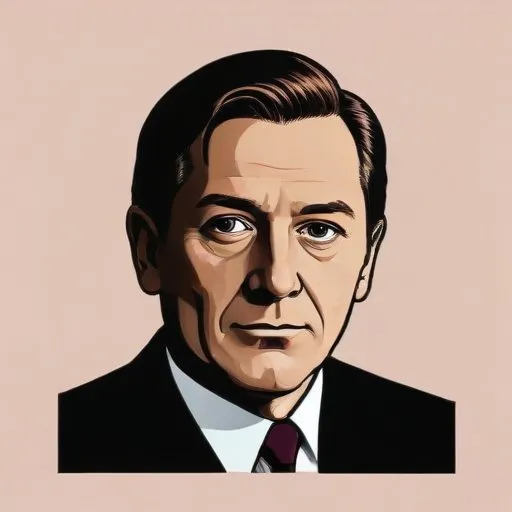
A lawyer and politician who served as a U.S. Representative from New York during the early 20th century, known for his progressive policies and advocacy for labor rights.
Jerome Francis Donovan, a stalwart of American politics, is best known for serving two terms as a United States Representative from New York from 1918 to 1921. During his time in office, he left an indelible mark on the country, paving the way for future generations of politicians.
Born on February 1, 1872, in New Haven, Connecticut, Donovan attended the public schools and later graduated from Yale Law School in 1894. He was admitted to the bar and commenced practice in New Haven, laying the foundation for a long and distinguished career in law and politics.
Donovan's sense of duty and patriotism led him to join the Connecticut Army National Guard during the Spanish-American War. He served as captain of Company C, 2nd Regiment from 1897 to 1903 and later became active in the United Spanish War Veterans.
A Democrat at heart, Donovan's political career spanned several decades. He was a member of the Connecticut House of Representatives from 1901 to 1903 and later served as New Haven City Auditor from 1902 to 1904. From 1904 to 1906, he was Secretary of the New Haven Civil Service Commission.
In 1910, Donovan moved to New York City, where he continued to practice law. From 1911 to 1913, he served as a state Special Deputy Attorney General. His dedication to public service led to his election to the 65th Congress in a special election in 1918, filling the vacancy caused by the resignation of George Murray Hulbert. Later that year, he was elected to a full term in the 66th Congress, serving in the House from March 5, 1918, to March 4, 1921.
After leaving Congress, Donovan served as Deputy Attorney General for the New York State Department of Labor from 1923 to 1924. He then resumed the practice of law in New York City until his retirement in 1936.
In retirement, Donovan resided in Stony Creek, Connecticut, where he passed away on November 2, 1949. He was laid to rest at St. Bernard's Cemetery in New Haven, leaving behind a legacy of service and dedication to his country.
Born in 1858
A pioneering leader who championed progressive reforms, trust-busting, and conservation, earning a Nobel Peace Prize for mediating the Russo-Japanese War. He's also famous for his rugged outdoorsmanship and "big stick" diplomacy.
Born in 1857
The 27th President of the United States was a lawyer and jurist who served as the only person to hold the offices of President and Chief Justice of the United States. He's known for his significant contributions to the country's judicial system.
Born in 1856
The 28th President of the United States, a Nobel Peace Prize winner, and a historian who played a key role in shaping international relations and global governance after World War I. He's most known for his idealistic vision of a League of Nations and his efforts to promote peace and diplomacy.
Born in 1865
The 29th President of the United States, a journalist-turned-politician, led the country through a period of post-war prosperity and scandalous corruption. He's infamous for his administration's numerous scandals and his own extramarital affairs.
Born in 1872
The 30th President of the United States, a lawyer and politician, led the country through a period of economic prosperity and limited government intervention, earning the nickname "Silent Cal" for his frugal and humble nature. He's most known for his minimalist approach to governance and tax cuts.
Born in 1874
The 31st President of the United States was a humanitarian and politician who led the country through the Great Depression and is known for his humanitarian efforts and infrastructure development. He's also infamous for his inability to mitigate the economic crisis.
Born in 1882
Led the United States through the Great Depression and World War II, implementing a series of reforms known as the New Deal and helping to establish the country as a global superpower.
Born in 1884
The 33rd President of the United States, a strong leader who made tough decisions, including dropping atomic bombs on Japan and establishing the Marshall Plan to rebuild Europe after WWII.
