


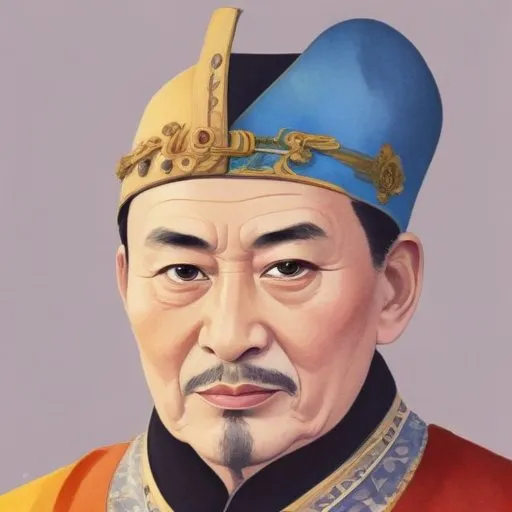
Ruling China from 1521 to 1566, this emperor oversaw a period of cultural and economic growth, while also being known for his tyrannical behavior and persecution of officials.
The Jiajing Emperor, also known as Zhu Houcong, is remembered as the 12th emperor of the Ming dynasty, reigning from 1521 to 1567. His unexpected rise to power, following the death of his cousin, the Zhengde Emperor, marked the beginning of a tumultuous reign, characterized by controversy, transformation, and a thirst for power.
The early years of Jiajing's reign were marred by the Great Rites Controversy, a bitter dispute between the emperor and his officials over the method of legalizing his accession. The controversy raged on for three years, resulting in the banishment or execution of many of the emperor's opponents, ultimately solidifying his grip on power.
In 1542, the Jiajing Emperor made the unusual decision to relocate from the Forbidden City to the West Park, a sprawling complex of palaces and Taoist temples in the heart of Beijing. This move was inspired by the Taoist belief in the Land of Immortals, and allowed the emperor to surround himself with a trusted coterie of eunuchs, Taoist monks, and loyal advisers.
The Jiajing Emperor's inner circle was comprised of influential figures, including Grand Secretaries Zhang Fujing, Xia Yan, Yan Song, and Xu Jie, who played a crucial role in shaping the emperor's policies and decision-making. This tight-knit group of advisors enabled the emperor to maintain a firm grasp on power and implement his vision for the empire.
During the early years of Jiajing's reign, the borders of the empire remained relatively peaceful, with the Mongols embroiled in internal conflicts. However, as Altan Khan unified the Mongol tribes, tensions began to rise, and the Jiajing Emperor was forced to adopt a more assertive approach to diplomacy and border defense.
The Jiajing Emperor's reign was marked by controversy, transformation, and a relentless pursuit of power. While his reign was not without its challenges, he successfully navigated the treacherous waters of imperial politics, leaving a lasting legacy that would shape the course of the Ming dynasty.
Born in 1130
A leading figure in Confucianism, he synthesized Confucian classics into a coherent philosophical system, influencing East Asian thought for centuries. His teachings emphasized moral cultivation and self-reflection.
