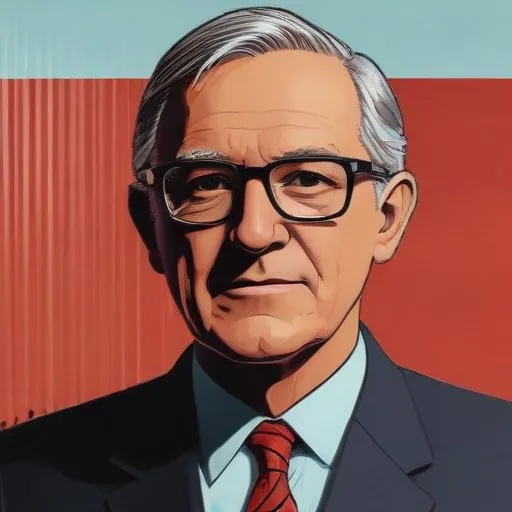
Jim Cairns: The Australian Politician Who Shaped the Nation's Politics
A Leader in the Labor Movement
Jim Cairns is best known for his prominent role in the Australian Labor movement during the 1960s and 1970s. As the fourth Deputy Prime Minister of Australia, he served under the Whitlam government and made significant contributions to the country's politics.
A Passionate Advocate Against the Vietnam War
Cairns was a vocal leader in the movement against Australian involvement in the Vietnam War. His strong stance against the war earned him recognition and respect from many Australians. His advocacy played a significant role in shaping the country's foreign policy and its stance on international conflicts.
A Life of Public Service
Born on October 4, 1914, in Carlton, Melbourne, Cairns grew up in a working-class family. His early life was marked by challenges, including his father's desertion and his mother's struggles to provide for the family. Despite these difficulties, Cairns was an excellent student and athlete, winning the broad jump championship at Northcote High School.
A Career in Politics
Cairns joined the Police Force in 1933 and eventually became a detective. However, his passion for politics led him to pursue a career in public service. He was elected to the Australian House of Representatives in 1955 and went on to hold various leadership positions, including Deputy Prime Minister and Treasurer.
A Prolific Writer and Economist
Cairns was not only a skilled politician but also a prolific writer and economist. He wrote extensively on economic and social issues, self-publishing and self-marketing many of his works. His writings provide valuable insights into his thoughts on politics, economics, and social policy.
A Controversial Figure
Cairns' personal life was not without controversy. His affair with Junie Morosi, a staffer in his office, sparked a media frenzy and led to his resignation as Deputy Prime Minister. However, Cairns remained unapologetic about his actions, citing his commitment to living life on his own terms.
A Lasting Legacy
Jim Cairns' legacy is complex and multifaceted. He was a champion of social justice, a passionate advocate for peace, and a dedicated public servant. Despite the controversies that surrounded him, Cairns' contributions to Australian politics and society are undeniable. He passed away on October 12, 2003, but his legacy continues to inspire and influence generations of Australians.
Quotes and Memorable Sayings
- "I believe that politics is a way of living, not just a way of making a living."
- "The only way to achieve real change is to challenge the status quo."
Historical Context and Legacy
Cairns' life and career were shaped by the tumultuous times in which he lived. From the Great Depression to the Vietnam War, he navigated the complexities of Australian politics with courage and conviction. His legacy serves as a reminder of the importance of standing up for one's beliefs and fighting for what is right, even in the face of adversity.
FAQ
What was Jim Cairns role in Australian politics?
Jim Cairns was an Australian economist and politician who served as the 4th Deputy Prime Minister of Australia from 1974 to 1975, and was a key figure in the Whitlam government.
How did Jim Cairns contribute to Australian economic policy?
Jim Cairns contributed to Australian economic policy by advocating for reforms to address poverty, inequality, and unemployment, and by working to promote economic development and growth.
What was Jim Cairns relationship with Gough Whitlam?
Jim Cairns had a close relationship with Gough Whitlam, serving as his Deputy Prime Minister and working closely with him to implement the Whitlam governments policies and reforms.
How did Jim Cairns respond to the challenges facing Australia?
Jim Cairns responded to the challenges facing Australia by advocating for policies to address poverty, inequality, and social unrest, and by working to promote economic growth and development.
What is Jim Cairns legacy in Australian politics?
Jim Cairns legacy in Australian politics is one of commitment to social justice, economic reform, and democratic values, as he is remembered as a key figure in the Whitlam government and a champion of progressive politics.