


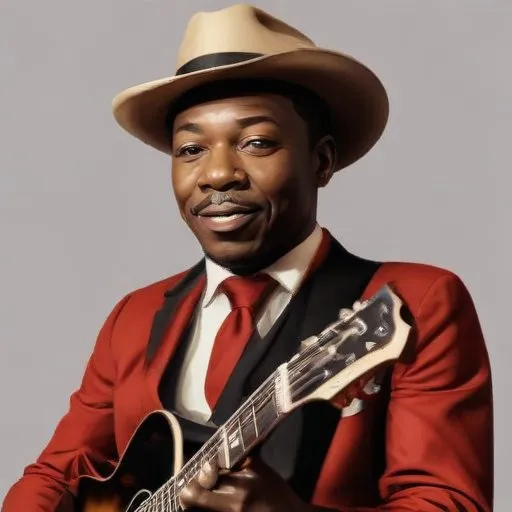
A blues musician known for his distinctive guitar playing and soulful vocals, influencing many rock and roll artists. He was a key figure in the development of Chicago blues.
Jimmy Rogers, a pioneering American blues singer, guitarist, and harmonica player, is best known for his work as a member of Muddy Waters' band in the early 1950s and his soulful contributions to the Chicago blues scene. With his distinctive vocals and masterful instrumentation, Rogers left an indelible mark on the genre, earning him a reputation as one of the most influential blues musicians of all time.
Born Jay or James Arthur Lane on June 3, 1924, in Ruleville, Mississippi, Rogers was raised in Atlanta and Memphis before adopting his stepfather's surname. He developed a passion for music at a young age, learning to play the harmonica with his childhood friend Snooky Pryor and later taking up the guitar as a teenager.
Rogers' professional music career began in East St. Louis, Illinois, where he played with notable musicians like Robert Lockwood, Jr. In the mid-1940s, he relocated to Chicago, where he recorded as a harmonica player and singer for the Harlem record label. Although his name did not appear on the record, which was mislabeled as the work of Memphis Slim and His Houserockers, Rogers' talent did not go unnoticed.
In 1947, Rogers joined forces with Muddy Waters and Little Walter, forming Waters' first band in Chicago. This iconic trio, often referred to as the Headcutters or Headhunters, defined the sound of the nascent Chicago blues style, more specifically, the South Side Chicago blues. During this period, Rogers recorded several sides of his own, but they remained unreleased until later.
Rogers achieved success as a solo artist in 1950 with the song "That's All Right," released by Chess Records. This breakthrough led to several successful records released by Chess, many of which featured either Little Walter or Big Walter Horton. His solo career flourished until the late 1950s, when he withdrew from the music industry.
In the 1970s, Rogers returned to recording and touring, reigniting his passion for the blues. His legacy continued to grow, with his music influencing generations of blues and rock musicians. Rogers' contributions to the Chicago blues scene have been recognized with numerous awards and accolades, including his induction into the Blues Hall of Fame.
Rogers' music remains a testament to his innovative spirit and dedication to the blues. His influence can be heard in the work of many notable musicians, from Eric Clapton to The Rolling Stones. Jimmy Rogers' legacy continues to inspire and captivate audiences, solidifying his place as a true pioneer of the Chicago blues.
Rogers passed away on December 19, 1997, leaving behind a rich musical heritage. Throughout his life, he remained humble and true to his art, never straying from his blues roots. Rogers' personal milestones, including his induction into the Blues Hall of Fame, serve as a testament to his enduring impact on the music world.
Rogers believed that the blues was not just a genre of music, but a way of life. He saw the blues as a means to express the struggles and triumphs of the human experience. Through his music, Rogers conveyed a sense of authenticity, honesty, and emotional depth that continues to resonate with listeners today.
Jimmmy Rogers' influence extends far beyond the blues community. His music has inspired countless rock, R&B, and jazz musicians, shaping the sound of modern popular music. Rogers' contributions to the Chicago blues scene have also had a profound impact on the city's cultural identity, cementing its reputation as a hub for blues and jazz innovation.
Born in 1913
A blues legend who electrified the genre with his signature sound and influential hits like "Hoochie Coochie Man" and "Mannish Boy", shaping the course of rock 'n' roll .
Born in 1910
A blues legend who electrified audiences with his powerful voice and guitar playing, creating a unique sound that influenced many rock and roll artists.
Born in 1926
Rock 'n' roll pioneer who wrote and performed iconic hits like "Johnny B. Goode" and "Maybellene", blending country, blues, and rhythm to create a unique sound.
97 Years Old
A rock 'n' roll pioneer who blended blues, R&B, and rock to create a unique sound, influencing many famous musicians with his innovative guitar playing and songwriting style.
96 Years Old
A pioneering blues harmonica virtuoso and soulful singer, known for revolutionizing the instrument's role in blues music with his innovative, amplified playing style. He's a legendary figure in blues history, influencing many famous musicians.
Born in 1915
A legendary blues musician who wrote over 500 songs, including iconic hits like "Hoochie Coochie Man" and "Little Red Rooster", and is often referred to as the "father of modern Chicago blues".
Born in 1917
A legendary blues musician who mesmerized audiences with his unique, boogie-woogie guitar style and soulful vocals, creating a distinctive sound that influenced many rock and roll artists.
88 Years Old
A legendary blues singer known for her powerful, soulful voice and classic hits like "At Last" and "I'd Rather Go Blind".
