


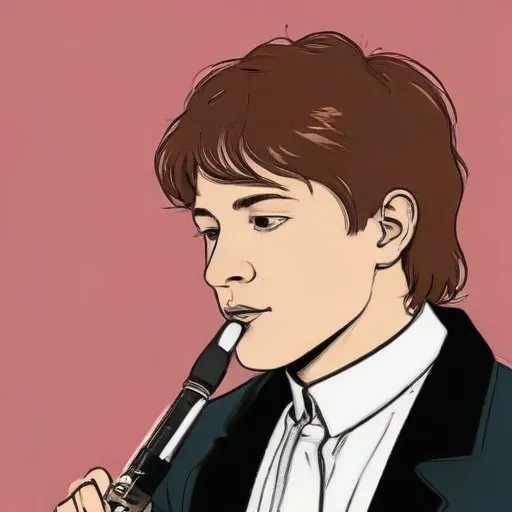
A renowned flautist, composer, and conductor, he was a prominent figure in Danish musical life, known for his virtuosic performances and compositions that blended classical and folk elements.
Known for his mesmerizing flute performances and compositions, Joachim Andersen was a Danish flutist, conductor, and composer who left an indelible mark on the music world. Born in Copenhagen on April 29, 1847, Andersen's exceptional talent and dedication to his craft earned him recognition as one of the best flutists of his time.
Andersen's musical journey began at a young age, with his father, Christian Joachim Andersen, a renowned flutist, serving as his first teacher. Alongside his brother Viggo, Joachim received rigorous training, which prepared him for his debut performance at the Danish theater, Casino, accompanied by harpist Frantz Pnitz.
At just 13 years old, Andersen became the first flutist in a musical orchestra in Copenhagen, conducted by the illustrious Niels Gade. This opportunity paved the way for his future success, and in 1869, he was employed by the Royal Danish Orchestra as a flutist.
In 1878, Andersen's quest for greater challenges led him to Saint Petersburg, where he joined the St. Petersburg Philharmonic Orchestra. His talent soon took him to Berlin, where he became a solo flutist in Bilses Band and the Royal German Opera. In 1882, he co-founded the Berlin Philharmonic, alongside 53 other musicians.
Andersen's leadership skills and musical genius eventually led him to take on conducting assignments. He conducted over eight summers of daily concerts in Scheveningen, showcasing his mastery of orchestral direction.
In 1893, Andersen was forced to resign due to a paralysis in his tongue, but this did not hinder his passion for music. He returned to Copenhagen, where he dedicated himself to composition and founded an orchestra school in 1897. As leader and professor in conducting, he nurtured the next generation of musicians until his passing in 1905.
In recognition of his outstanding contributions to music, Andersen was knighted by King Christian IX of Denmark to the Order of the Dannebrog in 1905.
Joachim Andersen's remarkable journey is a testament to his unwavering dedication to music and his unrelenting pursuit of excellence. His contributions to the flute repertoire and his influential teaching continue to inspire generations of musicians.
Born in 1865
A renowned Danish musician who excelled as a violinist, composer, and conductor, creating iconic works that blended Romantic and Modernist styles. His symphonies and concertos are still widely performed today.
Born in 1875
A renowned viola player and conductor, he was a leading figure in the development of modern orchestral performance, particularly in the interpretation of French and Russian music.
Born in 1875
A virtuosic violinist and composer, renowned for his mesmerizing performances and exquisite compositions that blended classical and romantic styles. His music still enchants audiences today.
Born in 1901
A virtuosic violinist renowned for his technical perfection, tone, and phrasing, revolutionizing the art of violin playing through his recordings and teaching.
Born in 1902
A virtuosic cellist renowned for his expressive tone, technical mastery, and iconic recordings of classical music's most beloved works. His playing style continues to inspire generations of cellists.
Born in 1903
A renowned cellist and educator, he was a master of his craft, known for his expressive playing style and dedication to teaching and mentoring future generations of musicians.
Born in 1904
A renowned viola virtuoso and dedicated teacher, celebrated for his expressive performances and influential pedagogy that shaped generations of string players.
Born in 1916
A renowned violinist and conductor who mesmerized audiences with his virtuosic performances and collaborations with esteemed musicians, also a passionate advocate for music education.
