


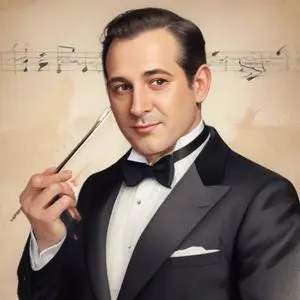
A renowned viola player and conductor, he was a leading figure in the development of modern orchestral performance, particularly in the interpretation of French and Russian music.
Pierre Monteux is renowned for being one of the most influential conductors of the 20th century, known for premiering some of the most iconic works of modern classical music, including Stravinsky's The Rite of Spring and Debussy's Jeux. With a career spanning over half a century, Monteux left an indelible mark on the world of classical music, mentoring some of the most illustrious conductors of our time.
Born on April 4, 1875, in Paris, France, Monteux began his musical journey at a young age, studying violin and viola at the Conservatoire de Paris. He went on to play in various orchestras, eventually becoming an occasional conductor before gaining his first regular conducting engagement in 1907.
Monteux's big break came when he joined Sergei Diaghilev's Ballets Russes company, conducting world premieres of groundbreaking works such as Petrushka, The Nightingale, and Daphnis et Chloé. This period cemented his reputation as a master conductor, and he went on to direct some of the world's most esteemed orchestras, including the Boston Symphony Orchestra, Amsterdam Concertgebouw Orchestra, and San Francisco Symphony.
In 1932, Monteux founded a conducting class in Paris, which evolved into a summer school that attracted students from around the world. After moving to the United States in 1942, he established a school for conductors and orchestral musicians in Hancock, Maine. Notable alumni of his schools include Lorin Maazel, Igor Markevitch, Neville Marriner, Seiji Ozawa, André Previn, and David Zinman, among others.
Despite his aversion to recording, Monteux left behind a substantial discography, showcasing his interpretations of French and German repertoire. He was particularly fond of Brahms' music, and his performances of the composer's symphonies are still revered today.
Pierre Monteux's influence on modern classical music is immeasurable. Through his performances, recordings, and mentorship, he shaped the sound of generations to come, leaving behind a rich legacy that continues to inspire musicians and audiences alike.
Born in 1882
A Russian master of music, renowned for revolutionizing classical music with bold, avant-garde compositions that blended traditional and modern elements. His iconic works, such as "The Rite of Spring," continue to inspire and influence artists across genres.
Born in 1872
A visionary who revolutionized ballet by combining avant-garde music, art, and dance, creating a new era of modern ballet. His company showcased works by renowned artists like Stravinsky and Picasso.
Born in 1918
A renowned musician who blended jazz, classical, and Broadway styles, creating iconic works like West Side Story, and inspiring generations with his charismatic performances and innovative compositions.
Born in 1897
A renowned conductor and composer, known for his precise and expressive performances, leading the Cleveland Orchestra to international acclaim. His interpretations of classical music remain highly influential.
Born in 1899
A renowned violinist and conductor, leading the Philadelphia Orchestra for over 40 years, known for his technical precision and interpretations of Romantic-era composers.
Born in 1891
A renowned violinist and conductor, leading the Boston Symphony Orchestra to new heights, and premiering works by famous composers like Debussy and Ravel.
Born in 1906
A renowned French cellist and educator, celebrated for his expressive and nuanced performances, particularly in the classical music repertoire. He was also a dedicated teacher, inspiring generations of cellists.
Born in 1901
A virtuosic violinist renowned for his technical perfection, tone, and phrasing, revolutionizing the art of violin playing through his recordings and teaching.
