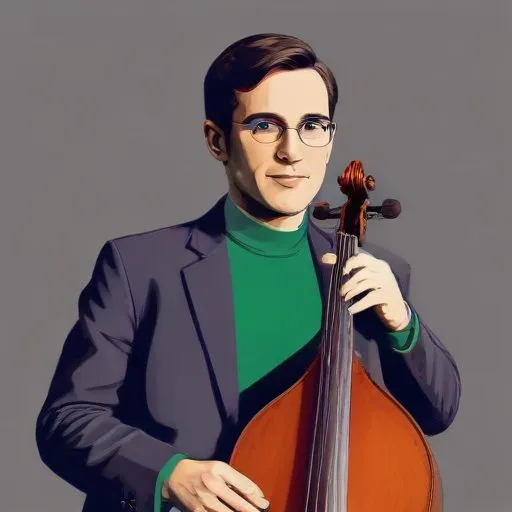
Pierre Fournier: The Aristocrat of Cellists
A Virtuoso of Elegance and Majesty
Pierre Fournier, the French cellist, was renowned for his extraordinary musicianship and majestic sound, earning him the title "the aristocrat of cellists." With a career spanning over five decades, Fournier left an indelible mark on the world of classical music, captivating audiences with his refined technique and expressive performances.
Early Life and Training
Born on June 24, 1906, in Paris, France, Fournier was the son of a French Army general. His mother, a piano teacher, introduced him to music at a young age. However, after contracting polio at the age of six, Fournier lost dexterity in his feet and legs, making it difficult for him to play the piano. He turned to the cello at nine, and under the guidance of Odette Krettly, Andrés Hekking, and
Paul Bazelaire, he honed his skills. Fournier graduated from the Paris Conservatory at just 17 years old, in 1923.
A Rising Star
Fournier's early career was marked by rapid success. He was hailed as the cellist of the future, praised for his virtuosity and bowing technique. He was a member of the Krettly Quartet, led by Odette's brother Robert Krettly, and performed with the Concerts Colonne Orchestra in 1925, launching his European tour. He collaborated with some of the most celebrated musicians of his time, including the prestigious chamber music ensembles.
Legacy and Recordings
Fournier's discography is a testament to his mastery of the cello. He recorded the complete chamber music of Brahms and Schubert for the BBC, although these recordings were lost due to deterioration. However, his iconic recordings of Bach's suites, captured in 1960 at the Beethoven-Saal in Hannover, remain unparalleled to this day, released on Deutsche Grammophon Archive records. His renditions of Beethoven's cello sonatas and Elgar's Cello Concerto are also highly acclaimed, available on CD.
Teaching and International Acclaim
Fournier was a dedicated teacher, sharing his expertise at the Ecole Normale de Musique in Paris and the Paris Conservatoire from 1937 to 1949. He made his first tour of the United States in 1948, receiving widespread acclaim in New York and Boston. His performances were characterized by precision, nuance, and emotional depth, solidifying his reputation as one of the greatest cellists of all time.
A Complex Legacy
Fournier's life, however, was not without controversy. In 1949, it was revealed that he had collaborated with the Nazis during the occupation of France, a fact that tarnished his reputation in the United States. This period in his life remains a subject of debate among music historians, as they grapple with the complexities of artistic genius and personal morality.
Lasting Impact and Legacy
Despite the controversies surrounding his life, Pierre Fournier's legacy as a cellist remains unwavering. His contributions to the world of classical music are immeasurable, inspiring generations of musicians and music lovers alike. His elegant musicianship and majestic sound continue to reverberate, a testament to the transcendent power of art to uplift and inspire humanity.
- Notable recordings: Bach's suites, Beethoven's cello sonatas, and Elgar's Cello Concerto
- Teaching positions: Ecole Normale de Musique, Paris Conservatoire
- Collaborations: Concerts Colonne Orchestra, Krettly Quartet, prestigious chamber music ensembles
FAQ
What was Pierre Fourniers role in music?
Pierre Fournier was a French cellist and educator who played a significant role in music, particularly in the areas of classical music and music education.
What is Pierre Fourniers most notable work?
Fourniers most notable work is his association with the Paris Conservatory, where he taught several prominent cellists and helped to shape the course of French music education.
What was Pierre Fourniers cello career like?
Fournier had a successful cello career, performing with several prominent orchestras and chamber music ensembles and recording several classic works for cello.
What was Pierre Fourniers role in French music?
Fournier played a key role in French music, serving as a prominent performer, teacher, and advocate for classical music in France and beyond.
What is Pierre Fourniers legacy in music education?
Pierre Fournier is remembered as one of the most influential music educators of the 20th century, and his legacy continues to inspire and shape the course of music education around the world.