


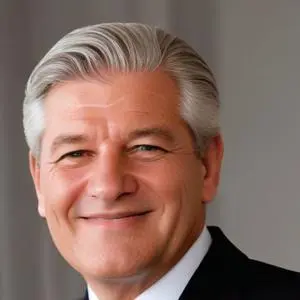
A German pastor and politician who served as the 11th President of Germany, known for his advocacy of human rights and democracy, particularly during the country's reunification. He was a key figure in the peaceful revolution that brought down the Berlin Wall.
As a former Lutheran pastor and prominent anticommunist civil rights activist, Joachim Gauck is synonymous with the fight against totalitarianism and the pursuit of democracy in Germany. His unwavering commitment to exposing the crimes of the communist secret police, the Stasi, earned him recognition as a Stasi hunter and a tireless advocate for human rights.
Born on January 24, 1940, in Rostock, Germany, Gauck's early life was marked by the harsh realities of living under communism. His father, a survivor of a Soviet Gulag, instilled in him a strong sense of resistance against totalitarianism, shaping his political convictions from a young age.
In 1989, during the Peaceful Revolution in East Germany, Gauck co-founded the New Forum opposition movement, which played a pivotal role in the downfall of the Socialist Unity Party of Germany (SED). This marked the beginning of his rise to prominence as a champion of democracy and human rights.
Throughout his career, Gauck has been a beacon of hope for those fighting against oppression and a powerful advocate for democracy and human rights. His work as a Stasi hunter and his unwavering commitment to exposing the crimes of the communist regime have earned him widespread recognition and admiration.
Gauck's life has been marked by significant personal milestones, including his marriage to Gerhild Radtke in 1963 and the birth of their four children. His commitment to his family and his faith has been a constant source of strength and inspiration throughout his life.
At the heart of Gauck's philosophy lies a deep commitment to democracy, human rights, and the pursuit of justice. He has consistently spoken out against totalitarianism and has been a vocal advocate for the importance of individual freedom and dignity.
Joachim Gauck's influence on modern society cannot be overstated. His tireless advocacy for democracy and human rights has inspired generations of Germans and people around the world. His commitment to exposing the crimes of the communist regime has helped to bring about a greater understanding of the dangers of totalitarianism.
When compared to his contemporaries, Gauck's unwavering commitment to democracy and human rights sets him apart as a truly unique and inspirational figure. His ability to bring people together across party lines and to inspire a new generation of leaders has earned him a special place in German history.
Joachim Gauck's remarkable life and career serve as a testament to the power of courage, conviction, and determination. As a champion of democracy and human rights, he has left an indelible mark on German history and continues to inspire people around the world.
72 Years Old
The first female Chancellor of Germany, serving for 16 years, known for her leadership during the European sovereign-debt crisis and her role in shaping the European Union's policy. She's a highly influential figure in modern politics.
82 Years Old
The 7th Chancellor of Germany, a lawyer-turned-politician, led the country from 1998 to 2005, implementing significant economic and social reforms. He's known for his efforts to modernize Germany and strengthen the European Union.
Born in 1918
A German leader who served as Chancellor from 1974 to 1982, known for his pragmatic and socially liberal policies, and his key role in shaping the European Union. He was also a respected economist and published author.
79 Years Old
German Minister of Finance from 2005 to 2009, known for his efforts to mitigate the effects of the global financial crisis and his role in shaping the European Union's economic policies.
64 Years Old
A German lawyer and politician who served as the country's Vice-Chancellor from 2009 to 2013, known for his liberal policies and advocacy for human rights and democracy.
83 Years Old
A Polish-German economist and politician who served as the 9th President of Germany, known for his efforts to strengthen the European Union and promote global economic cooperation. He's also a former IMF Managing Director.
Born in 1679
Developed a philosophical system that combined elements of Leibniz and Descartes, and was a prominent figure in the German Enlightenment. He wrote extensively on metaphysics, ethics, and logic.
70 Years Old
The 14th Vice-Chancellor of Germany, a seasoned politician and academic, served as the country's second-highest ranking official, playing a crucial role in shaping Germany's domestic and foreign policies. He's known for his diplomatic efforts and commitment to European integration.
