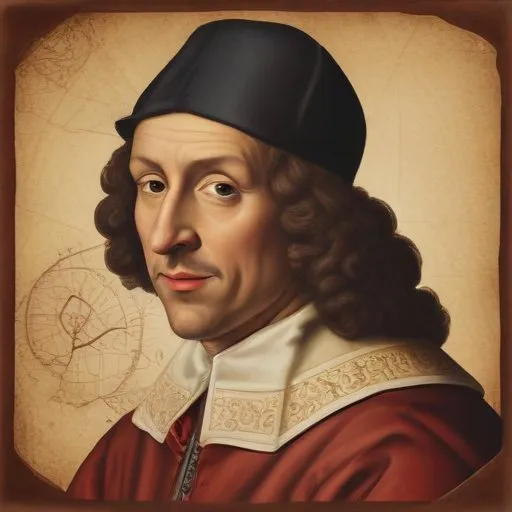
Jodocus Hondius: The Cartographer Who Revived a Legacy
A Master Engraver and Cartographer of the Golden Age
Jodocus Hondius is renowned for his early maps of the New World and Europe, and for reestablishing the reputation of the work of Gerard Mercator, one of the most influential cartographers of the 16th century. He is also celebrated for his portraits of Francis Drake, the English privateer and explorer, and for his role in establishing Amsterdam as the center of cartography in Europe during the 17th century.
Early Life and Career
Born on October 17, 1563, in Wakken, Flanders, Hondius grew up in Ghent, where he developed his skills as an engraver, instrument maker, and globe maker. In 1584, he moved to London with his sister Jacomina to escape religious difficulties in Flanders, where he established himself as a prominent engraver and cartographer.
Collaborations and Innovations
In London, Hondius collaborated with his brother-in-law, Pieter van der Keere, and married Colette van den Keere, daughter of Hendrik, an engraver of metal type. This partnership led to the creation of innovative maps, globes, and charts, including the Mariners Mirrour (1588) and the first English globes, completed in 1592.
A New Era in Cartography
In 1593, Hondius moved to Amsterdam, where he remained until the end of his life. This marked the beginning of a new era in cartography, as he continued to refine and publish his works, including Mercator's plates, which he inherited and revised. Hondius's contributions played a significant role in establishing Amsterdam as the center of cartography in Europe during the 17th century.
Legacy and Impact
Hondius's work had a lasting impact on the field of cartography, influencing many prominent cartographers and explorers of his time. His maps and portraits continue to be celebrated for their accuracy, detail, and aesthetic appeal. Today, his works are highly sought after by collectors and are considered some of the most important cartographic achievements of the Golden Age of Dutch cartography.
Notable Works
- Early maps of the New World and Europe
- Portraits of Francis Drake
- The Mariners Mirrour (1588)
- The first English globes, completed in 1592
- Revised and published Mercator's plates
A Lasting Legacy
Jodocus Hondius's contributions to the field of cartography have left an indelible mark on the history of exploration and discovery. His work not only revived the legacy of Gerard Mercator but also paved the way for future generations of cartographers and explorers. Today, Hondius is remembered as one of the most influential cartographers of the Golden Age of Dutch cartography, and his works continue to inspire and fascinate scholars and enthusiasts alike.
FAQ
What is Jodocus Hondius known for in cartography?
Jodocus Hondius is renowned for his pioneering work in cartography, particularly in the production of decorative maps and the development of copperplate engraving techniques. His maps are characterized by their ornate designs and accurate representations of geographical features.
What was Jodocus Hondius role in the Mercator-Hondius Atlas?
Jodocus Hondius played a significant role in the creation of the Mercator-Hondius Atlas, a groundbreaking cartographic work that combined the maps of Gerardus Mercator with Hondius own engravings. The atlas is considered a landmark in the history of cartography.
How did Jodocus Hondius influence the development of mapmaking?
Hondius innovative techniques and artistic style had a profound impact on the development of mapmaking. He introduced new symbols, ornate borders, and decorative elements, setting a standard for cartographic representation that influenced mapmakers for centuries.
What was Jodocus Hondius contribution to the field of astronomy?
In addition to his work in cartography, Hondius made significant contributions to the field of astronomy. He produced several celestial globes and maps, including a notable globe that depicted the constellations and their mythological associations.
Where did Jodocus Hondius work during his career?
Jodocus Hondius worked in several locations throughout his career, including Antwerp, London, and Amsterdam. His collaborations with other prominent cartographers and publishers led to the production of influential maps and atlases that shaped our understanding of the world.