


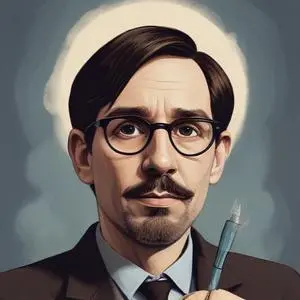
A Swedish-born American labor activist and poet who wrote powerful songs and poems that inspired workers to organize and fight for their rights, and was eventually executed for a crime he did not commit.
Joe Hill, born Joel Emmanuel Hagglund in 1879, was a Swedish-American labor activist, songwriter, and member of the Industrial Workers of the World (IWW) - fondly referred to as the Wobblies. He is renowned for his influential songs that gave voice to the struggles of the working class, earning him the nickname "The Bard of the Working Class."
Hill's life was marked by hardship and struggle. As an immigrant worker, he faced frequent unemployment and underemployment, which fueled his passion for the labor movement. From New York to San Francisco, Hill worked various jobs, honing his English skills and developing his musical talents. His experiences as an itinerant worker inspired his songs, which became anthems for the labor movement.
Hill's songs, including "The Preacher and the Slave," "The Tramp," "There Is Power in a Union," "The Rebel Girl," and "Casey Jones - the Union Scab," are testaments to his commitment to the labor movement. His music addressed the harsh realities of working-class life, urging workers to organize and fight for better working conditions. His lyrics remain powerful and relevant, continuing to inspire generations of activists and labor organizers.
In 1914, Hill was accused of murdering John G. Morrison, a Salt Lake City grocer, and his son. Despite a questionable trial, Hill was convicted and sentenced to death. The execution of Joe Hill in November 1915 sparked international outrage, with many prominent figures and workers' organizations calling for clemency. The controversy surrounding his trial and execution continues to be debated to this day.
Joe Hill's life and death have inspired numerous books, poems, and songs. His legacy extends beyond his music, as he became a symbol of the labor movement and a martyr for the cause. His story has inspired generations of activists, labor organizers, and musicians, including Woody Guthrie, Pete Seeger, and Joan Baez, who have perpetuated his message of workers' rights and social justice.
Some of Hill's most iconic quotes and song lyrics include:
Joe Hill's music and message continue to resonate with modern audiences. His songs have been covered by numerous artists, and his legacy has inspired countless labor organizers and social justice activists. Hill's story serves as a powerful reminder of the importance of workers' rights, social justice, and the power of collective action.
Born in 1855
A pioneering labor leader who fought for workers' rights and social justice, founding the Industrial Workers of the World and running for president five times on the Socialist Party ticket.
Born in 1869
A Lithuanian-Canadian philosopher and activist who advocated for anarchism, free speech, and women's rights, playing a pivotal role in shaping modern feminist and political thought.
Born in 1878
A pioneering muckraker, exposing social and economic injustices through influential novels, most notably "The Jungle", which led to significant reforms in the meatpacking industry.
Born in 1921
The 67th Governor of Maine, a politician and diplomat who served from 1959 to 1967, is most known for his moderate Republican leadership and efforts to modernize the state's government. He also played a key role in the development of the Maine Turnpike.
Born in 1857
Noted lawyer who famously defended controversial cases, including the Scopes "Monkey Trial," and was a pioneer in the development of modern American legal defense strategies.
