


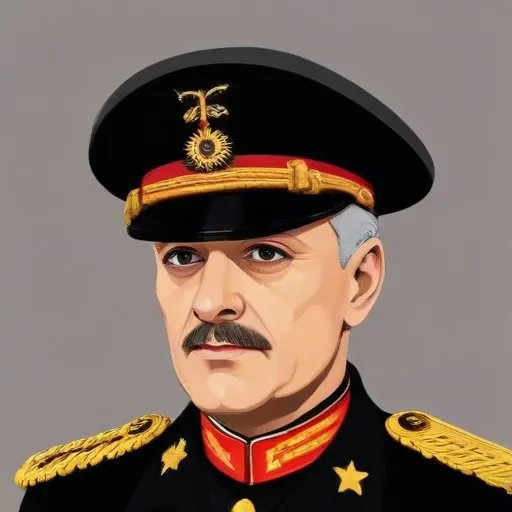
A 17th-century German military leader who fought in the Thirty Years' War and led Danish forces against Sweden, earning a reputation for bravery and strategic prowess.
Johan Rantzau, a German-Danish general and statesman, is renowned for his pivotal role in the Counts' Feud, ensuring the succession of Christian III to the throne, which ultimately led to the Reformation in Denmark. His military prowess and strategic leadership earned him a place in history as a champion of the Protestant cause.
Born on November 12, 1492, at Schloss Breitenburg in Steinburg, Schleswig-Holstein, Rantzau was the son of Henrik Breidesen Rantzau and Ollegaard Ditlevsdatter von Buchwald. His family, loyal to the rulers of Schleswig and Holstein, had served the Danish king since the union between Denmark and the duchies. Rantzau's early years were marked by a pursuit of a military career, and he was educated as an officer and a mercenary landsknecht.
Rantzau's military acumen and political savvy earned him a position as a trusted advisor to the Duke of Schleswig-Holstein. When King Christian II of Denmark was overthrown in 1523, Rantzau led Frederick I's army of conquest, becoming a member of the Danish Privy Council and governor of the duchies. He emerged as a prominent squire of Holstein, making Schloss Breitenburg his entailed estate.
Rantzau's commitment to the Protestant cause deepened during the Scanian peasant rebellion of 1525, which he ruthlessly suppressed. He worked closely with his Danish colleagues to advance the Lutheran cause, solidifying his reputation as a devoted Protestant. His military campaigns and political maneuvering further cemented his position as a key figure in the Counts' Feud.
In 1534, Rantzau crushed Skipper Clement's peasant rebellion in Jutland, securing the peninsula for the king.
The same year, he led an unsuccessful attempt to conquer Funen, ending in a humiliating retreat.
In 1535, Rantzau successfully conquered Funen, defeating the opposition and solidifying Christian III's hold on the throne.
Rantzau's military leadership and strategic prowess played a crucial role in shaping Denmark's Reformation. His unwavering commitment to the Protestant cause and his ability to navigate the complex web of alliances and rivalries in 16th-century Europe earned him a revered place in history. As a champion of the Lutheran faith, Rantzau's influence extended far beyond the battlefields, leaving an indelible mark on the fabric of Danish society.
Rantzau's personal life was marked by his devotion to his family and his faith. He remained loyal to the rulers of Schleswig-Holstein, maintaining a deep connection to his ancestral lands. His legacy extends beyond his military conquests, as a testament to the enduring power of conviction and leadership.
Rantzau's role in shaping Denmark's Reformation has had a lasting impact on modern society. His commitment to the Protestant cause paved the way for the establishment of the Lutheran Church, which remains a cornerstone of Danish culture. His leadership and strategic prowess continue to inspire, offering a fascinating glimpse into the complexities of 16th-century politics and warfare.
Born in 1583
A powerful and influential military leader who played a crucial role in the Thirty Years' War, leading the Holy Roman Empire's army to several victories before his assassination. He's also known for his strategic genius and innovative military tactics.
Born in 1594
A Bavarian field marshal who played a key role in the Thirty Years' War, leading troops to several victories and earning a reputation as a skilled military strategist. He's also remembered for his bravery and chivalry on the battlefield.
Born in 1477
A 16th-century German archbishop who attempted to reform the Catholic Church and was a key figure in the Protestant Reformation. He's known for his efforts to reconcile Catholicism and Lutheranism.
