


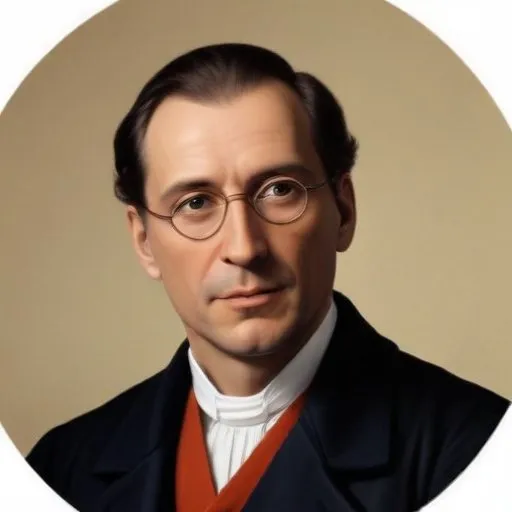
Developed influential mathematical and physical concepts, including the theory of turbines and the first mathematical treatment of the flow of fluids. Known for his contributions to the fields of mathematics, physics, and medicine.
Johann Andreas Segner, a Hungarian scientist, is renowned for his groundbreaking contributions to various fields, including mathematics, physics, and medicine. He is particularly famous for his work on the Cartesian rule of signs, which has had a lasting impact on the development of mathematics.
Born on October 9, 1704, in Pozsony (now Bratislava), Kingdom of Hungary, Segner was the son of Johann Michael von Segner, a tax clerk. His ancestors had been granted nobility in 1596 for their military accomplishments. Segner studied at Pressburg and Debrecen before moving to the University of Jena in 1725, where he developed his theorem under the guidance of Georg Erhard Hamberger.
Segner's mathematical theorem, which deals with the determination of the number of real roots of a polynomial equation, is considered one of his most significant contributions. He also worked on the development of the calculus of variations and made notable contributions to the fields of physics and medicine. His work on the metaphysics of Christian Wolff further solidified his reputation as a polymath.
In 1732, Segner became a professor of philosophy at the University of Jena, where he lectured on metaphysics and mathematics. His teachings had a profound impact on the development of mathematics in the 18th century. He later joined the University of Göttingen, where he continued to teach and conduct research until his death in 1777.
Segner's philosophical contributions were deeply rooted in the ideas of Christian Wolff, a prominent philosopher of the time. He believed in the importance of reason and empirical evidence in understanding the natural world. His work on metaphysics and the nature of reality reflects his commitment to the pursuit of knowledge and truth.
Segner's mathematical theorem has had a lasting impact on the development of mathematics, physics, and engineering. His work has influenced some of the most prominent mathematicians and scientists of the modern era, including Leonhard Euler and Joseph-Louis Lagrange. His legacy continues to inspire new generations of mathematicians and scientists.
Segner's family was granted nobility in 1596 for their military accomplishments. He was supported by Hermann Friedrich Teichmeyer, a prominent physician, during his studies at the University of Jena.
Johann Andreas Segner's contributions to mathematics, physics, and medicine have left an indelible mark on the scientific community. His work continues to inspire new generations of mathematicians and scientists, and his legacy serves as a testament to the power of human ingenuity and curiosity.
Born in 1707
Pioneering mathematician and physicist who made immense contributions to fields like calculus, number theory, and optics, shaping the course of modern mathematics and physics.
Born in 1749
Developed nebular hypothesis of the origin of the solar system and formulated Laplace's equation, a fundamental concept in mathematics and physics. He's considered the founder of celestial mechanics.
Born in 1752
Developed the theory of elliptic integrals, and his work on number theory laid the foundation for modern cryptography.
Born in 1774
A French polymath who made significant contributions to the fields of physics, astronomy, and mathematics, particularly in the discovery of chromatic polarization and the Biot-Savart law.
Born in 1786
A mathematician and politician who made significant contributions to the development of electromagnetism and served as Prime Minister of France, advocating for social reform and education.
Born in 1789
Developed rigorous mathematical theories and introduced concepts like convergence and continuity, revolutionizing calculus and paving the way for modern mathematics.
Born in 1826
A pioneering mathematician who developed the theory of higher dimensions and laid the foundations for modern physics, particularly in the understanding of space and time.
