


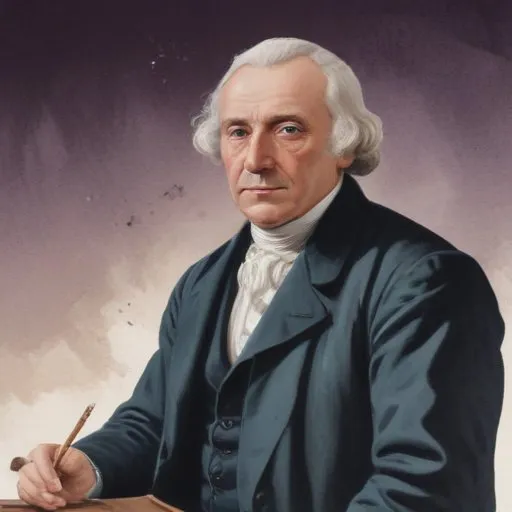
German astronomer who discovered the comet-like appearance of Halley's Comet in 1758, providing evidence for its periodic nature.
Johann Georg Palitzsch, a German astronomer, etched his name in the annals of history by recovering Comet 1P/Halley, popularly known as Halley's Comet, on Christmas Day, 1758. This monumental achievement validated Edmond Halley's prediction of the comet's periodic nature, made over five decades earlier.
Born on June 11, 1723, in Prohlis, Electorate of Saxony, Holy Roman Empire (now part of Dresden, Germany), Palitzsch was raised to become a successful farmer under the guidance of his strict stepfather. However, his true passion lay in astronomy, which he pursued secretly, studying from the books he could afford.
Palitzsch's interest in astronomy was piqued by Christian Pescheck's book, Vorhof der Sternwissenschaft (The Forecourt of Astronomy). He taught himself Latin and, at the age of 21, inherited the family farm. This newfound freedom allowed him to construct his own botanical garden, library, laboratory, and museum, which became the hub of his astronomical pursuits.
Palitzsch received support from various benefactors, including the future King of Saxony. However, the wars between Prussia and Austria disrupted his ambitions, forcing him to put his research on hold.
On December 25, 1758, Palitzsch made history by observing and recording the return of Halley's Comet, a feat that had been predicted by Edmond Halley in 1705. This observation not only validated Halley's work but also marked a significant milestone in the field of astronomy.
Upon his death on February 21, 1788, Palitzsch left behind a vast library of 3,518 books, including handwritten copies of scientific works that were too expensive for him to purchase. His contributions to astronomy are commemorated by a crater and a vallis (valley) on the Moon, named in his honor. Additionally, the asteroid 11970 Palitzsch is named after this remarkable astronomer.
Johann Georg Palitzsch's remarkable journey from a farmer to an accomplished astronomer serves as a testament to his dedication and passion for the field. Despite the challenges he faced, Palitzsch remained committed to his pursuit of knowledge, leaving behind a lasting legacy that continues to inspire generations of astronomers and scientists.
Through his work, Palitzsch demonstrated that with persistence and determination, one can achieve greatness, even in the face of adversity. His recovery of Halley's Comet remains a beacon of inspiration, reminding us of the power of human curiosity and the importance of pursuing one's passions.
Born in 1571
A 17th-century trailblazer who discovered the three laws of planetary motion, revolutionizing our understanding of the solar system. He's also credited with being a pioneer in the field of astrology.
Born in 1564
Pioneering astronomer, physicist, and mathematician who played a major role in the Scientific Revolution, making key discoveries that challenged Aristotelian views and laid the foundation for modern science.
Born in 1546
A 16th-century astronomer who made precise measurements of the stars and planets, laying the foundation for modern astronomy. His data helped Kepler discover planetary orbits.
Born in 1473
A Renaissance-era mathematician and astronomer who proposed the heliocentric model, where the Sun is at the center of our solar system, revolutionizing our understanding of the universe.
Born in 1629
A 17th-century polymath who made groundbreaking contributions to optics, probability theory, and astronomy, including the discovery of Saturn's rings and the largest moon, Titan.
Born in 1656
Predicted celestial events, including the return of a comet that bears his name, and made significant contributions to navigation, astronomy, and mathematics.
Born in 1738
A pioneering astronomer and musician who discovered Uranus and two of its moons, and also composed symphonies and concertos.
