


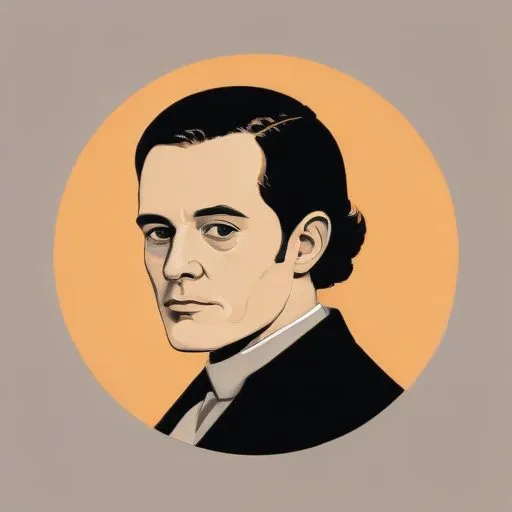
A Dutch composer and conductor, known for his contributions to the development of Dutch classical music, particularly in the Romantic era, and leading the Utrecht Municipal Orchestra.
Johannes Verhulst, a renowned Dutch composer and conductor, left an indelible mark on the music landscape of the 19th century. As a prolific creator of songs and a shrewd administrator, Verhulst's influence during his lifetime was considerable, shaping the course of Dutch music for generations to come.
Born on March 19, 1816, in The Hague, Verhulst's musical talent was evident from a young age. As a choirboy in a Catholic church, he demonstrated a remarkable gift for music, which eventually led to his appointment as a first violinist in the court chapel of King William I.
It was during this period that Verhulst's compositions caught the attention of the celebrated German composer Felix Mendelssohn, who was vacationing in Scheveningen. Impressed by Verhulst's work, Mendelssohn took him under his wing, and in 1838, Verhulst began studying with his mentor in Leipzig.
In Leipzig, Verhulst's skills as a composer and conductor flourished. He was appointed conductor of the Euterpe orchestra, for which he wrote his magnificent Symphony in E minor. This work showcased his mastery of orchestration and cemented his reputation as a rising star in the music world.
In 1842, King William II urged Verhulst to return to The Hague, where he dedicated himself to writing Dutch songs. This period saw the creation of some of his most beloved works, which would go on to become an integral part of Dutch cultural heritage.
Verhulst's success as a composer was matched only by his administrative acumen. He held various positions, including chief conductor of the Rotterdam Music Society Maatschappij tot Bevordering der Toonkunst, conductor of concerts at the Diligentia Society in The Hague, and conductor of the orchestral society Caecilia and the Felix Meritis Society in Amsterdam.
These appointments gave Verhulst significant influence over Dutch music life, allowing him to promote and nurture the careers of fellow composers and musicians.
Despite his many achievements, Verhulst's conservative tastes often led to controversy. He refused to endorse or perform the works of Berlioz, Liszt, and Wagner, sparking criticism from many in the musical community.
This stance led to a public backlash, and in 1883, Diligentia imposed Richard Hol as a substitute conductor, bypassing Verhulst's authority.
Johannes Verhulst's contributions to Dutch music are undeniable. Through his compositions, performances, and administrative roles, he helped shape the country's musical identity and paved the way for future generations of composers and musicians.
Today, Verhulst's music remains an integral part of Dutch cultural heritage, a testament to his enduring legacy and influence on the world of classical music.
Born in 1813
A revolutionary composer who transformed opera with his epic, mythological works, creating a new era of musical storytelling. His iconic operas, such as "Der Ring des Nibelungen," continue to captivate audiences worldwide.
Born in 1811
A virtuosic pianist and composer who revolutionized classical music with his technically demanding and emotionally expressive works, blending Hungarian folk influences with Romantic-era drama.
Born in 1810
A renowned Romantic-era composer and influential music critic, known for his expressive and emotionally charged works, including symphonies, piano music, and art songs.
Born in 1809
A renowned 19th-century musician who masterfully blended classical and romantic styles, creating iconic works like the "Wedding March" and "Elijah" oratorio. His compositions continue to inspire and influence generations of artists.
Born in 1833
A renowned pianist and composer, he crafted complex, expressive works that blended traditional and innovative techniques, leaving an indelible mark on classical music.
Born in 1841
A Czech composer and academic who blended folk influences with classical music, creating iconic works like the "New World Symphony".
Born in 1813
A renowned composer of iconic operas like La Traviata and Aida, known for his masterful blending of drama and music. His works continue to captivate audiences worldwide.
Born in 1803
A French Romantic-era mastermind who composed iconic symphonies, operas, and orchestral works, revolutionizing classical music with his bold, expressive style.
