


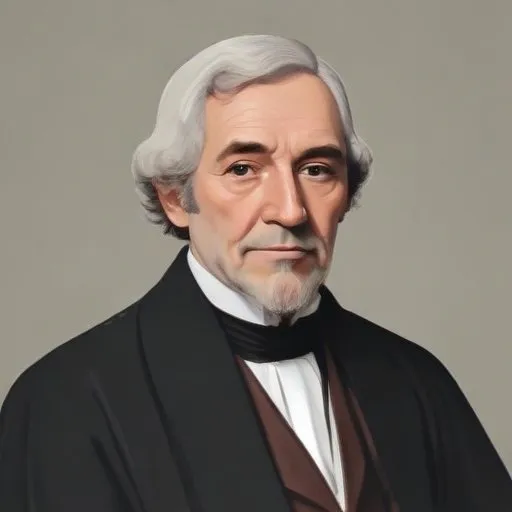
A prominent Puritan leader who played a significant role in shaping early American religious and political thought, known for his influential writings and sermons that helped establish the Massachusetts Bay Colony.
John Cotton, a renowned clergyman in England and the American colonies, is known for his significant contributions to Puritanism and his role as a minister and theologian in the Massachusetts Bay Colony. Through his sermons, writings, and teachings, Cotton advocated for a simpler, more reformed approach to Christianity, earning him a reputation as a prominent Puritan leader.
Cotton was born on December 4, 1585, and spent five years studying at Trinity College, Cambridge, followed by nine years at Emmanuel College, Cambridge. During this time, he developed a strong foundation in theology and biblical studies, which would later shape his ministry.
In 1612, Cotton became the minister at St. Botolph's Church, Boston, in Lincolnshire, where he gained a reputation as a scholar and outstanding preacher. Despite being a Puritan, Cotton preferred to reform the Church of England from within, rather than separating from it. His conciliatory and gentle demeanor helped him thrive at St. Botolph's for nearly 20 years, even amidst the removal of many Puritan ministers from their pulpits.
By 1632, church authorities increased pressure on nonconforming clergy, forcing Cotton into hiding. The following year, he and his wife sailed to New England, where he became a highly sought-after minister in Massachusetts. He was quickly installed as the second pastor of the Boston church, sharing the ministry with John Wilson. Cotton's preaching generated more religious conversions in his first six months than had been made the whole previous year.
Early in his Boston tenure, Cotton faced controversy, including the banishment of Roger Williams, who blamed Cotton for his troubles. The Antinomian Controversy also surrounded him, as adherents of his free grace theology, including Anne Hutchinson, criticized other ministers in the colony. Although Cotton initially supported his adherents, he later realized that many of them held theological positions that were beyond his own beliefs.
John Cotton's contributions to Puritanism and his work in the Massachusetts Bay Colony have had a lasting impact on American religious history. His emphasis on a simpler, more reformed approach to Christianity paved the way for future generations of Puritan leaders. Today, Cotton is remembered as a prominent figure in American colonial history, shaping the theological and cultural landscape of the young nation.
Through his teachings, writings, and ministry, John Cotton left an indelible mark on American religious history, cementing his place as one of the most influential figures of the Puritan era.
Born in 1588
A 17th-century English lawyer and politician who played a key role in establishing the Massachusetts Bay Colony and shaping its early government and laws. He's known for his "City upon a Hill" sermon, which emphasized the colony's mission to create a model Christian community.
Born in 1576
An early American leader who played a key role in shaping the Massachusetts Bay Colony, serving as its governor and contributing to its growth and development. He was also a skilled military leader and politician.
Born in 1616
Governor of the Massachusetts Bay Colony from 1673 to 1679, known for his role in King Philip's War and his efforts to negotiate with Native American tribes.
Born in 1663
A Puritan minister and writer who advocated for the use of inoculation against smallpox and wrote influential books on witchcraft, including "Memorable Providences, Relating to Witchcrafts and Possessions".
