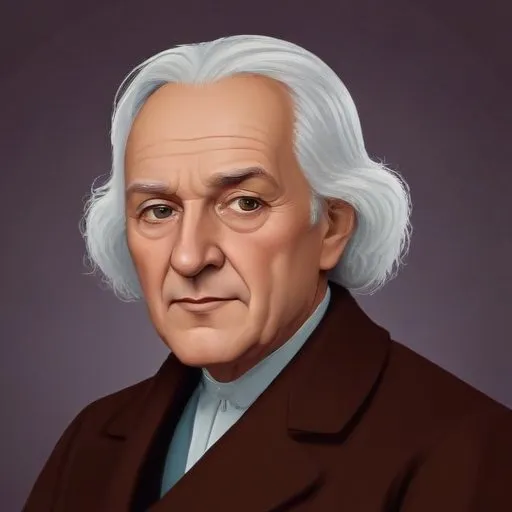
John Crank: The Pioneering Mathematical Physicist
A Legacy Built on Numerical Solutions
John Crank, a renowned mathematical physicist, is best known for his groundbreaking work on the numerical solution of partial differential equations, particularly in the field of heat conduction problems. His collaboration with
Phyllis Nicolson led to the development of the Crank-Nicolson method, a pivotal contribution to the world of mathematics.
Early Life and Education
Born on February 6, 1916, in Hindley, Lancashire, England, Crank was the son of a carpenter's pattern maker. He pursued his academic interests at Manchester University, where he earned his BSc and MSc degrees between 1934 and 1938. Notably, he was a student of the esteemed Lawrence Bragg and
Douglas Hartree. In 1953, Manchester University awarded him a DSc, further solidifying his academic credentials.
War Efforts and Early Career
During World War II, Crank worked on ballistics, applying his mathematical expertise to support the war effort. Following the war, he joined Courtaulds Fundamental Research Laboratory as a mathematical physicist, where he spent 12 years (1945-1957) honing his skills and making significant contributions to the field.
Academic Leadership and Legacy
In 1957, Crank was appointed as the first Head of Department of Mathematics at Brunel College in Acton. He went on to serve two terms as Vice-Principal of Brunel, leaving an indelible mark on the institution. Upon his retirement in 1981, he was granted the title of Professor Emeritus, a testament to his dedication and achievements.
The Crank-Nicolson Method
Crank's most notable contribution to mathematics is the Crank-Nicolson method, developed in collaboration with Phyllis Nicolson. This innovative approach to solving partial differential equations has had a profound impact on various fields, including heat transfer, fluid dynamics, and computer simulations.
A Passion for Gardening and Family
Away from the world of mathematics, Crank was an avid gardener. As a retirement gift to Brunel University, he established the John Crank Garden, a beautiful oasis that continues to thrive. Crank was married to his loving wife, Joan, for 63 years until her passing in 2005. They were survived by their two children, a testament to their enduring love and legacy.
Lifetime Achievements and Honors
Throughout his illustrious career, Crank received numerous accolades for his contributions to mathematics and education. His dedication to his craft and his students has inspired generations of mathematicians and scientists.
- Appointed as the first Head of Department of Mathematics at Brunel College in Acton
- Served two terms as Vice-Principal of Brunel
- Granted the title of Professor Emeritus upon retirement
A Lasting Impact on Mathematics and Beyond
John Crank's pioneering work in mathematical physics has left an indelible mark on the scientific community. His contributions to partial differential equations, heat conduction problems, and numerical solutions have paved the way for breakthroughs in various fields. As a passionate educator and mathematician, Crank's legacy continues to inspire and educate future generations.
FAQ
What was John Cranks contribution to mathematics and physics?
John Crank was an English mathematician and physicist who made significant contributions to the development of numerical methods for solving partial differential equations, particularly in the field of fluid dynamics.
What is the Crank-Nicolson method?
The Crank-Nicolson method is a numerical method for solving partial differential equations, developed by Crank and his colleague Phyllis Nicolson, which has become a fundamental tool in many fields of physics and engineering.
How did John Cranks work impact the field of fluid dynamics?
Cranks work on numerical methods for fluid dynamics has had a profound impact on the field, enabling the simulation of complex fluid flows and contributing to advances in fields such as aerodynamics, oceanography, and weather forecasting.
What awards did John Crank receive for his work?
Crank received several awards and honors for his contributions to mathematics and physics, including the Royal Societys Hughes Medal and the Institute of Physicss Guthrie Medal.
What is John Cranks legacy in the scientific community?
Cranks legacy is one of technical innovation and rigor, with his work continuing to influence research in mathematics, physics, and engineering, and inspiring new generations of scientists and mathematicians.