


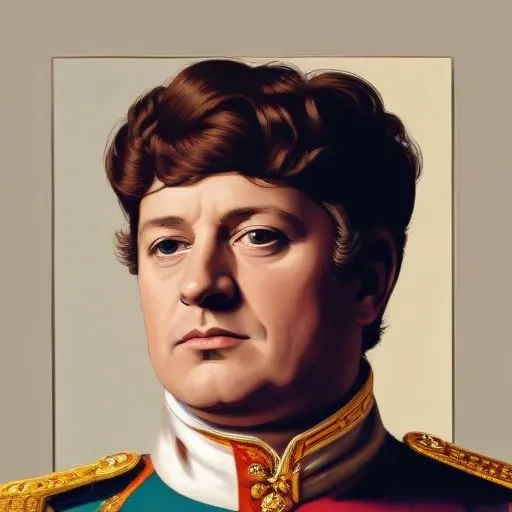
Elector of Saxony from 1591 to 1611, known for his role in the early stages of the Thirty Years' War and his attempts to strengthen the Lutheran Church.
John George IV, Elector of Saxony, is renowned for his patronage of the arts and music during the Renaissance period, earning him the title "John the Steadfast" for his unwavering support of the Lutheran faith. His reign from 1591 to 1656 witnessed a cultural flowering in Saxony, with the Elector's love for music being instrumental in shaping the region's rich musical heritage.
Born on October 18, 1580, in Dresden, John George IV was the third son of Elector Christian I of Saxony and Sophie of Brandenburg. Following the death of his elder brothers, he became the heir to the electorship and succeeded his father in 1591. During his early years, John George IV received a humanist education, which instilled in him a deep appreciation for the arts and sciences.
John George IV's reign was marked by a surge in artistic and cultural activity, earning Dresden the reputation as a hub of Renaissance humanism. The Elector's court attracted prominent artists, musicians, and scholars, including the famous composer and organist, Heinrich Schütz. His patronage of Schütz led to the creation of numerous works, including the acclaimed "Dafne" opera, which premiered in 1627.
John George IV's love for music was deeply intertwined with his Lutheran faith. He recognized the power of music in promoting religious devotion and unity. During his reign, the Elector commissioned numerous choral works, hymns, and motets, which became an integral part of Lutheran worship. His support for musical education and the establishment of the Dresden Kreuzchor choir further solidified Saxony's position as a center of musical excellence.
In 1604, John George IV married Sibylle of Berg, with whom he had two children. His marriage was marked by a deep affection for his wife, who shared his passion for music and the arts. The Elector's legacy extends beyond his cultural achievements, as he played a significant role in promoting religious tolerance and unity during a time of great upheaval in Europe.
John George IV's patronage of the arts and music had a lasting impact on the cultural landscape of Saxony and beyond. His support for Heinrich Schütz helped establish the composer as a leading figure in the development of German Baroque music. The Elector's legacy continues to inspire artists, musicians, and scholars, with his love for music and the arts remaining an integral part of Saxony's cultural identity.
John George IV, Elector of Saxony, remains an enduring figure in the history of Renaissance culture and music. His unwavering support for the arts and his passion for music have left an indelible mark on the region's cultural heritage. As a patron, musician, and Lutheran leader, John George IV continues to inspire generations with his commitment to promoting artistic excellence and religious unity.
Born in 1670
A powerful Polish king who transformed his country into a major European power through military conquests and cultural achievements, earning him the nickname "the Strong".
Born in 1797
King of Saxony from 1836 to 1854, known for his efforts to modernize and industrialize his country, and for his role in the Revolutions of 1848.
Born in 1797
King of Saxony from 1836 to 1854, known for his efforts to modernize and industrialize his country, and for his role in the Revolutions of 1848.
