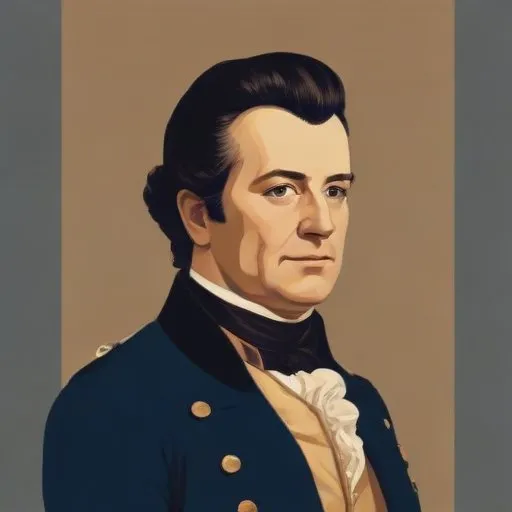
John Graves Simcoe: The Visionary Leader Who Shaped Upper Canada
The Architect of Modern Ontario
John Graves Simcoe, a British Army general, is renowned for his instrumental role as the first lieutenant governor of Upper Canada, serving from 1791 to 1796. During his tenure, he laid the foundations for the development of modern Ontario, introducing institutions such as courts of law, trial by jury, and English common law, making him a pivotal figure in Canadian history.
Early Life and Education
Born on February 25, 1752, Simcoe was the only surviving son of Captain John Simcoe, a Cornishman, and Katherine Simcoe. After his father's untimely death in 1759, Simcoe moved to his maternal grandparents' home in Exeter. He received his education at Exeter Grammar School, Eton College, and Merton College, Oxford. Originally intended to pursue a career in law, Simcoe was drawn to the military, following in his father's footsteps.
A Vision for Upper Canada
Simcoe's long-term goal was to establish Upper Canada as a model community, built on aristocratic and conservative principles. He sought to demonstrate the superiority of these principles over the republicanism of the United States. To achieve this, he worked tirelessly to introduce institutions and practices that would foster a strong, stable society. Some of his notable achievements include:
- Founding York, now known as Toronto
- Introducing freehold land tenure, which allowed settlers to own land
- Establishing the abolition of slavery in Upper Canada
- Forming alliances with select indigenous nations
Personal Milestones and Key Life Events
Simcoe's life was marked by significant events that shaped his personality and career. Some notable milestones include:
- 1792: Simcoe founded York, which would eventually become the City of Toronto
- 1793: He established the first parliament in Upper Canada
- 1794: Simcoe negotiated the Treaty of Amity, Commerce, and Navigation with the Mississauga Nation
Philosophical Contributions and Beliefs
Simcoe's conservative and aristocratic values guided his leadership in Upper Canada. He believed in the importance of establishing a strong, hierarchical society, with a robust system of governance and institutions. His vision for Upper Canada was centered around creating a model community that would serve as a beacon for other colonies.
Legacy and Impact
Today, Simcoe is remembered as a founding figure in Canadian history, particularly in Southern Ontario. His contributions to the development of Upper Canada have had a lasting impact on the region. In recognition of his legacy, Simcoe Day is celebrated in Toronto, honoring his role in shaping the city and the province.
Controversies and Public Perception
While Simcoe's achievements are undeniable, his legacy is not without controversy. Some critics have argued that his aristocratic and conservative values were at odds with the more democratic ideals of the time. Additionally, his treatment of indigenous peoples has been subject to criticism, with some accusing him of exploiting their resources and lands.
Trivia and Fun Facts
Did you know that:
- Simcoe's father, Captain John Simcoe, was a naval commander who served with James Cook during the siege of Louisbourg?
- Simcoe was admitted to Lincolns Inn, but chose to pursue a military career instead of law?
Conclusion
John Graves Simcoe's vision for Upper Canada has left an indelible mark on Canadian history. His contributions to the development of modern Ontario, his leadership, and his philosophical beliefs have made him a significant figure in the country's history. Despite controversies, Simcoe's legacy continues to inspire and educate generations, cementing his place as a founding figure in Canadian history.
FAQ
What was John Graves Simcoes role in Canadian history?
John Graves Simcoe was an English-Canadian general and politician who served as the first Lieutenant Governor of Upper Canada. He played a significant role in shaping the early history of Canada, advocating for responsible government and the establishment of a robust system of laws.
What were John Graves Simcoes accomplishments as Lieutenant Governor?
John Graves Simcoes accomplishments as Lieutenant Governor included the establishment of the Court of Kings Bench, the creation of a system of roads and public infrastructure, and the encouragement of settlement and economic development in Upper Canada.
How did John Graves Simcoes military background shape his approach to governance?
John Graves Simcoes military background had a significant impact on his approach to governance, as he brought a sense of discipline and order to his role as Lieutenant Governor. He was known for his attention to detail and his ability to make tough decisions.
What was John Graves Simcoes relationship with the indigenous peoples of Upper Canada?
John Graves Simcoes relationship with the indigenous peoples of Upper Canada was complex and multifaceted. While he sought to establish good relations with native leaders, he also advocated for the expansion of British settlement and the assertion of British authority over native lands.
What is John Graves Simcoes legacy in modern Canadian history?
John Graves Simcoes legacy in modern Canadian history is one of significance and complexity. He played a key role in shaping the early history of Canada, but his legacy is also marked by controversy and debate over his treatment of indigenous peoples and his role in the expansion of British colonialism.