


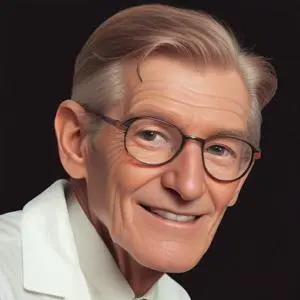
A pioneer in developmental biology, he discovered that mature cells can be converted into stem cells, revolutionizing our understanding of cellular development and regenerative medicine.
Known for his groundbreaking research in nuclear transplantation and cloning, Sir John Gurdon is a British developmental biologist who has made monumental contributions to the field of science. In 2012, he was awarded the Nobel Prize for Physiology or Medicine, along with Shinya Yamanaka, for the discovery that mature cells can be converted to stem cells.
Born on October 2, 1933, Gurdon attended Edgeborough prep school before moving on to Eton College. Interestingly, he ranked last in his year group in biology and was in the bottom set in every other science subject. A schoolmaster even wrote in his report, "I believe he has ideas about becoming a scientist on his present showing this is quite ridiculous." Gurdon would later frame this report, often reminding himself of the doubts others had about his abilities.
Gurdon then attended Christ Church, Oxford, where he initially studied classics before switching to zoology. He graduated with an MA degree and went on to pursue his DPhil degree, studying nuclear transplantation in the frog species Xenopus, under the supervision of Dr. Michail Fischberg at Oxford University.
After completing his postdoctoral work at Caltech, Gurdon returned to England and held various positions, including in the Department of Zoology at the University of Oxford. He spent a significant portion of his research career at the MRC Laboratory of Molecular Biology and later in the Department of Zoology.
In 1989, Gurdon became a founding member of the WellcomeCRC Institute for Cell Biology and Cancer, later known as the WellcomeCR UK, at Cambridge. He served as the chairman of the institute until 2001. Additionally, he was a member of the Nuffield Council on Bioethics from 1991 to 1995 and later became the Master of Magdalene College, Cambridge, from 1995 to 2002.
Gurdon's work has been recognized with numerous awards and honors, including the Lasker Award in 2009 and the Nobel Prize for Physiology or Medicine in 2012. He was also awarded the Copley Medal in 2003 and the RSA Albert Lasker Award in 2005.
Gurdon married Jean Elizabeth Margaret Curtis and has a son and a daughter. Despite his many accomplishments, he remains humble, often drawing inspiration from his early struggles and the doubts of others.
Sir John Gurdon's pioneering work in nuclear transplantation and cloning has paved the way for significant advancements in the field of science. His discovery, along with Shinya Yamanaka, has opened up new possibilities for the treatment of diseases and has far-reaching implications for the future of medicine.
63 Years Old
A Japanese physician and biologist who discovered a way to reprogram adult cells into induced pluripotent stem cells, revolutionizing the field of regenerative medicine. This breakthrough has opened doors to new possibilities for disease treatment and tissue engineering.
72 Years Old
Pioneering stem cell researcher and Harvard professor who co-directs the Harvard Stem Cell Institute, making groundbreaking discoveries in regenerative medicine and diabetes treatment.
61 Years Old
An American-Finnish author who wrote gritty, hard-boiled crime novels that explored the darker side of human nature, often drawing from his own experiences as a convict and a soldier.
82 Years Old
Pioneering embryologist who cloned Dolly the sheep, a groundbreaking achievement in genetic engineering. This breakthrough sparked controversy and debate on the ethics of cloning and genetic manipulation.
79 Years Old
A renowned biologist and geneticist who discovered the genetic control of embryonic development, earning a Nobel Prize in Physiology or Medicine in 1995. Their work has greatly advanced our understanding of developmental biology and its applications.
