


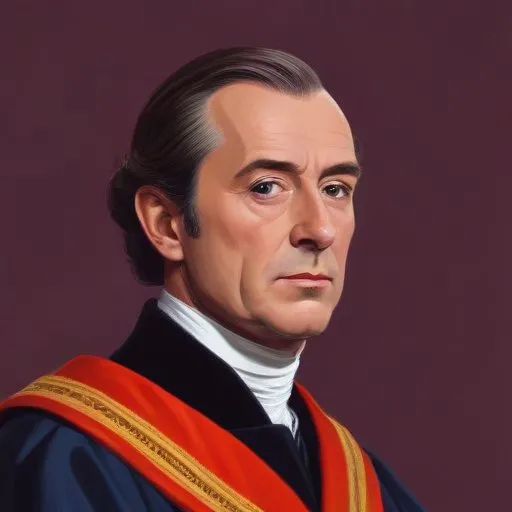
A 17th-century English politician who served as a diplomat and Secretary of State, known for his involvement in the Glorious Revolution and his role in shaping British foreign policy.
John Hervey, 1st Earl of Bristol, was a prominent English Whig politician, renowned for his unwavering commitment to the principles of the revolution and his resolute support for the Hanoverian succession. His influential political career spanned multiple decades, earning him a reputation as a shrewd strategist and visionary leader.
Born on August 27, 1665, in Bury St Edmunds, Suffolk, John Hervey was the son of Sir Thomas Hervey. He received his education in Bury and later at Clare College, Cambridge, laying the foundation for his future political endeavors.
In 1694, Hervey became one of the two Members of Parliament for Bury St Edmunds, following in the footsteps of his father. His political prowess and dedication to the Whig cause earned him a barony in 1703 and an earldom in 1714. As the 1st Earl of Bristol, Hervey continued to champion the principles of the revolution, solidifying his position as a respected and influential figure in British politics.
The Hervey family's principal estate, Ickworth, was acquired by John's ancestor Thomas Hervey through his marriage to Jane Drury. Later, John's marriage to Elizabeth Felton brought additional properties in Suffolk, including Tuddenham, Playford, and Shotley. Hervey married twice, first to Isabella Carr, with whom he had three children, and then to Lady Elizabeth Felton, with whom he had seventeen children.
John Hervey, 1st Earl of Bristol, played a significant role in shaping British politics during a tumultuous period in the country's history. His steadfast commitment to the Whig cause and his influential leadership earned him a lasting legacy as a champion of revolutionary principles. Through his estates, marriages, and children, Hervey left an indelible mark on British history, ensuring his memory would endure for generations to come.
Born in 1676
The first Prime Minister of the United Kingdom, serving from 1721 to 1742, known for establishing the office of Prime Minister and setting important precedents for the role. He is also recognized for his skill in managing Parliament and his role in shaping British politics.
Born in 1694
The Prime Minister who led Britain through a period of relative peace and stability, and is often credited with being the first Prime Minister in the modern sense, holding office from 1743 to 1754.
Born in 1738
The British monarch who ruled during the American Revolution, losing the colonies, and later suffered a mental illness that led to a regency crisis. He's also known for his cultural and artistic patronage.
Born in 1749
A prominent 18th-century politician who championed individual liberties and opposed British imperialism, known for his charismatic oratory skills and influential foreign policy decisions.
Born in 1720
A British aristocrat who served as Prime Minister from 1756 to 1757, known for his brief tenure and lack of significant accomplishments. He was a prominent figure in 18th-century British politics, but his impact was limited.
Born in 1712
A skilled lawyer and politician who served as Prime Minister of Great Britain, known for implementing the Stamp Act, a taxation policy that sparked American colonial resistance.
