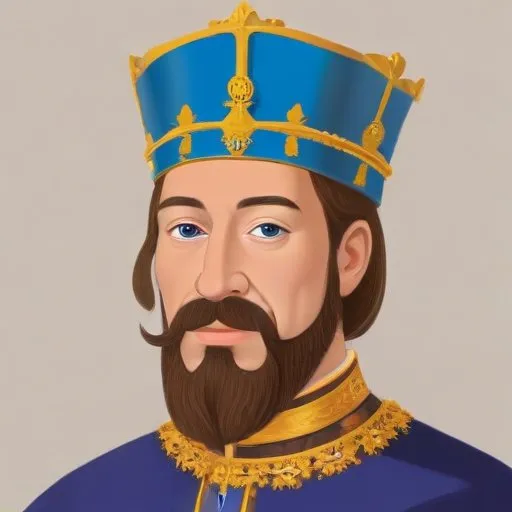
John III: The Swedish King Who Bridged the Gap Between Lutheranism and Catholicism
A King of Compromise and Diplomacy
John III, also known as Johan III in Finnish and Swedish, was the King of Sweden from 1569 until his death in 1592. He is primarily remembered for his attempts to reunite the Lutheran Church of Sweden with the Catholic Church, as well as his tumultuous relationship with his brother, Eric XIV.
Early Life and Rise to Power
John was born on December 20, 1537, to King
Gustav I of Sweden and his second wife, Margaret Leijonhufvud. As the second son, John was sent to Finland as a duke to secure Swedish territory in the eastern Baltic from Russian threats. During his time in Finland, John developed liturgical and theological interests, which would later influence his reign as king.
A Diplomatic Mission to England
In 1559, John was sent to England as an emissary to secure the hand of Queen Elizabeth I in marriage to his half-brother, Crown Prince Erik. Although the mission failed, John's time in England exposed him to the reintroduction of Protestantism and the Book of Common Prayer.
The Road to the Throne
John's opposition to his half-brother King Eric XIV's efforts to secure Reval and East Baltic ports eventually led to his imprisonment in Gripsholm in 1563. However, after his release, John joined the opposition of the nobles, deposed Eric, and made himself the king with the help of his maternal uncle, Sten Leijonhufvud.
Reign and Policy of Compromise
As king, John pursued a policy of compromise between the Lutheran Church of Sweden and the Catholic Church. He introduced the Red Book, which aimed to create a more acceptable form of worship that would appeal to both Lutherans and Catholics. Although his efforts were met with resistance, John's policy of compromise earned him the respect of his contemporaries.
Personal Life and Legacy
John's first wife, Catherine Jagellonica of the Polish-Lithuanian ruling family, bore him a son, Sigismund, who would eventually ascend both the Polish-Lithuanian and Swedish thrones. John's conflict with and murder of his brother Eric XIV have been the subject of much controversy and debate.
Trivia and Fun Facts
- John III was known for his elaborate coronation ceremony, which was attended by foreign dignitaries and nobles.
- During his reign, John III introduced the first postal system in Sweden.
- He was a patron of the arts and commissioned several works of literature and art.
Historical Context and Legacy
John III's reign marked a significant period in Swedish history, as he navigated the complexities of religious reform and diplomacy. His attempts to bridge the gap between Lutheranism and Catholicism, although ultimately unsuccessful, demonstrate his commitment to finding common ground and promoting unity. Today, John III is remembered as a king of compromise and diplomacy, who left an indelible mark on Swedish history.
FAQ
What was John IIIs role in Swedish history?
John III was King of Sweden from 1568 to 1592, and played a significant role in shaping the countrys history during a time of great turmoil and change.
What were John IIIs most notable achievements?
Some of John IIIs most notable achievements include his efforts to strengthen the Swedish monarchy, his promotion of education and culture, and his role in the Council of Uppsala.
How did John IIIs reign impact Swedish politics and society?
John IIIs reign had a lasting impact on Swedish politics and society, including the establishment of a strong centralized government and the promotion of Lutheran reforms.
What was John IIIs relationship with the Catholic Church?
John III had a complex relationship with the Catholic Church, having been raised Catholic but eventually embracing Lutheranism and promoting it in Sweden.
What is John IIIs legacy in Swedish history?
John IIIs legacy in Swedish history is that of a strong and ambitious leader who played a significant role in shaping the countrys politics, society, and culture.