


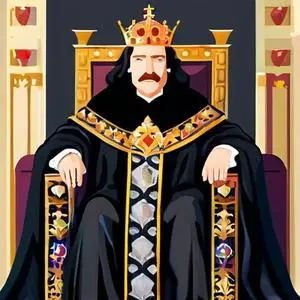
Signed the Magna Carta, a document limiting royal power and establishing due process, which has had a lasting impact on modern democracy.
Known for his tumultuous reign and loss of territories, John, King of England, is often remembered as the monarch who signed the influential Magna Carta, a document that laid the foundation for the evolution of the United Kingdom's constitution. He ruled England from 1199 until his death in 1216, leaving a lasting impact on the country's history.
Born on December 24, 1166, John was the youngest son of King Henry II of England and Duchess Eleanor of Aquitaine. Nicknamed John Lackland, or Jean sans Terre, he was not expected to inherit significant lands. However, he became his father's favorite child after his brothers' failed revolt against the king in 1173-1174.
John was appointed Lord of Ireland in 1177 and given lands in England and on the continent. When his brother, King Richard I, left for the Third Crusade, John attempted a rebellion against the royal administrators but was ultimately unsuccessful. After Richard's death in 1199, John was proclaimed king.
In 1215, a baronial revolt took place, leading to the signing of the Magna Carta, a document that limited the king's power and protected the rights of the nobility and the church. This significant event marked a turning point in English history, establishing the principle that the king was not above the law.
John's reign was marked by conflicts with France, particularly with King Philip II. In 1200, he signed the Treaty of Le Goulet, recognizing Philip's possession of the continental Angevin lands. However, war broke out again in 1202, and John's military campaigns were unsuccessful, leading to the loss of Normandy and other French territories.
Despite his military failures, John's judicial reforms had a lasting impact on the English common law system. He introduced new administrative systems, reformed the justice system, and established a more efficient system of taxation.
John's personal life was marked by controversy, including his treatment of his nobles and his disputes with the Church. In 1209, he was excommunicated by Pope Innocent III, a dispute that was finally settled in 1213.
John's reign may have been tumultuous, but his legacy is significant. The Magna Carta, signed during his reign, has had a lasting impact on constitutional law, and his judicial reforms shaped the English common law system.
Born in 1133
King of England from 1154 to 1189, known for establishing a strong centralized government, reforming the English church, and his tumultuous relationships with Thomas Becket and his sons.
Born in 1924
Noted for his powerful bass-baritone voice and versatility in film, television, and opera, he was a pioneering African American performer who broke racial barriers in the entertainment industry.
