


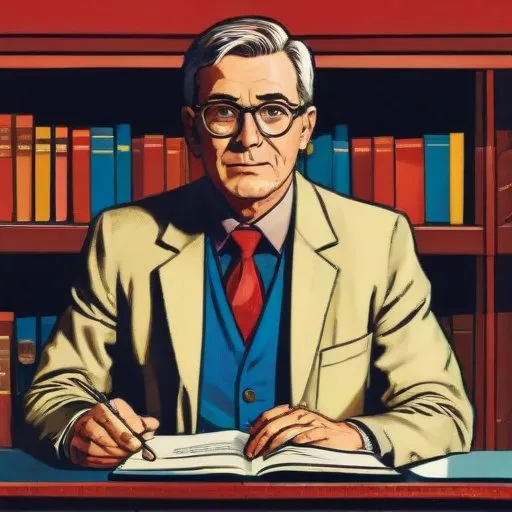
A pioneering librarian who cataloged and preserved Harvard University's library collections, making significant contributions to the field of librarianship.
John Langdon Sibley, a stalwart figure in the realm of academia, is renowned for his unwavering dedication to the preservation and dissemination of knowledge, particularly during his tenure as the librarian of Harvard University from 1856 to 1877. It is through his meticulous efforts that the esteemed institution's library underwent a transformative expansion, both in terms of its physical infrastructure and fiscal resources.
Born on December 29, 1804, in Union, Maine, John Langdon Sibley was the son of Dr. Jonathan Sibley and his wife, Persis Morse. His academic pursuits took him to Phillips Exeter Academy, followed by Harvard University, where he earned his undergraduate degree. Subsequently, he delved into the realm of theology at Harvard Divinity School.
Following his academic pursuits, Sibley embarked on a pastoral career in Stow, Massachusetts, serving from 1829 to 1833. Thereafter, he transitioned to Cambridge, Massachusetts, where he worked as a magazine editor. This exposure to the world of publishing laid the foundation for his future endeavors.
In 1841, when Harvard's first purpose-built library, Gore Hall, was inaugurated, Sibley was appointed as the assistant librarian under the tutelage of Thaddeus William Harris. Upon Harris's passing in 1856, Sibley assumed the role of librarian, a position he held until 1877. During his tenure, he oversaw the physical expansion of the library, as well as its fiscal growth, leaving an indelible mark on the institution.
On May 30, 1866, Sibley married Charlotte Augusta Langdon Cook at Sommerville, Massachusetts. This union marked a significant milestone in his personal life, which was otherwise dominated by his professional pursuits.
Sibley's philosophical inclinations were deeply rooted in his commitment to the preservation and dissemination of knowledge. He believed that access to information was a cornerstone of academic excellence, and his work at Harvard Library was a testament to this conviction.
Sibley's contributions to Harvard University's library are a lasting testament to his dedication to the field of librarianship. His work on the initial volumes of the Sibley's Harvard Graduates series, published between 1873 and 1885, covering the classes of 1642 to 1689, has been carried forward by subsequent scholars, including Clifford K. Shipton, who expanded the series to cover classes from 1690 to 1771.
Upon his passing on December 9, 1885, at his Cambridge residence, Sibley bequeathed funds to the Massachusetts Historical Society for the continuation of the Sibley's Harvard Graduates project, ensuring the perpetuation of his life's work.
Sibley's contributions to the field of librarianship and his dedication to Harvard University earned him recognition from the American Academy of Arts and Sciences, which honored him with a biography.
In conclusion, John Langdon Sibley's legacy as a visionary librarian, scholar, and academic administrator continues to inspire generations of scholars and researchers. His unwavering commitment to the preservation and dissemination of knowledge has left an indelible mark on the academic community.
Born in 1837
Developed the Cutter Classification system, a method of organizing library materials that is still used today.
Born in 1834
A pioneering educator who transformed Harvard University, introducing elective courses and modernizing the curriculum, and is also credited with standardizing the PhD degree.
