


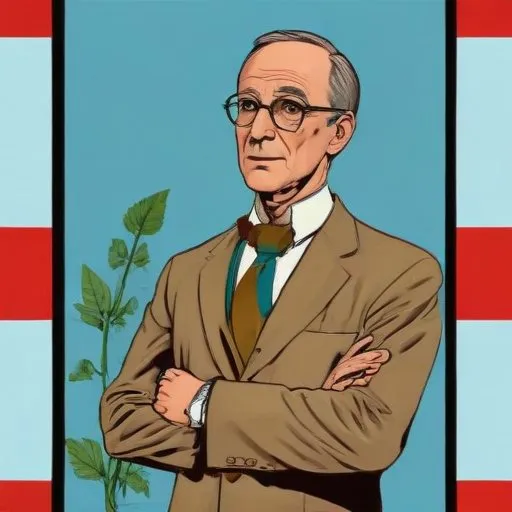
A pioneering entomologist and botanist who cataloged and described numerous insect and plant species, making significant contributions to the fields of natural history and taxonomy.
Thaddeus William Harris, a renowned American entomologist and librarian, is celebrated for his groundbreaking work in broadening the scope of entomological studies beyond mere taxonomy. Harris's fascination with insect life cycles and interactions with plants paved the way for the development of agricultural entomology, a field that would revolutionize the understanding of pest management and crop protection.
Born in Dorchester, Massachusetts on November 12, 1795, Harris was the son of Thaddeus Mason Harris, a Unitarian minister and librarian of Harvard University. Following in his father's footsteps, Harris graduated from Harvard in 1815 and went on to study medicine, earning his M.D. in 1820.
In 1831, Harris was appointed librarian of Harvard University, a position he held for 25 years. During his tenure, he oversaw the rapid growth of the library and introduced one of the earliest American library card catalogs, revolutionizing the way information was accessed and organized.
Harris's work in entomology and library science reflects his commitment to understanding the interconnectedness of natural systems and the importance of accessible knowledge. His legacy extends beyond his own accomplishments, having inspired and mentored numerous entomologists and librarians who have continued to build upon his foundation.
Thaddeus William Harris's contributions to entomology and library science have had a profound impact on modern society, influencing the development of integrated pest management strategies, crop protection practices, and the organization and dissemination of knowledge.
Thaddeus William Harris's remarkable life and achievements serve as a testament to the power of innovation, dedication, and a passion for knowledge. His enduring legacy continues to inspire generations of scientists, librarians, and scholars, ensuring his place in the annals of American intellectual history.
Born in 1810
A pioneering botanist who contributed significantly to the development of American botany, particularly in the fields of plant classification and evolution.
Born in 1785
A pioneering ornithologist and artist, famous for meticulously illustrating and documenting North American bird species in his iconic book "The Birds of America". His work remains a cornerstone of ornithology and wildlife art.
Born in 1809
Developed the theory of evolution through natural selection, revolutionizing our understanding of life on Earth. This groundbreaking idea transformed the fields of biology, ecology, and beyond.
Born in 1817
A 19th-century thinker who advocated for simple living, civil disobedience, and individualism, inspiring generations to reevaluate their relationship with nature and society.
Born in 1803
A leading figure in the Transcendentalist movement, he advocated for individualism, self-reliance, and nature-inspired spirituality through his essays and poetry. His ideas continue to influence American thought and culture.
Born in 1807
A pioneering scientist who studied fossils and glaciers, making groundbreaking discoveries about the Ice Age and the classification of species.
