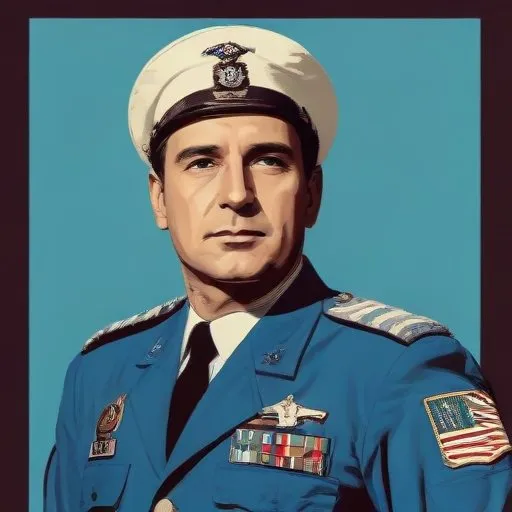
John M. Fabian: The Astronaut Who Shaped the Future of Space Exploration
A Pioneering Figure in Space Shuttle Development
John M. Fabian is renowned for his instrumental role in the development of the Space Shuttle program, particularly the robotic arm, which revolutionized space exploration. As a NASA astronaut and Air Force officer, Fabian flew two Space Shuttle missions, leaving an indelible mark on the history of space travel.
Early Life and Education
Born on January 28, 1939, in Goose Creek, Texas, Fabian considers Pullman, Washington, his hometown. His academic journey began at Pullman High School, where he graduated in 1957. He then pursued a Bachelor of Science degree in mechanical engineering from Washington State University, earning his degree in 1962. Fabian's academic pursuits continued at the U.S. Air Force Institute of Technology, where he received a Master of Science degree in aerospace engineering in 1964. He later earned a doctorate in aeronautics and astronautics from the University of Washington in 1974.
Military Career and NASA
Fabian's military career began as an Air Force ROTC student at Washington State University, where he was commissioned upon graduation in 1962. After serving as a commander of the Arnold Air Society from 1960 to 1961, he went on to join NASA's Astronaut Candidate School in 1978. As an astronaut, Fabian flew on two Space Shuttle missions, STS-7 and STS-51-G, and was instrumental in the development of the Space Shuttle's robotic arm.
Post-NASA Career and Advocacy
After retiring from NASA in 1998, Fabian moved to Port Ludlow, Washington, where he continued to advocate for environmental causes. In 2002, he co-founded the Hood Canal Coalition, a watchdog group dedicated to protecting the Hood Canal and surrounding ecosystem. Fabian has also participated in various educational programs, including the Lunch with an Astronaut and Astronaut Encounter events at the Kennedy Space Center Visitor Complex.
Awards and Honors
Fabian's contributions to space exploration have been recognized through several awards and honors, including:
- Distinguished Flying Cross
- Meritorious Service Medal
- Air Force Commendation Medal
- NASA Exceptional Service Medal
- NASA Space Flight Medal
Legacy and Impact
John M. Fabian's groundbreaking work on the Space Shuttle program has left a lasting impact on the field of space exploration. His advocacy for environmental causes and dedication to education have inspired countless individuals to pursue careers in STEM fields. As a pioneering figure in space exploration, Fabian's legacy continues to inspire future generations of astronauts, engineers, and scientists.
FAQ
What is John M. Fabians experience as an astronaut?
John M. Fabian is a retired NASA astronaut who flew on the Space Shuttle Challenger in 1983, logging over 61 hours in space.
What was John M. Fabians role in the Space Shuttle program?
John M. Fabian served as a mission specialist on the STS-7 mission, which deployed two communications satellites and conducted several scientific experiments.
What military service did John M. Fabian receive?
John M. Fabian is a decorated military officer, having served in the United States Air Force as a fighter pilot and flight instructor before joining NASA.
What is John M. Fabians educational background?
John M. Fabian holds a Bachelor of Science degree in astronautical engineering from the United States Air Force Academy and a Master of Science degree in aeronautics from Stanford University.
What is John M. Fabians post-NASA career?
After retiring from NASA and the Air Force, John M. Fabian worked as an engineer and consultant in the aerospace industry, and has also served on several corporate boards.