


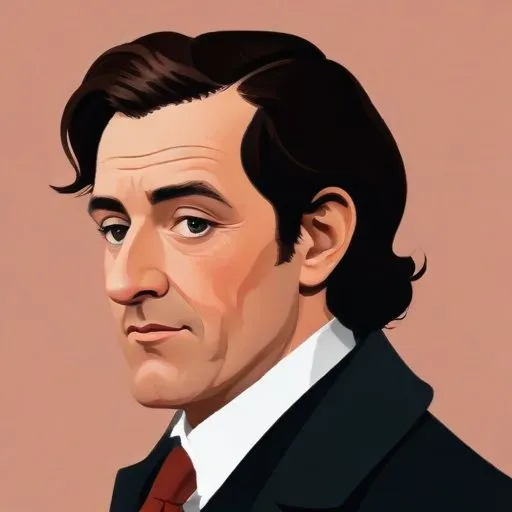
A leading figure in the Bloomsbury Group, this poet and critic was a key promoter of modernist literature, editing influential magazines and championing authors like D.H. Lawrence and E.M. Forster.
John Middleton Murry was a renowned English writer, critic, and editor, best known for his widespread literary contributions, associations with prominent authors, and his role in shaping modern literary criticism. Throughout his lifetime, Murry produced over 60 books, thousands of essays, and reviews on literature, social issues, politics, and religion, earning him a reputation as one of the most prolific writers of his time.
Murry was born on August 6, 1889, in Peckham, London, to John Murry, a clerk in the Inland Revenue, and Emily Wheeler. His father, a self-made man from an impoverished background, prioritized Murry's education, recognizing the importance of literacy in shaping his son's future.
Murry began his education at the Roles Road Board School, followed by the Bellendon Road Higher Grade Board School. He demonstrated a keen sense of maturity, with his aunt describing him as a "little old man" at the age of 11. In 1901, he received a scholarship to attend Christ's Hospital, where he developed an interest in journalism and became the editor-in-chief of a school newspaper and later the editor of the school's magazine.
Murry's writing career took off after meeting Katherine Mansfield in 1911, through W.L. George. Their intense relationship, marked by intellectual and emotional intimacy, had a profound impact on Murry's writing and personal life. Following Mansfield's death, Murry edited her work, cementing his reputation as a literary critic and editor.
In addition to his association with Mansfield, Murry formed close friendships with prominent writers D.H. Lawrence and T.S. Eliot, as well as a brief affair with Frieda Lawrence. These relationships not only influenced his writing but also shaped his perspective on literature and art.
Murry's writing spanned a wide range of genres, including fiction, non-fiction, literary criticism, and social commentary. His works often explored the intersection of literature and politics, reflecting his deep interest in the human condition. Some of his notable works include The Evolution of an Intellectual, The Problem of Style, and The Novel and the Modern World.
Despite facing criticism and controversy throughout his career, Murry's contributions to literary criticism and his role in shaping modern literary discourse are undeniable. His legacy continues to inspire and influence contemporary writers, critics, and scholars.
Murry's personal life was marked by intense relationships, including his marriage to Katherine Mansfield and his brief affair with Frieda Lawrence. His relationships often blurred the lines between personal and professional, leading to controversy and criticism from his peers.
Leonard Woolf, in his memoirs, famously described Murry as "Pecksniffian," suggesting that he was hypocritical and self-righteous. Despite these criticisms, Murry's dedication to his craft and his unwavering commitment to his artistic vision remain an inspiration to many.
Murry received the Charles Lamb medal for an essay entitled "Literature and Journalism" during his time at Christ's Hospital. This early recognition of his talent foreshadowed his later success as a writer and critic.
Murry's literary contributions and critical perspectives have had a lasting impact on modern literature and society. His work continues to influence contemporary writers, scholars, and critics, shaping the way we think about literature, politics, and the human condition.
Through his writing, Murry addressed pressing social issues, including politics, religion, and morality, challenging his readers to engage with the complexities of modern life. His legacy serves as a testament to the power of literature to shape our understanding of the world and ourselves.
Born in 1885
A pioneering writer of the early 20th century, known for exploring themes of human nature, relationships, and the clash between individual desire and societal expectations through novels like "Sons and Lovers" and "Lady Chatterley's Lover".
Born in 1888
A celebrated author of poignant, psychologically nuanced short stories and essays that probed the human condition, exploring themes of identity, class, and relationships. Her works are revered for their lyricism and insight into the modernist experience.
Born in 1882
A pioneering author of modernist literature, known for experimental novels and essays that explored the human experience, blurring the lines between reality and fiction.
Born in 1879
This celebrated author crafted novels and plays that probed the human condition, exploring themes of social class, morality, and personal relationships, with a distinctive wit and insight. Their works continue to captivate audiences with their nuanced portrayals of English society during the early 20th century.
Born in 1894
Author of dystopian classics like Brave New World, exploring the consequences of technological advancements on humanity. Known for prophetic warnings about government control and manipulation.
Born in 1888
A renowned poet, playwright, and critic who reshaped modern poetry with works like "The Waste Land" and "Old Possum's Book of Practical Cats", influencing literature and art with their unique style.
Born in 1885
A pioneering modernist poet and critic who transformed 20th-century literature with innovative styles and provocative ideas, shaping the course of modern poetry.
Born in 1873
A pioneering modernist writer, credited with influencing 20th-century literature through experimental novels and poetry that explored the human condition. Known for his impressionistic style and complex characters.
