


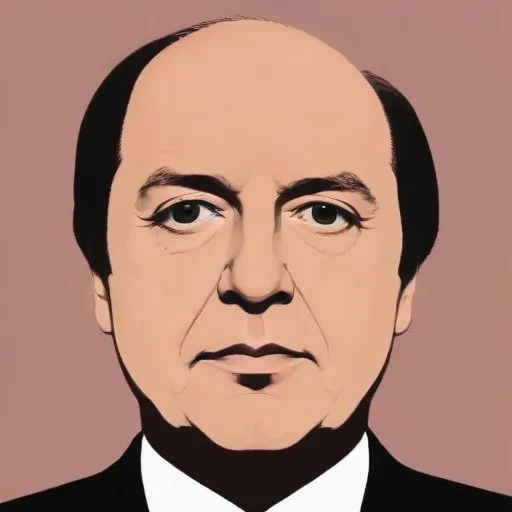
The first Director of National Intelligence, overseeing all 16 US intelligence agencies, and playing a key role in shaping the country's national security policies. He's known for his diplomatic efforts and intelligence reforms.
John Negroponte is a name synonymous with diplomatic excellence and strategic leadership. As the first-ever Director of National Intelligence, he played a pivotal role in shaping the United States' foreign policy and national security apparatus in the post-9/11 era.
With a career spanning over five decades, Negroponte has left an indelible mark on the world of international relations, serving as a beacon of wisdom and integrity in the highest echelons of government.
Born in London to Greek parents Dimitrios Negrepontis and Catherine Coumantaros, Negroponte's early life was marked by a sense of adventure and cultural exchange. His father, a shipping magnate and alpine skier, competed in the 1936 Winter Olympics, instilling in young John a sense of discipline and perseverance.
Negroponte attended the Allen-Stevenson School and The Buckley School before graduating from Phillips Exeter Academy in 1956. He went on to pursue a degree in history from Yale University, where he was a member of the Fence Club and Psi Upsilon fraternity, alongside notable figures such as William H. T. Bush and Porter Goss.
Negroponte joined the United States Foreign Service in 1960, embarking on a journey that would take him to eight different posts in Asia, Europe, and Latin America. His distinguished career included stints as the United States ambassador to Honduras, Mexico, and the Philippines, as well as a stint as the U.S. permanent representative to the United Nations from 2001 to 2004.
In 2005, Negroponte became the first Director of National Intelligence, overseeing the reform of the U.S. intelligence community in the wake of the 9/11 attacks. He went on to serve as the U.S. Deputy Secretary of State from 2007 to 2009, working closely with Secretary Condoleezza Rice to shape U.S. foreign policy.
Negroponte's approach to international relations is underpinned by a deep understanding of the complexities of global politics. He has advocated for a nuanced approach to statecraft, emphasizing the importance of diplomacy and cooperation in achieving national security goals.
His philosophical contributions to the field of international relations are reflected in his numerous publications and public lectures, where he has stressed the need for a more informed and engaged citizenry in the face of global challenges.
Negroponte's legacy is a testament to the power of dedicated public service and strategic leadership. As a statesman, diplomat, and intelligence chief, he has left an indelible mark on the United States' foreign policy apparatus, shaping the country's response to emerging global challenges.
His historical significance lies in his ability to navigate the complexities of international relations, bridging the gap between diplomacy and national security in an era of unprecedented global change.
Besides his illustrious career, Negroponte has been a devoted husband and father, marrying Diana Villiers in 1970 and having five children together.
In his later years, Negroponte has continued to engage in public life, serving as a James R. Schlesinger Distinguished Professor at the Miller Center for Public Affairs at the University of Virginia, and as a research fellow and lecturer at Yale University's Jackson Institute for Global Affairs.
Negroponte's life is a testament to the power of dedication, perseverance, and strategic leadership. His commitment to public service has inspired generations of diplomats, policymakers, and scholars, who continue to draw inspiration from his remarkable career.
As a role model and statesman, Negroponte's legacy serves as a beacon of hope and inspiration, reminding us of the importance of diplomacy, cooperation, and leadership in an increasingly complex and interconnected world.
72 Years Old
The first African American woman to serve as Secretary of State, she played a crucial role in shaping US foreign policy during a tumultuous period, earning her a lasting legacy in international relations.
89 Years Old
The first African American to serve as Secretary of State, he played a crucial role in shaping US foreign policy during the Gulf War and War on Terror. He's also known for his diplomatic efforts and leadership in the military.
89 Years Old
The first female US Secretary of State, serving from 1997 to 2001, who played a key role in shaping American foreign policy during the Clinton administration. She's known for her strong diplomatic efforts and advocacy for democracy and human rights.
Born in 1923
A renowned diplomat and strategist who played a pivotal role in shaping global politics during the Cold War era, known for his Realpolitik approach and brokering peace agreements .
Born in 1920
An American economist and politician who served as the 60th United States Secretary of State, playing a key role in shaping foreign policy during the Cold War era. He's known for his diplomatic efforts to end the Cold War and his advocacy for economic freedom.
Born in 1925
A highly respected military strategist and diplomat who served as the 9th United States National Security Advisor, playing a crucial role in shaping foreign policy and national security decisions.
98 Years Old
A Polish-born American strategist and policymaker who served as National Security Advisor, shaping US foreign policy and advising presidents on global affairs. Known for his realist approach and expertise on geopolitics.
85 Years Old
A seasoned diplomat and strategist who brokered the Dayton Peace Accords, ending the Bosnian War, and served as a key advisor to several US presidents.
