


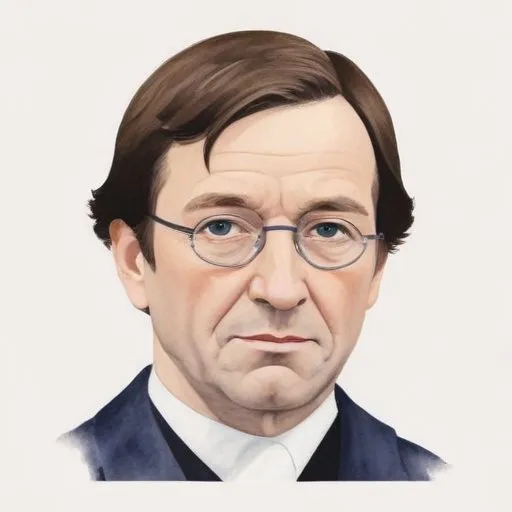
Australian philosopher and academic who wrote extensively on ethics, politics, and the history of philosophy, particularly on the concept of humanism. He's known for his critiques of modern society and its values.
John Passmore, an Australian philosopher of immense repute, is renowned for his groundbreaking work in the realm of philosophical history, ethics, and aesthetics. Through his extensive writings and lectures, Passmore delved into the complex historical context of philosophical problems, earning him a reputation as a meticulous historian of ideas and a visionary philosopher.
Born on September 9, 1914, in Manly, Sydney, Passmore grew up with an insatiable thirst for knowledge. He attended Sydney Boys High School, where he initially aspired to become a school teacher. However, his employment terms required him to pursue coursework in philosophy, which soon became his passion.
Passmore graduated from the University of Sydney with first-class honors in English literature and philosophy, setting the stage for a distinguished academic career. He continued teaching at the University of Sydney as an assistant lecturer in philosophy from 1934 to 1949.
In 1948, Passmore embarked on a journey to the University of London, where he furthered his studies. This academic sojourn was followed by a stint as the first professor of philosophy at the University of Otago in New Zealand from 1950 to 1955.
Passmore's academic trajectory took him to the University of Oxford in 1955, where he studied on a Carnegie grant. Upon his return to Australia, he joined the Institute of Advanced Studies at the Australian National University, serving as professor of philosophy in the Research School of Social Sciences from 1958 to 1979.
Passmore's philosophical work was characterized by his meticulous attention to historical context and his ability to weave together nuanced analyses of philosophical problems. His scholarship encompassed a broad range of topics, including ethics, aesthetics, and the history of philosophy.
Through his writings, Passmore demonstrated a deep understanding of the complex relationships between philosophy, history, and culture. His work continues to inspire philosophical inquiry, encouraging scholars to engage with the intricate narratives that shape human understanding.
Passmore's contributions to philosophy and education were recognized with several prestigious awards and honors. He was appointed a Companion of the Order of Australia (AC) in 1994, Australia's highest civilian honor.
In 1960, he served as the Ziskind visiting professor at Brandeis University in the United States. Passmore was also a Foundation Fellow of the Australian Academy of the Humanities in 1969.
Passmore's personal life was marked by his enduring marriage to Doris, with whom he had two daughters. He passed away on July 25, 2004, leaving behind a legacy of scholarship and intellectual curiosity that continues to inspire generations of philosophers and scholars.
Through his life's work, Passmore demonstrated an unwavering commitment to the pursuit of knowledge and understanding. His philosophical contributions continue to shape modern thought, ensuring his place as one of the most influential Australian philosophers of the 20th century.
John Passmore's remarkable life and work serve as a testament to the power of intellectual curiosity and the importance of philosophical inquiry. His enduring legacy continues to inspire scholars and thinkers around the world, cementing his place as one of the most distinguished philosophers of his time.
Born in 1910
A prominent logical positivist, he championed the idea that only verifiable statements are meaningful, and his book "Language, Truth, and Logic" remains a seminal work in 20th-century philosophy.
Born in 1900
A philosopher who challenged traditional views on the mind-body problem, proposing a more holistic approach to understanding human behavior and consciousness. He's known for his concept of "category mistake."
Born in 1872
A renowned thinker who made significant contributions to mathematics, philosophy, and social commentary, known for his influential writings on logic, ethics, and politics. He's a prominent figure in shaping modern intellectual thought.
Born in 1889
A philosopher who challenged traditional philosophy by emphasizing the importance of language and its limits, and is famous for his philosophical ideas on logic, reality, and the nature of meaning.
Born in 1909
A Latvian-English historian and philosopher who explored the intersection of philosophy, history, and politics, and is renowned for his work on the Enlightenment, liberty, and the nature of humanity.
Born in 1921
Developed the concept of "justice as fairness" and argued that a just society should be based on principles that would be agreed upon by rational individuals behind a "veil of ignorance".
87 Years Old
A renowned philosopher who challenged traditional notions of justice, morality, and the role of government, known for his influential book "Anarchy, State, and Utopia".
