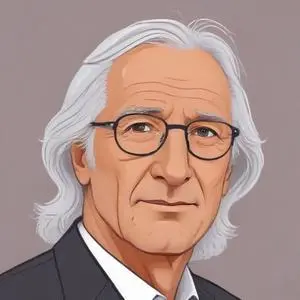
John Pilger

John Pilger

John Pilger was born on October 9th, 1939

Full Name: John Pilger
Place of Birth: Bondi, Australia
Profession: Journalist, Director, Producer
Nationality: Australian-English
Education: Sydney Boys High School
Notable Work: Year Zero: The Silent Death of Cambodia
Awards: BAFTA Award winner
Style: Investigative journalism

Investigative journalist and documentary filmmaker known for exposing government and corporate wrongdoing, particularly in relation to human rights and war crimes.

Written by: Carlos Hernandez Carlos Hernandez

John Pilger: A Fearless Critic of Imperialism and Champion of Human Rights

A Noted Journalist and Filmmaker

John Pilger is a renowned Australian journalist, writer, and documentary filmmaker, best known for his scathing critiques of American, Australian, and British foreign policy, which he believes is driven by an imperialist and colonialist agenda. With a career spanning over five decades, Pilger has been a vocal advocate for human rights, particularly for the indigenous populations of Australia and other marginalized communities around the world.

Early Life and Education

Born on October 9, 1939, in Bondi, New South Wales, Australia, Pilger grew up in a family of German and Irish descent. His mother, Elsie, was a French teacher, and his father, Claude, was of German ancestry. Pilger's older brother, Graham, was a disabled rights activist who later advised the Australian government. Pilger attended Sydney Boys High School, where he developed an interest in journalism, starting a student newspaper called The Messenger. He later joined a four-year journalist trainee scheme with the Australian Consolidated Press.

Career Highlights and Major Works

Pilger's journalism career took off in the 1960s, during which he worked at the Daily Mirror from 1963 to 1986. He wrote a regular column for the New Statesman magazine from 1991 to 2014. Pilger's documentary filmmaking career began with The Quiet Mutiny (1970), made during one of his visits to Vietnam. This was followed by over 50 documentaries, including Year Zero (1979), about the aftermath of the Pol Pot regime in Cambodia, and Death of a Nation: The Timor Conspiracy (1993). His documentaries on indigenous Australians include The Secret Country (1985) and Utopia (2013).

Awards and Honors

Pilger has received numerous awards for his journalism and filmmaking. He won Britain's Journalist of the Year Award in 1967 and 1979. His documentaries have gained awards in Britain and abroad, including a BAFTA.

Influence on Modern Society

Pilger's work has had a significant impact on modern society, particularly in raising awareness about the plight of indigenous populations and the consequences of imperialist policies. His documentaries have sparked public debate and influenced public opinion on issues such as the Cambodian genocide and the treatment of Indigenous Australians.

Philosophical Contributions and Beliefs

Pilger's work is guided by a strong sense of justice and a commitment to human rights. He believes that journalism should be a catalyst for change, rather than simply reporting on events. Pilger's criticisms of imperialism and colonialism are rooted in his conviction that these systems perpetuate inequality and oppression.

Personal Milestones and Key Life Events

Throughout his career, Pilger has been a visiting professor at Cornell University in New York. He has also been involved in various humanitarian initiatives, including advocating for the rights of Indigenous Australians and exposing the plight of marginalized communities around the world.

Controversies and Public Perception

Pilger's outspoken critiques of Western foreign policy have sometimes led to controversy and criticism. However, his unwavering commitment to human rights and social justice has earned him a reputation as a fearless and uncompromising journalist.

Legacy

John Pilger's tireless advocacy for human rights and his fearless critiques of imperialism have left a lasting impact on modern society. His work continues to inspire journalists, filmmakers, and human rights activists around the world. As a champion of marginalized communities, Pilger's legacy will endure, reminding us of the importance of speaking truth to power and fighting for justice and equality.
Timeline
1939
Born in Bondi, Australia
John Pilger was born on October 28, 1939, in Bondi, Australia.
1963
Became a Journalist
Pilger began his career as a journalist, working for the Sydney Daily Mirror and later as a correspondent for the ABC.
1975
Won the Journalist of the Year Award
Pilger was awarded the Journalist of the Year Award for his reporting on the Cambodian genocide.
1990
Directed the Documentary Cambodia: Year Zero
Pilger directed the documentary Cambodia: Year Zero, which exposed the atrocities committed by the Khmer Rouge.
2009
Received the Sydney Peace Prize
Pilger was awarded the Sydney Peace Prize for his commitment to excellence in journalism and his work in promoting human rights and social justice.
John Pilger

John Pilger Quiz

What is John Pilger known for?

Score: 0/5
FAQ
What is John Pilgers area of journalistic expertise?
John Pilger is a renowned investigative journalist, with a particular focus on exposing social and political injustices, particularly in the areas of war, imperialism, and human rights.
What is John Pilgers most famous documentary?
One of John Pilgers most famous documentaries is The War on Democracy, a scathing critique of US foreign policy and its impact on Latin America.
What is John Pilgers approach to investigative journalism?
John Pilger is known for his fearless and meticulous approach to investigative journalism, which has earned him numerous awards and accolades.
What awards has John Pilger won for his journalism?
John Pilger has won numerous awards for his journalism, including multiple BAFTA Awards and an Emmy Award.
What is John Pilgers connection to the New Statesman?
John Pilger has been a long-time contributor to the New Statesman, where he has written extensively on politics and current affairs.

Related People:

Julian Assange

55 Years Old

A controversial figure who publishes classified documents and information online, exposing government secrets and sparking global debates.

Noam Chomsky

97 Years Old

Developed groundbreaking theories on language acquisition and universal grammar, and is a prominent critic of power and propaganda in modern society.

Edward Said

90 Years Old

A prominent cultural critic and scholar who challenged Western perceptions of the Middle East and Islam, and wrote extensively on Orientalism and imperialism.

Robert Fick

52 Years Old

A first baseman and outfielder who played for several MLB teams, including the Detroit Tigers and Atlanta Braves, known for his clutch hitting and strong defensive skills.

Sebastian Coe

69 Years Old

A renowned Olympic gold medalist and former world record holder in the 800 meters, known for his impressive athletic career and later becoming a prominent politician.

Harold Pinter

95 Years Old

A renowned playwright, screenwriter, and director, known for his unique style of absurdity and dark humor, exploring themes of power, politics, and human relationships.

Ken Loach

90 Years Old

A renowned filmmaker acclaimed for crafting gritty, socially conscious dramas that often spotlight the struggles of the working class. His films frequently spark controversy and ignite important conversations.

Alan Cunningham

Born in 1887

A British Army officer who served as High Commissioner for Palestine and Transjordan during the British Mandate period, known for his role in shaping the region's modern political landscape. He played a crucial part in the establishment of the State of Israel.