


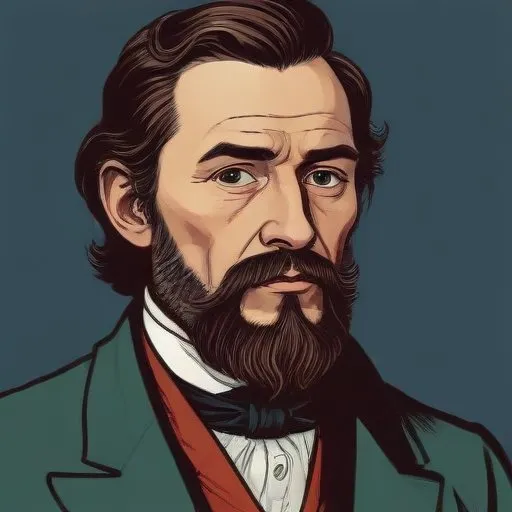
A Scottish polymath who contributed significantly to the fields of antiquarianism, cartography, literature, numismatics, and history, leaving a lasting legacy in these areas.
John Pinkerton was a Scottish polymath, best known for his extensive contributions to the fields of antiquarianism, cartography, and literature, with a particular focus on Scottish history and culture. His works encompassed a wide range of subjects, from numismatics and historiography to poetry and literary criticism, earning him recognition as one of the most versatile scholars of his time.
Born on February 17, 1758, in Edinburgh, Scotland, Pinkerton was the son of James Pinkerton and Mary (née Heron or Bowie). During his early years, he demonstrated a keen interest in classical studies, translating Roman authors like Livy and developing a profound knowledge of the Classics. He pursued higher education at Edinburgh University, where he graduated and later took up an apprenticeship in Law.
However, Pinkerton's true passion lay in writing, and he soon abandoned his legal career to focus on literary pursuits. In 1776, he published his first major work, Elegy on Craigmillar Castle, which marked the beginning of his prolific writing career. He went on to publish numerous works, including:
Pinkerton's cartographic contributions were instrumental in shaping the field of geography and mapping. He created numerous maps, including those of Scotland, England, and Wales, which were highly acclaimed for their accuracy and detail. His cartographic works remained unparalleled for many years, providing a valuable resource for historians, scholars, and travelers alike.
Pinkerton's writings often reflected his strong opinions on various subjects, including literature, history, and philosophy. He was a vocal proponent of Germanic racial supremacy theory, which sparked controversy among his contemporaries. His critiques of classical authors, particularly in Letters of Literature, also generated debate and criticism.
Despite the controversies surrounding some of his views, Pinkerton's multifaceted contributions to the realms of antiquarianism, cartography, and literature remain unparalleled. His works continue to influence scholars and historians, offering valuable insights into Scotland's rich cultural heritage. John Pinkerton's remarkable legacy serves as a testament to his boundless energy, intellectual curiosity, and dedication to the pursuit of knowledge.
Born in 1769
Pioneering geologist and cartographer who created the first geological map of England and Wales, revolutionizing the field of geology.
Born in 1512
A Flemish mathematician, cartographer, and philosopher who developed the Mercator projection, a cylindrical map projection that preserves angles and shapes well, revolutionizing navigation and cartography.
Born in 1527
A Flemish cartographer and geographer who created the first modern atlas, revolutionizing navigation and exploration. His work laid the foundation for modern cartography.
41 Years Old
A Welsh rugby union player who captained Wales and the British and Irish Lions, known for his exceptional skill and leadership on the pitch.
Born in 1779
Founded the modern academic field of geography, emphasizing the importance of human-environment interactions and cultural differences in shaping the world around us.
