


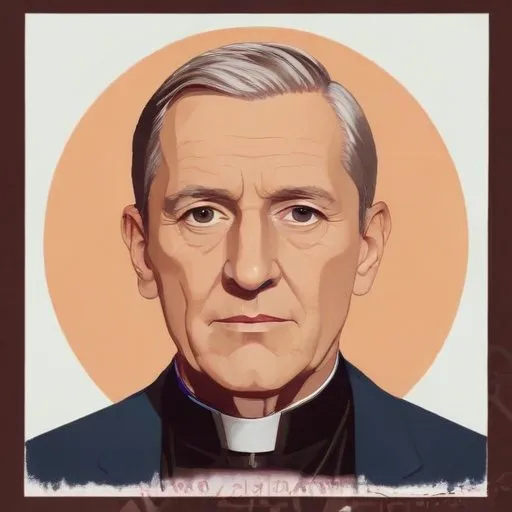
An English administrator and bishop who served as the Chancellor of Oxford University and later became the Bishop of Worcester, known for his involvement in the English Reformation. He played a significant role in shaping the Church of England during the 16th century.
John Prideaux, a distinguished English academic and theologian, is best known for his esteemed tenure as the Bishop of Worcester, a prominent figure in the Church of England during the 17th century.
Born on September 17, 1578, at Stowford House in Devon, England, Prideaux was the fourth son of John and Agnes Prideaux. Through the benevolence of Lady Fowell, a wealthy friend, he was sent to Oxford University at the age of 18.
soon after completing his studies, Prideaux took holy orders and was appointed chaplain to Henry Frederick, Prince of Wales. This marked the beginning of his illustrious career in the Church of England.
In 1609, Matthew Sutcliffe named him one of the fellows of his Chelsea College, a testament to his growing reputation as a scholar and theologian.
Prideaux's academic prowess earned him the position of Rector of Exeter College, Oxford, in 1612. He was permitted to take the degree of Doctor of Divinity (D.D.) on May 30, 1612, before the statutable period.
During his tenure as Rector, Prideaux built upon the college's reputation for scholarship, attracting a diverse range of students, including notable figures such as Philip Cluverius, James Casaubon, and Sixtinus Amama.
In 1614, Prideaux was appointed Bishop of Worcester, a position he held until his death in 1650.
As Bishop, Prideaux continued to demonstrate his commitment to education and scholarship. He added to the buildings of Exeter College, including the construction of a new chapel, which was consecrated on October 5, 1624.
One of his notable students, Anthony Ashley Cooper, records that Prideaux was a just and kind mentor, capable of handling excitable undergraduates with ease.
Prideaux's theological works and sermons demonstrate his adherence to the principles of the Church of England. His contributions to the field of theology remain significant, reflecting his erudite understanding of scripture and doctrine.
Through his writings and teachings, Prideaux left an indelible mark on the Church of England, cementing his legacy as a distinguished theologian and educator.
Born in 1893
American hurdler who won two Olympic bronze medals in the 400-meter hurdles at the 1900 and 1904 Summer Olympics. He was also a talented sprinter and middle-distance runner.
Born in 1423
A 15th-century Archbishop of York and Chancellor of England, he played a key role in establishing the University of Cambridge's St Catharine's College. He's also known for his diplomatic efforts to prevent the Wars of the Roses.
Born in 1715
Noted for his contributions to English church music, particularly his anthems and services, and held prominent positions at Salisbury Cathedral and Westminster Abbey.
