


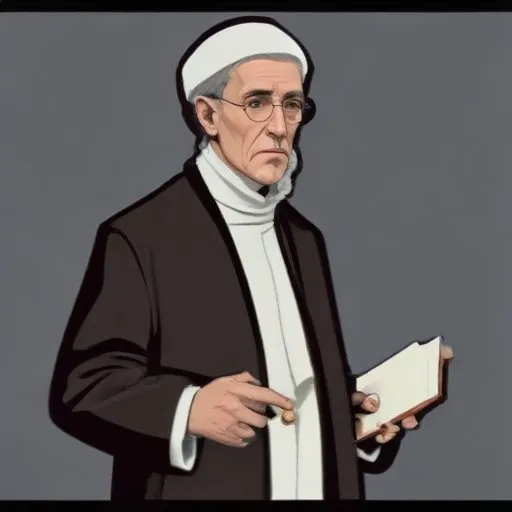
A 15th-century Archbishop of York and Chancellor of England, he played a key role in establishing the University of Cambridge's St Catharine's College. He's also known for his diplomatic efforts to prevent the Wars of the Roses.
Thomas Rotherham, a prominent English cleric and statesman, is best known for his illustrious career as Archbishop of York and twice-serving Lord Chancellor. His exceptional leadership skills and devotion to the Church earned him a revered status in Rotherham, South Yorkshire, his birthplace.
Born on August 24, 1423, Thomas Rotherham was the eldest son of Sir Thomas Rotherham of Rotherham and his wife, Dame Alice. He was initially educated by a grammar teacher, later attending Eton College to prepare for university entrance. Rotherham's academic pursuits continued at King's College, Cambridge, where he graduated with a Bachelor of Divinity and became a Fellow of his college.
Rotherham's exceptional knowledge and eloquence earned him a lectureship in Grammar, Theology, and Philosophy. Following his ordination as a priest, he became a prebendary of Lincoln in 1462 and then of Salisbury in 1465. His rise to prominence continued with his appointments as Bishop of Rochester in 1468, Bishop of Lincoln in 1472, and ultimately, Archbishop of York in 1480, a position he held until his passing in 1500.
In 1467, King Edward IV appointed Rotherham as Keeper of the Privy Seal, a testament to his growing influence. He was later sent as ambassador to France in 1468 and as joint ambassador to Burgundy in 1471. In 1475, Rotherham was entrusted with the office of Lord Chancellor, a position he held on two separate occasions.
Thomas Rotherham's remarkable career left an indelible mark on Rotherham, South Yorkshire, and the Church. He remains a revered figure, celebrated for his dedication to education, theology, and public service. His remarkable life serves as a testament to the power of education, hard work, and devotion to one's craft.
Thomas Rotherham's life and career were shaped by the tumultuous era in which he lived. The Wars of the Roses, a dynastic struggle that ravaged England, played a significant role in shaping his rise to prominence. Despite these challenges, Rotherham's commitment to education, theology, and public service earned him a lasting legacy, cementing his place as a revered figure in Rotherham's history.
Thomas Rotherham's remarkable life serves as a testament to the power of hard work, dedication, and devotion to one's craft. His rise from a modest background to esteemed positions in the Church and state is a shining example of what can be achieved through perseverance and determination. Rotherham's legacy continues to inspire generations, encouraging individuals to strive for excellence in their chosen fields.
Born in 1489
Leader of the English Reformation, instrumental in creating the Church of England and authoring the Book of Common Prayer.
Born in 1478
A renowned Renaissance humanist and statesman who served as Lord Chancellor of England, famous for his literary work "Utopia" and his martyrdom for refusing to acknowledge the English monarch's supremacy over the Church.
Born in 1457
First Tudor king of England, who ended the Wars of the Roses and established a strong, centralized government, bringing stability and prosperity to the country.
Born in 1239
Conqueror of Wales and hammer of the Scots, he strengthened the English monarchy and established parliamentary representation.
Born in 1926
The monarch of the United Kingdom and its Commonwealth realms, serving as a unifying figurehead and symbol of national identity, while also carrying out various ceremonial and charitable duties.
Born in 1509
A French pastor and theologian who played a key role in the Protestant Reformation, shaping Christian theology and influencing Western civilization. He's famous for his teachings on predestination and his role in establishing Calvinism.
Born in 1483
A German monk and priest who sparked the Protestant Reformation, challenging Catholic Church authority and shaping Western Christianity. He's famous for nailing 95 theses to a church door, sparking a religious revolution.
