


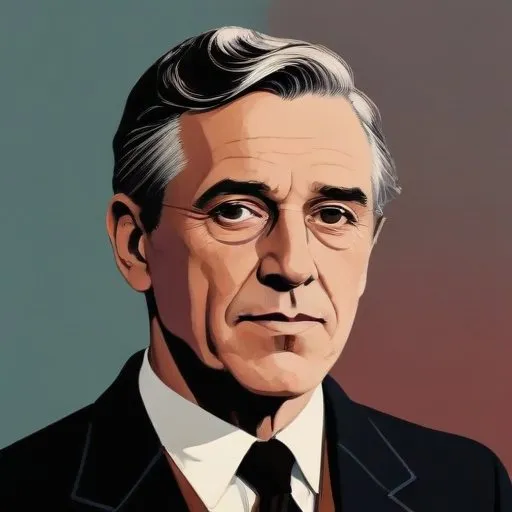
American journalist and poet who reported on the Mexican Revolution and wrote about the Bolshevik Revolution, known for his eyewitness accounts and poetic writings.
John Reed, an American journalist, poet, and communist activist, is best known for his coverage of the October Revolution in Petrograd, Russia, which he wrote about in his 1919 book Ten Days That Shook the World. This book is considered one of the most influential and groundbreaking works of journalism of the 20th century, offering a firsthand account of the Bolshevik Revolution and its aftermath.
John Silas Reed was born on October 22, 1887, in Portland, Oregon, to Charles Jerome Reed and Margaret Reed (née Green). He grew up in a privileged household, with his maternal grandfather, Henry Dodge Green, being a successful industrialist. Reed's early life was marked by adventure and a thirst for knowledge, which would later define his career as a journalist.
Reed's journalism career spanned over a decade, during which he covered some of the most significant events of the early 20th century. He worked as a war correspondent during the Mexican Revolution and World War I, writing for publications such as Metropolitan and The Masses. His coverage of the Russian Revolution and its aftermath cemented his reputation as a fearless and intrepid journalist.
Reed's book, Ten Days That Shook the World, is a testament to his bravery and commitment to telling the story of the Russian Revolution. The book provides a vivid and detailed account of the events leading up to and during the revolution, offering insights into the politics and personalities of the time.
Reed was a passionate advocate for socialism and communism, and his writing often reflected his strong convictions. He believed in the power of the working class to bring about change and was drawn to the ideals of the Russian Revolution. Reed's writing was not only informative but also persuasive, encouraging readers to consider the possibilities of a socialist or communist society.
In 1918, Reed traveled to Russia, where he briefly joined the Red Guards and supported the Soviet takeover. This experience had a profound impact on his life and writing, shaping his views on politics and society. Reed also co-founded the short-lived Communist Labor Party of America in 1919, further solidifying his commitment to the cause.
Reed's writing and activism had a significant impact on modern society, inspiring generations of journalists, writers, and activists. His book, Ten Days That Shook the World, has been translated into numerous languages and remains a classic of 20th-century literature. Reed's commitment to telling the stories of the marginalized and oppressed continues to influence journalists and writers today.
John Reed's legacy extends beyond his writing and activism. He is one of only four Americans buried at the Kremlin Wall Necropolis, a testament to his contribution to the Russian Revolution and its aftermath. A memorial bench dedicated to Reed was installed in Washington Park, Portland, in 2001, overlooking the site of his birthplace.
Reed's life and work serve as a reminder of the power of journalism and activism to shape our understanding of the world and inspire change. His courage, conviction, and commitment to telling the story of the Russian Revolution continue to inspire and influence people around the world.
Born in 1888
A pioneering playwright who explored the American experience through powerful, psychologically complex dramas, earning the Nobel Prize in Literature in 1936.
Born in 1883
A radical writer and poet who championed women's rights and free speech, known for his provocative essays and poetry that challenged social norms.
Born in 1869
A Lithuanian-Canadian philosopher and activist who advocated for anarchism, free speech, and women's rights, playing a pivotal role in shaping modern feminist and political thought.
Born in 1878
A pioneering muckraker, exposing social and economic injustices through influential novels, most notably "The Jungle", which led to significant reforms in the meatpacking industry.
Born in 1876
Wrote classic adventure novels like "Call of the Wild" and "White Fang", exploring the human condition through stories of survival and the American wilderness.
