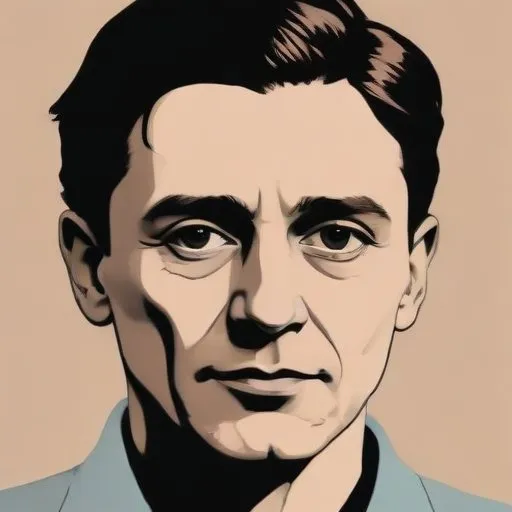
Max Eastman: The Radical Thinker and Writer
A Life of Activism and Literary Pursuits
Max Eastman was a renowned American writer, poet, and political activist, known for his involvement in radical circles and his influential writings on literature, philosophy, and society. As a prominent figure of the early 20th century, Eastman's work spanned multiple genres, from poetry and literature to politics and social activism.
Early Life and Education
Born on January 4, 1883, in Canandaigua, New York, Eastman was the fourth of four children to Samuel Elijah Eastman, a Congregational Church minister, and Annis Bertha Ford, one of the first women ordained in a Protestant church in the United States. Growing up in a family of strong religious convictions, Eastman's early life was marked by a sense of social responsibility and a desire for change.
Radical Circles and Literary Pursuits
Eastman's move to New York City for graduate school marked the beginning of his involvement with radical circles in Greenwich Village. He became a leading patron of the Harlem Renaissance, supporting socialist causes and befriending influential figures like
Upton Sinclair and
John Reed. During this period, he edited the radical magazine
The Masses, which became a platform for his writing and activism.
The Liberator and Soviet Union Experience
In 1917, Eastman co-founded
The Liberator with his sister Crystal Eastman, a magazine that focused on politics and the arts. His experience in the Soviet Union from 1922 to 1924 had a profound impact on his views, as he witnessed the power struggle between
Leon Trotsky and
Joseph Stalin. This experience led him to become highly critical of Stalinism and communism, ultimately shifting his perspective towards free market economics and anticommunism.
Philosophical Contributions and Beliefs
Eastman's writings and activism reflected his commitment to social justice and individual freedom. He believed in the importance of individual autonomy and the dangers of totalitarian regimes. His philosophical contributions were marked by a shift from socialism to anticommunism, as evident in his 1955 publication
Reflections on the Failure of Socialism.
Career Highlights and Major Works
Eastman's literary career spanned multiple genres, including poetry, essays, and fiction. Some of his notable works include:
- Enjoyment of Poetry (1913)
- The Enjoyment of Laughter (1936)
- Reflections on the Failure of Socialism (1955)
Influence on Modern Society
Eastman's work and activism had a significant impact on modern society. He played a crucial role in shaping the literary and political landscape of the early 20th century. His critiques of communism and socialism continue to influence contemporary debates on politics and economics.
Personal Milestones and Key Life Events
Eastman's life was marked by significant personal milestones, including his experience in the Soviet Union and his shift towards anticommunism. He also publicly opposed the Vietnam War in the 1960s, underscoring his commitment to individual freedom and social justice.
Legacy
Max Eastman's legacy is one of intellectual curiosity, social activism, and literary excellence. His commitment to individual freedom and social justice continues to inspire generations of thinkers and writers. As a radical thinker and writer, Eastman's impact on modern society is a testament to the power of ideas and the importance of standing up for one's convictions.
FAQ
What was Max Eastmans contribution to American literature?
Max Eastman was a prominent American author and poet, known for his innovative and expressive works that explored the human condition and the natural world. His writing often featured bold, lyrical language that reflected his fascination with modernism and free verse.
How did Max Eastmans experiences as a socialist influence his writing?
Max Eastman was a committed socialist, and his writing often reflected his belief in the power of social justice and equality. His poetry and essays often explored themes of labor, class, and politics, earning him a reputation as a champion of the working class.
What was Max Eastmans relationship with the Stieglitz circle?
Max Eastman was a member of the Stieglitz circle, a group of avant-garde artists and intellectuals who gathered around Alfred Stieglitzs 291 gallery in New York. The circle included artists such as Gertrude Stein and Emma Goldman, and Eastmans writing was heavily influenced by the groups emphasis on experimentation and innovation.
How did Max Eastmans writing reflect his love of nature?
Max Eastman was a passionate advocate for the beauty and importance of the natural world. His poetry often celebrated the landscapes and seascapes of America, and he was praised for his ability to evoke the sights, sounds, and smells of the natural world.
What is the significance of Max Eastmans Venture?
Max Eastmans poetry collection Venture is a celebrated work of American modernism, known for its innovative and expressive portrayals of the human condition and the natural world. The collection is widely regarded as a masterpiece of American poetry, and is often cited as one of Eastmans most beautiful and evocative works.