


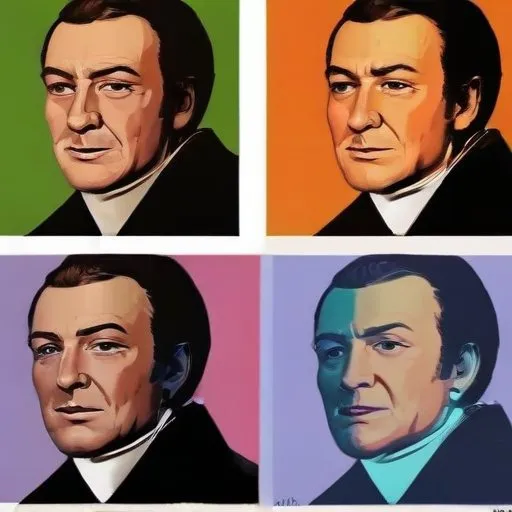
A prominent 18th-century politician who served as Lord President of the Council, playing a significant role in shaping British politics and governance. He's also known for his architectural endeavors, including the development of Russell Square.
John Russell, 4th Duke of Bedford, is renowned for his instrumental role in negotiating the Treaty of Paris in 1763, bringing an end to theSeven Years War. As a leading Whig statesman and peer, he served as the Lord Lieutenant of Ireland from 1757 to 1761, leaving an indelible mark on British politics and history.
Born on September 30, 1710, John Russell was the fourth son of Wriothesley Russell, 2nd Duke of Bedford, and Elizabeth, daughter and heiress of John Howland of Streatham, Surrey. Known as Lord John Russell, he married Diana Spencer, daughter of Charles Spencer, 3rd Earl of Sunderland, in October 1731. After her passing in 1735, he married Lady Gertrude Leveson-Gower, daughter of John Leveson-Gower, 1st Earl Gower, in April 1737.
In the House of Lords, Bedford joined the Patriot Whig opposition, where he took a prominent part in public business and earned the dislike of George II. He was appointed First Lord of the Admiralty in the administration of Henry Pelham in 1744 and was made a privy councillor. Bedford's success at the admiralty was marked by his effective leadership and strategic decisions. However, his tenure as Secretary of State for the Southern Department in 1748 was marred by conflicts with his colleague, The Duke of Newcastle.
Beyond his political accomplishments, Bedford was a fervent patron of the arts and sports. He commissioned numerous works from prominent artists, including Canaletto, whose landscapes adorned his residence, Woburn Abbey. Bedford was also an early promoter of cricket, recognizing the game's potential to unite people across social classes.
In 1749, Bedford was appointed a Knight of the Order of the Garter, a prestigious honor conferred upon him for his noteworthy contributions to British politics and society.
John Russell, 4th Duke of Bedford's remarkable legacy extends beyond his political achievements. His patronage of the arts and sports helped shape British culture, while his diplomatic efforts brought peace to a war-torn era. As a testament to his vision and leadership, Bedford remains an integral figure in British history.
John Russell, 4th Duke of Bedford, left an indelible mark on British history, politics, and culture. His remarkable legacy serves as a testament to his vision, leadership, and patronage, inspiring future generations to strive for excellence.
Born in 1759
Prime Minister of the United Kingdom from 1783 to 1801 and 1804 to 1806, known for leading the country through the French Revolutionary and Napoleonic Wars.
Born in 1749
A prominent 18th-century politician who championed individual liberties and opposed British imperialism, known for his charismatic oratory skills and influential foreign policy decisions.
Born in 1762
The only British Prime Minister to be assassinated, he served from 1809 to 1812 and is known for his strong leadership during the Napoleonic Wars.
Born in 1770
A skilled lawyer and politician who served as Prime Minister of the United Kingdom, known for his strong oratory skills and brief but influential tenure in office.
